
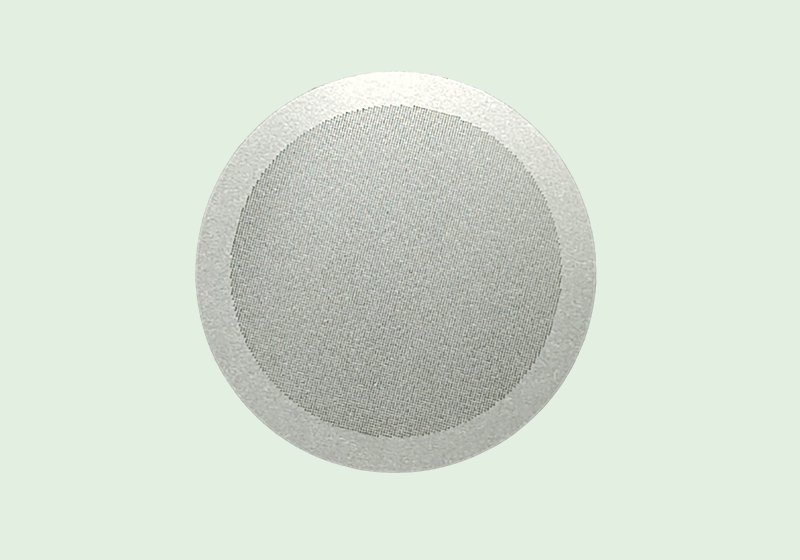
Microporous filter screens are core functional components in fluid filtration, impurity separation and flow control systems, widely deployed across industrial, medical, food and new energy scenarios where precise particle interception and stable medium delivery are required. Traditional manufacturing methods such as woven wire mesh, stamping perforation and laser drilling carry inherent limitations. Woven mesh suffers from wire shifting, uneven gaps and filament breakage under long-term pressure pulsation; stamping produces burrs and tapered holes that cause secondary contamination and accelerated clogging; laser drilling creates heat-affected zones and rough hole walls that degrade filtration consistency.
As an advanced non-contact cold subtractive manufacturing technology, photochemical etching has become the premium solution for high-end microporous filter screens. It forms highly uniform micron-sized hole arrays on thin metal sheets through controlled chemical dissolution, delivering outstanding performance in filtration accuracy, surface cleanliness, structural durability and customization flexibility. The process fully preserves native material properties while achieving complex geometries that traditional methods cannot economically produce, making it the preferred manufacturing route for precision filtration components in modern high-end manufacturing.
I. Key Product Characteristics of Precision Etched Microporous Filter Screens
The photochemical etching process defines the unique performance attributes of microporous filter screens, which significantly outperform traditional filter products in aperture consistency, surface quality, structural stability and environmental adaptability. All performance indicators can be precisely tuned via etching parameters to meet industrial, medical and food-grade certification standards.
1. Uniform Micron Apertures with Ultra-High Dimensional Accuracy
Precision etching delivers a stable dimensional tolerance of ±0.005mm to ±0.01mm, with a minimum machinable aperture of 0.02mm. All holes across the entire screen share highly consistent size and spacing, with deviation controlled within 5 microns across the full surface area. By contrast, woven wire mesh has random gap sizes due to wire interlacing and wire shifting under pressure, with gap deviation reaching up to 40%, which leads to uneven filtration accuracy and leakage of oversized particles. Stamped holes typically form a tapered bell-mouth structure with inconsistent upper and lower diameters, while laser-drilled holes have irregular inner walls and large dimensional deviation.
Etched filter screens support custom aperture gradients and zoning layouts, such as dense holes in the central flow area and sparse holes at the edge, to match specific fluid flow paths optimized by CFD simulation. Complex hole shapes including round holes, slotted holes, diamond holes, hexagonal holes and special-shaped holes can all be formed in a single process, perfectly reproducing designs optimized for maximum open area and minimum flow resistance. This level of precision ensures stable filtration rating throughout the entire service life, which is critical for medical, semiconductor and hydraulic systems with strict cleanliness requirements.
2. Burr-Free Smooth Hole Walls & Dead-Zone-Free Surface
Etched holes feature smooth vertical sidewalls and rounded edges, completely free of burrs, flanging or sharp corners. Traditional woven mesh has numerous interwoven gaps that easily trap impurities and dirt, breeding bacteria and causing progressive clogging. Stamped and laser-drilled screens carry burrs at hole edges that can fall off during operation, contaminating filtered media and scratching downstream precision components.
The smooth burr-free structure greatly reduces adhesion of particles, grease and impurities. The screen can be quickly cleaned via simple flushing or backwashing, with no hidden dead corners for dirt accumulation. This feature is particularly critical for medical, food and semiconductor scenarios with strict hygiene requirements, and extends filter screen service life by more than 3 times compared with woven mesh. Smooth hole walls also promote laminar flow and reduce turbulent pressure drop, improving overall filtration system efficiency.
3. Stress-Free Monolithic Structure & High Mechanical Strength
As a room-temperature cold processing technology, etching applies no mechanical extrusion force or high-temperature thermal impact to the metal substrate, and does not generate residual internal stress or lattice deformation inside the material. Etched filter screens support substrate thickness from 0.03mm to 1.0mm, with ultra-thin models as thin as 0.03mm for micro-instruments and portable filtration devices. The overall flatness is controlled within ≤0.01mm, with no warping or deformation, and fits tightly with filter housings without side leakage.
Unlike woven mesh that relies on interwoven wires for strength, etched screens are fabricated from a single integrated metal sheet with uniform tensile and compressive strength. They can withstand filtration pressures of 1–5MPa without deformation, hole expansion or rupture, and maintain stable filtration accuracy under long-term high-pressure operating conditions. The monolithic structure has no welds, joints or wire intersections that would serve as fatigue failure points, delivering exceptional structural reliability under vibration and pressure cycling.
4. Broad Material Compatibility & Superior Corrosion Resistance
The etching process is compatible with almost all common metal filter materials, including 304/316L stainless steel, TA1/TA2 titanium alloy, copper alloy, nickel alloy, Hastelloy, Monel and Invar. Dedicated etching liquid systems are configured for different materials to fully retain the original corrosion resistance, temperature resistance and mechanical properties of the substrate.
316L stainless steel etched screens resist weak acid and alkali corrosion, suitable for conventional industrial and food scenarios; titanium alloy screens offer outstanding corrosion resistance for seawater filtration, chemical media and high-end medical applications; special alloy screens adapt to extreme environments such as high temperature and strong corrosion. All materials are fully traceable, with corresponding material certification and compliance test reports available upon request.
5. High Design Flexibility & One-Step Integrated Forming
The etching process imposes no restrictions on graphic complexity. The outer contour of the filter screen, mounting positioning holes, sealing grooves, reinforcing ribs, brand logos and microporous arrays can all be integrally formed in one etching pass without secondary CNC machining. It supports single-sided etching and double-sided differential depth etching, and enables custom composite structures such as coarse filtration layer + fine filtration layer to realize multi-stage filtration in a single component.
Custom shapes including round, square, rectangular, special-shaped and framed filter screens can be produced flexibly to adapt to various filter installation structures. No expensive hard molds are required, and design modifications only require adjusting the digital photomask, with a sample delivery cycle of 24–48 hours. This dramatically reduces R&D costs and shortens time-to-market for new filtration products.
6. Electronic-Grade Cleanliness & Hygienic Compliance
All etching processes are completed in constant-temperature clean workshops. After processing, the screen goes through multiple stages of ultrasonic pure water cleaning and vacuum drying, so there is no oil stain, metal debris and etching liquid residue on the surface, reaching electronic-grade cleanliness.
There is no stamping oil residue or laser oxide dust pollution, making the screens suitable for high-end scenarios with strict cleanliness requirements such as medical equipment, semiconductor equipment and optical instruments. They will not cause catalyst contamination and optical path pollution, and extend the service life of core components of the filtration system. The smooth non-porous surface also prevents bacterial growth, complying with FDA, LFGB and other food contact and medical safety standards.
Core Product Functions of Etched Microporous Filter Screens
As the core filtration medium of fluid systems, etched microporous filter screens undertake six core functions: precision graded interception, uniform flow control, pressure-bearing structural support, high-temperature corrosion-resistant medium separation, anti-clogging long-life operation and low-resistance energy-saving optimization. The reliable realization of all functions highly depends on the high-precision and high-stability structure brought by the etching process.
1. Precision Graded Filtration & Accurate Impurity Interception
This is the most fundamental core function. By customizing precise aperture sizes, filter screens accurately intercept solid particles of specific sizes and allow target media to pass through, realizing solid-liquid separation, solid-gas separation and impurity purification. Etched uniform apertures ensure consistent filtration accuracy across the entire screen, eliminating the problem of fine particle leakage caused by uneven gaps in woven mesh.
Multi-stage composite etched screens realize graded filtration from coarse to fine in a single component, intercepting large particles and fine impurities step by step, improving filtration efficiency and reducing the number of filter stages. They are widely used in scenarios with strict filtration accuracy requirements such as medical infusion filtration, hydraulic oil precision filtration and semiconductor chemical filtration.
2. Uniform Flow Diversion & Stable Permeability Control
Regular and uniform micropore arrays evenly disperse incoming fluid, so that flow velocity and pressure are consistent across the entire filter surface, avoiding local scouring and premature failure caused by concentrated fluid impact. Smooth hole walls deliver low fluid resistance and stable permeability, without the gradually increasing resistance caused by burrs and rough inner walls of laser-drilled holes.
Stable filtration rate ensures steady flow of the entire fluid system, reduces pressure fluctuation, and improves operational stability of downstream equipment. For scenarios such as coffee extraction and beverage filling that require stable flow rate, the uniform flow characteristics of etched filter screens directly determine the consistency of final product quality.
3. Pressure-Bearing Structural Support & Anti-Deformation
The integrated metal sheet structure has high mechanical strength, withstanding the working pressure difference between the inlet and outlet sides of the filtration system, serving as both a filtering medium and a structural support. It will not deform, collapse or rupture under long-term high-pressure operation, and maintains stable filtration accuracy.
Compared with woven mesh which is prone to loosening and sagging under pressure, etched filter screens have fixed aperture and structure, without the problem of increasing pore size and decreasing filtration accuracy after long-term use. They can be used as independent filter elements or paired with support meshes to adapt to higher pressure working conditions.
4. High-Temperature & Corrosion-Resistant Medium Separation
Metal etched filter screens adapt to high-temperature fluid filtration scenarios up to hundreds of degrees Celsius, without softening, deformation or release of harmful substances like plastic filter elements. Combined with corrosion-resistant alloy materials, they can filter various corrosive media such as acid, alkali and salt, which cannot be achieved by plastic, paper and surface-treated woven mesh.
This function makes etched filter screens widely used in special industrial scenarios such as chemical filtration, petrochemical industry, seawater desalination and high-temperature steam filtration, adapting to harsh working environments that traditional filter materials cannot handle.
5. Anti-Clogging & Reusable Long Service Cycle
Smooth burr-free hole walls greatly reduce particle trapping and fouling tendency, slowing down clogging progression and extending service intervals. Etched metal filter screens can be cleaned and reused repeatedly via backwashing, ultrasonic cleaning and other methods. They are not easily damaged, with a service life 3–5 times that of woven mesh, paper filter elements and plastic filter screens.
Reusability reduces replacement and maintenance frequency, lowers long-term use cost, and also reduces waste generation, aligning with the concept of green and sustainable development.
6. Laminar Flow Optimization & Low Energy Consumption
Smooth vertical hole walls promote laminar flow and minimize turbulent pressure drop, reducing the energy consumption of pumps and compressors in the filtration system. Optimized hole arrangement and open area ratio can achieve the same filtration flow rate with smaller pump power, helping to reduce overall system operating costs. This energy-saving advantage is particularly prominent in large-scale industrial filtration systems and new energy equipment.
Main Application Fields of Etched Microporous Filter Screens
With continuous improvement of global industrial precision and hygiene requirements, high-precision etched microporous filter screens are gradually replacing traditional woven mesh and stamping perforated screens in more and more fields, and are widely used in multiple high-end industries.
1. Medical & Pharmaceutical Industry
Medical-grade 316L stainless steel and titanium etched filter screens are used in infusion sets, syringes, surgical instruments, drug filtration and biopharmaceutical equipment to intercept tiny particles and bacteria. The burr-free and dead-corner-free structure meets strict medical hygiene standards, withstands high-temperature and high-pressure sterilization, and produces no pollutants. They are also applied in implantable medical devices and in vitro diagnostic equipment with high precision requirements.
2. Food & Beverage Processing
Food-grade stainless steel etched filter screens are used in coffee extraction, beer brewing, beverage filling, edible oil filtration and food processing lines. They deliver accurate filtration accuracy, no impurity shedding, and easy cleaning, meeting food contact safety standards such as FDA and LFGB. Uniform flow ensures stable taste and quality of food and beverage products, serving as the core accessory of high-end coffee machines, brewing equipment and filling production lines.
3. New Energy & Hydrogen Energy Industry
In the hydrogen energy sector, etched titanium filter screens are used for gas diffusion layers, gas purification filtration and electrolyte filtration of PEM fuel cells and electrolyzers; in the new energy battery industry, they are applied for slurry filtration and electrode coating filtration of lithium batteries. They feature corrosion resistance, high temperature resistance and uniform gas flow, adapting to the harsh internal working environment of new energy equipment and ensuring stable operation of core components.
4. Industrial Hydraulic & Lubrication Filtration
Etched stainless steel filter screens are used in hydraulic systems, lubrication systems and fuel systems of construction machinery, automobiles and ships to filter metal debris and impurity particles in oil, protect precision parts such as hydraulic valves and bearings, and reduce equipment wear. High pressure resistance and stable filtration accuracy ensure reliable operation of industrial equipment under long-term high-load conditions, and reduce maintenance costs.
5. Electronics & Semiconductor Manufacturing
In semiconductor production, electronic-grade high-cleanliness etched filter screens are used for gas purification, chemical filtration and cooling liquid filtration of chip manufacturing equipment, with micron-level filtration accuracy and ultra-high surface cleanliness, avoiding particle contamination to chips. They are also used for heat dissipation, shielding and filtration of electronic components, meeting the high-precision and high-cleanliness requirements of the electronics industry.
6. Aerospace & Environmental Protection
Aerospace equipment adopts lightweight and high-strength alloy etched filter screens for fuel filtration, hydraulic system filtration and air purification of aircraft and satellites, adapting to extreme environments such as high altitude, wide temperature range and strong vibration. In the environmental protection field, they are used in water treatment, waste gas treatment and dust removal equipment, with corrosion resistance and long service life, improving the stability of environmental protection equipment.
As global industrial precision upgrades and hygiene standards continue to rise, high-precision etched microporous filter screens are gradually replacing traditional filter products with their unique advantages of uniform aperture, burr-free structure, wide material adaptability and high customization flexibility. Photochemical etching, as a mature and high-quality manufacturing process, continuously expands the application boundary of metal filter screens, providing reliable filtration solutions for medical, food, new energy, industrial and other fields.
With the rapid development of high-end manufacturing, hydrogen energy and semiconductor industries, the market demand for precision etched microporous filter screens will maintain sustained growth, presenting broad market prospects and application value.