
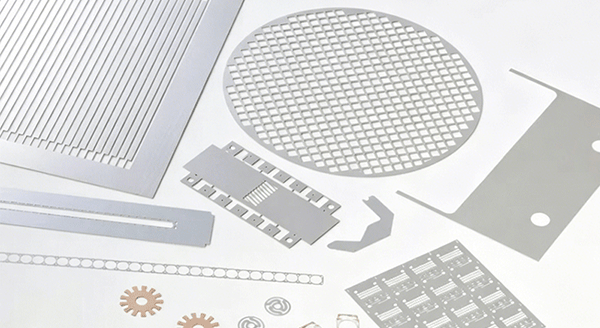
Electrochemical Etching: Working Principle, Features & Industrial Applications
Electrochemical etching, also commonly called electrolytic etching or electro chemical etching, is a hybrid precision subtractive manufacturing technology that combines electric field drive and liquid-phase chemical redox reaction to realize selective material removal on conductive metal surfaces. Different from pure chemical etching that only relies on corrosive liquid dissolution and laser etching that depends on thermal ablation, this process takes the workpiece as the anode in an electrolytic cell. Under the drive of controllable DC or AC current, metal atoms lose electrons and dissolve into electrolyte in the form of ions, so as to form preset patterns, micro grooves, depth-controlled pits and permanent marking structures on the surface.
As a room-temperature non-contact cold processing method, electrochemical etching introduces no mechanical extrusion force and minimal thermal impact on substrates. It can process high-hardness tempered steel, titanium alloy, stainless steel, copper alloy, aluminum alloy and other difficult-to-machine conductive metals that are prone to deformation and tool wear in traditional machining. With adjustable etching depth, high edge definition, low chemical consumption and environmental-friendly waste liquid treatment, electrochemical etching has become an important supplementary process of precision metal manufacturing, widely used in industrial permanent marking, micro-nano structure processing, PCB circuit production, medical part surface treatment and aerospace component precision finishing fields. It also forms a complementary relationship with photochemical etching and dry plasma etching to meet diversified precision processing demands in modern high-end manufacturing.
I. Complete Standard Workflow of Electrochemical Etching
The whole electrochemical etching process is based on the principle of anodic dissolution, with strictly standardized operation steps and closed-loop parameter control to guarantee stable etching depth and pattern fidelity in batch production.
1. Workpiece Pre-Treatment and Surface Cleaning
First of all, the metal workpiece is inspected for flatness, hardness and surface integrity. Degreasing and deoxidation treatment are carried out to thoroughly remove surface oil stains, fingerprints, oxide scale and passive films. Contaminants will hinder the uniform conduction of current on the metal surface, resulting in inconsistent etching depth, blurred pattern edges and local reaction failure. For curved, irregular 3D surfaces, targeted positioning fixtures are made to ensure the electrode can fit closely with the processing area.
2. Mask Protection and Pattern Stencil Attachment
According to the required etching graphics, two masking methods are adopted: one is to attach insulating stencils or screen printing masks on the non-processing area of the workpiece; the other is to apply photoresist for exposure and development like photo etching to form high-precision protective layers. The masked area cannot contact electrolyte and conduct current, so the electrochemical reaction is limited only to the exposed conductive part, realizing selective localized etching and accurate pattern replication.
3. Electrolyte Preparation and Equipment Assembly
Conductive electrolyte solution is prepared according to metal material characteristics. Common formulas include neutral salt solution, diluted acid electrolyte and special complexing agent mixed liquid, which can improve reaction uniformity and reduce metal ion precipitation residue. The workpiece is connected to the positive pole (anode) of the DC power supply, and the inert electrode plate is connected to the negative pole (cathode). The two electrodes are suspended in the electrolyte with a fixed gap to form a complete electrolytic circuit.
4. Parameter Setting and Controlled Electrochemical Reaction
Core parameters including voltage, current density, power-on time and electrolyte temperature are set according to target etching depth and metal hardness. After power on, the anode metal undergoes oxidation reaction and dissolves into the electrolyte in the form of metal ions, while reduction reaction occurs on the cathode to release hydrogen. The etching depth is precisely locked by controlling power-on duration: short-time energization realizes shallow surface marking, and prolonged reaction achieves deep groove micro-structure processing. For high-contrast black marking, AC power mode can be selected to obtain darker etched bottom surface.
5. Cleaning, Passivation and Post Surface Treatment
After reaching the preset etching depth, the power supply is cut off immediately, and the workpiece is taken out for multi-stage pure water rinsing to completely wash away residual electrolyte and precipitated metal particles on the surface. Passivation anti-oxidation treatment is carried out on metals such as stainless steel and aluminum alloy to prevent secondary oxidation discoloration. Optional post-processes such as light polishing, coloring and sealing can be added to enhance surface texture and wear resistance of etched patterns.
6. Inspection and Batch Quality Verification
Finished products are tested with measuring instruments for etching depth tolerance, pattern edge definition, surface flatness and no residual corrosion pits. Mass-produced parts carry out sampling tests on batch repeatability of depth and size to ensure consistent processing effect, and finally conduct anti-collision and anti-oxidation protective packaging.
II. Core Technical Features of Electrochemical Etching
1. Zero Mechanical Stress and Ultra-Low Thermal Damage
The biggest core advantage of electrochemical etching is pure cold electrolytic reaction at room temperature. No tool extrusion, impact force or high-temperature heat input acts on the workpiece, completely avoiding workpiece warping, deformation, work hardening and residual stress caused by stamping, tapping and CNC milling. Meanwhile, the heat-affected zone is nearly negligible compared with laser cutting, so the original mechanical hardness, fatigue resistance and corrosion resistance of hardened steel, titanium alloy and other high-strength materials are 100% retained, which is very suitable for fatigue-sensitive safety-critical components.
2. Precise Etching Depth Controllability
By adjusting current density and energization time, the etching depth can be accurately controlled from several micrometers to hundreds of micrometers, with depth tolerance controlled within ±0.002mm for micro shallow etching. This characteristic realizes differentiated processing requirements: ultra-shallow permanent marking for product traceability, and deep micro grooves, blind holes and step structures for functional parts. Unlike pure chemical etching which is difficult to control depth stably, the electric field closed-loop control greatly improves processing repeatability.
3. Excellent Material Compatibility for All Conductive Metals
Electrochemical etching can process all conductive metal materials, covering common engineering metals: 201/304/316L stainless steel, brass, phosphor bronze, beryllium copper, aluminum alloy, titanium alloy, nickel alloy, and high-hardness quenched steel above 60 HRC which is difficult for engraving tools. Only the electrolyte formula and electrical parameters need to be slightly adjusted for different alloys, without increasing processing difficulty and cost, breaking the bottleneck of difficult-to-machine alloy processing.
4. Clean Burr-Free Edges and Smooth Inner Surfaces
Metal is removed through uniform ionic dissolution in the electrolytic reaction, and the inner wall and edge of the etched area are smooth and flat without burrs, molten slag, sharp protrusions and tool scratches. Most parts do not need secondary deburring and polishing procedures, effectively eliminating hidden dangers such as circuit short circuit, equipment friction damage and component scratching caused by burr falling off. It meets the high cleanliness requirements of medical devices and precision electronic components.
5. Adaptability to Flat, Curved and 3D Complex Surfaces
Different from photochemical etching which is mainly limited to flat sheet metal processing, electrochemical etching can complete marking and micro etching on curved surfaces, cylindrical surfaces, inner holes and irregular 3D special-shaped workpieces by replacing flexible electrode heads and adaptive fixtures. This unique three-dimensional processing capability fills the market gap of precision etching for non-flat parts and has irreplaceable value in hardware accessories, shaft parts and complex mold surface marking.
6. Low-Cost Customization and Fast Prototyping
No expensive hard molds and cutting tools are required. Pattern modification only needs to update the stencil or photomask file, with extremely low proofing cost and short delivery cycle. Small-batch customized marking and micro-structure proofing can be completed within several hours, greatly reducing the R&D trial-and-error cost of new products. The equipment input and consumable cost are far lower than dry plasma etching equipment, with obvious economic advantages for small and medium batch orders.
7. Environmentally Friendly and Recyclable Electrolyte System
Compared with high-concentration ferric chloride etching solution used in traditional chemical etching, the electrolyte of electrochemical etching has lower corrosiveness and toxicity. After filtering out precipitated metal ions, the solution can be recycled and reused many times. The waste liquid after final treatment is easier to reach environmental discharge standards, reducing the pressure of green production compliance for manufacturing enterprises.
III. Core Functional Values of Electrochemical Etching
1. Permanent Wear-Resistant Product Marking and Traceability
The most widely applied function is permanent part marking. The etched text, serial number, QR code, LOGO and part model are embedded into the metal substrate rather than attached to the surface, which can resist long-term friction, high-temperature cleaning, solvent wiping and outdoor ultraviolet aging. It solves the problem of easy falling off of adhesive labels and laser marking fading on high-hardness metals, and realizes full-life traceability of automotive parts, aerospace components and mechanical equipment.
2. Precision Micro-Nano Functional Structure Forming
Electrochemical etching can process micro flow channels, shallow grooves, positioning steps and filter micro holes on metal surfaces with micron-level accuracy. These micro-structures are used to optimize fluid flow, heat dissipation efficiency and assembly positioning accuracy of components, providing a low-damage processing scheme for MEMS devices, microfluidic chips and precision instrument functional parts.
3. High-Reliability Component Surface Non-Destructive Machining
For finished high-hardness molds, bearing parts and medical implant components that cannot bear mechanical impact and thermal damage, electrochemical etching realizes non-destructive local material removal. It will not change the material hardness and internal stress state of finished parts, effectively avoiding the hidden danger of product performance degradation caused by secondary processing damage.
4. Agile R&D Iteration and Rapid Sample Verification
Low-cost stencil production and short processing cycle support rapid verification of multiple pattern schemes and etching depth parameters in the product development stage. It shortens the overall new product launch cycle and helps enterprises quickly respond to personalized customized market demands.
5. Total Lifecycle Manufacturing Cost Optimization
For small-batch marking, special-shaped 3D part processing and high-hardness alloy micro-machining, electrochemical etching has lower comprehensive cost than CNC machining, wire EDM and laser fine engraving. The recyclable electrolyte reduces long-term consumable expenditure, and the one-step forming reduces post-processing labor costs.
6. Decorative Surface Texture and Contrast Effect Production
By adjusting current mode and reaction time, different matte, frosted and high-contrast black bottom etching effects can be formed on metal surfaces, used for decorative pattern etching of high-end hardware, jewelry, souvenir medals and metal plaques, improving product texture and added value.
IV. Main Industrial Application Fields
1. Automotive and Mechanical Parts Traceability Marking
It is the largest application scenario, used for VIN code, part number, batch serial number and anti-counterfeiting marking on engine parts, gear shafts, brake components, mold accessories and fasteners. The permanent etching ensures clear identification during long-term vehicle operation and after-sales maintenance, meeting strict automotive quality traceability standards.
2. Medical Devices and Implant Components
Medical-grade titanium alloy and stainless steel parts adopt electrochemical etching for non-destructive marking and micro-structure processing, including surgical instrument text marking, implant device serial number coding and micro-channel structures on biosensors. Stress-free and burr-free features comply with medical biocompatibility and high sterilization frequency requirements.
3. Aerospace and High-End Precision Equipment
Applied to high-strength alloy structural parts, hydraulic valve bodies, sensor diaphragms and aviation standard parts for permanent marking and local micro-machining. The complete retention of material fatigue resistance and corrosion resistance enables components to operate stably under extreme conditions such as temperature alternation and strong vibration.
4. Electronic Industry and PCB Auxiliary Processing
Used for precision etching of PCB edge characters, conductive circuit trimming, electromagnetic shielding shell marking and micro-contact shrapnel surface micro-structure processing. Low-damage processing avoids the influence of stress and heat on electrical conductivity of thin conductive metal layers.
5. Mold, Tool and Hardened Steel Machining
For quenched high-hardness mold steel, drill bits and cutting tools, electrochemical etching carries out model marking, wear-resistant micro-texture etching and local tiny material removal, solving the problem of severe tool wear in traditional mechanical engraving of hard materials.
6. Custom Gifts, Hardware and Decorative Crafts
Custom etched portraits, LOGO and decorative patterns on stainless steel, brass and titanium alloy pendants, commemorative medals, metal nameplates and high-end door hardware. Stable etching effect and metallic texture improve the grade of personalized customized products.
Conclusion
In summary, electrochemical etching is a mature low-damage precision processing technology based on electrolytic anodic dissolution reaction. With core strengths including stress-free cold processing, controllable etching depth, adaptability to 3D curved surfaces, wide metal compatibility and low environmental impact, it makes up for the limitations of pure chemical etching, laser etching and mechanical machining in special-shaped parts and high-hardness alloy processing. It plays an irreplaceable role in permanent industrial marking, micro-nano functional structure manufacturing and non-destructive finishing of high-reliability components.
As downstream industries put forward higher requirements for non-destructive processing, product full-life traceability and green manufacturing, the market demand for electrochemical etching will continue to expand. In the future, this technology will be further optimized in terms of etching resolution, electrolyte environmental protection formula and automatic parameter intelligent control, continuously expanding its application scope in high-end precision manufacturing fields and providing more diversified processing solutions for industrial product upgrading.