
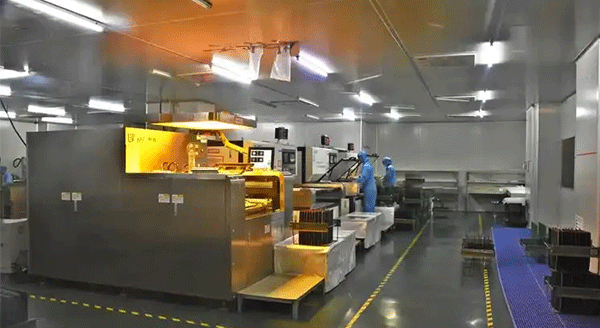
Electrochemistry Etching | Precision Anodic Dissolution Metal Processing Guide
Electrochemistry etching is a non-contact precision metal fabrication technology that realizes controlled material removal through anodic dissolution reaction driven by an external electric field. By placing the workpiece as the anode and the forming tool as the cathode in a specially formulated electrolyte solution, and applying low-voltage direct current, metal atoms on the target surface are selectively oxidized and dissolved under the directional action of the electric field, so as to accurately reproduce preset patterns, textures or microstructures. Different from chemical etching that relies on spontaneous chemical corrosion, or laser etching that relies on high-temperature thermal ablation, electrochemistry etching regulates the material removal rate with high precision through electrical parameters. The whole process is completed at room temperature, with zero residual stress, no heat-affected zone and high forming accuracy, making it an irreplaceable special processing technology in the field of high-end manufacturing.
With the continuous improvement of global industrial requirements for surface accuracy, material performance retention and green production, traditional processing methods are increasingly unable to meet the high-precision surface treatment needs of difficult-to-machine metals. Electrochemistry etching fills this gap. It not only achieves finer and more uniform surface texture processing, but also completely preserves the original mechanical and corrosion resistance properties of the base material, and has been widely used in mold manufacturing, aerospace, new energy and medical industries.
I. Core Characteristics of Electrochemistry Etching
The ion-level anodic dissolution mechanism endows electrochemistry etching with a set of inherent technical advantages unmatched by traditional mechanical and thermal processing methods. These core features directly determine the processing quality, production efficiency and long-term performance of finished parts.
1. Non-Contact Ion Removal with Zero Stress & Heat Damage
There is no physical tool contact during the entire processing. Material is removed at the ionic level through electrochemical reaction at room temperature, introducing no mechanical extrusion force, residual stress or thermal deformation. There is also no recast layer, work hardening or fatigue cracks common in mechanical cutting and laser processing, and 100% of the native mechanical and fatigue properties of the base material are retained. This is particularly critical for key parts with high fatigue performance requirements such as aerospace engines and medical implants.
2. Micron-Level Precision Depth Controllability
By adjusting current density, processing time and electrolyte concentration, the etching depth can be controlled with high precision, and the depth tolerance can be stably controlled within ±0.002mm. It supports both sub-micron shallow marking etching and tens-of-microns texture and groove processing, with depth uniformity far superior to traditional chemical etching. For scenarios requiring strict depth consistency such as micro flow channels and sealing grooves, this controllability directly guarantees the functional performance of parts.
3. Burr-Free Smooth Edges with No Surface Deterioration Layer
The anodic dissolution process removes material uniformly at the molecular level, resulting in smooth and rounded etched edges without burrs, flash or edge chipping. There is also no slag and thermal deterioration layer common in laser processing. The etched surface can directly enter subsequent procedures without secondary grinding and polishing, reducing post-processing costs and avoiding surface damage caused by secondary treatment.
4. Independent of Material Hardness and Toughness
The processing effect is only related to the electrochemical activity of the material, and is not affected by mechanical properties such as hardness and toughness. For materials with high traditional machining difficulty and high tool loss such as titanium alloy, nickel-based superalloy and cemented carbide, electrochemistry etching has significant cost and efficiency advantages, and the processing difficulty does not increase with the rise of material hardness.
5. Excellent Batch Consistency Without Tool Wear Drift
A whole batch of workpieces can be processed simultaneously in the electrolytic cell. Under the condition of stable electric field and flow field, the consistency of etching depth and texture effect of parts in the batch exceeds 99%, and there is no quality drift caused by tool wear. The automatic production line can realize continuous mass production, with efficiency much higher than laser and mechanical engraving processes that process parts one by one.
6. High Design Flexibility with No Complexity Premium
Arbitrary complex patterns, textures and microstructures can be processed through masking or CNC scanning. The processing cost and cycle of complex designs such as curves, fine textures and irregular arrays are exactly the same as those of simple graphics. There is no additional mold cost, and design modification only requires adjusting the mask file, adapting to the demand for multi-variety and small-batch customization.
7. High Environmental Friendliness with Recyclable Medium
The electrolyte formula is stable and can be recycled through filtration and component supplementation, and waste liquid discharge is much lower than that of traditional chemical etching. There is no dust, noise or harmful gas emission during processing, which meets the green production standards of high-end manufacturing and is easier to meet environmental compliance requirements.
II. Core Functions & Industrial Value
Beyond basic surface marking, electrochemistry etching delivers six core functional values, solving common pain points in traditional manufacturing and creating tangible economic benefits for downstream industries.
1. Custom Precision Surface Texturing
The most core function is to realize high-precision texture preparation on metal surfaces. It can replicate various effects such as leather grain, wire drawing grain, matte grain and geometric texture, with uniform and delicate texture and accurately controllable gloss and touch. It widely replaces traditional manual graining and chemical etching, and greatly improves texture consistency and replication accuracy.
2. Functional Surface Structure Preparation
It can process functional microstructures such as micro pits, micro flow channels, sealing grooves and heat dissipation arrays to optimize the friction, lubrication, heat dissipation and sealing properties of the part surface. For example, machining oil storage micro pits on the friction pair surface can significantly improve lubrication effect and extend part service life; machining microstructures on heat exchange parts can enhance heat exchange efficiency.
3. Precision Forming of Difficult-to-Machine Materials
It provides an efficient and low-cost precision machining solution for superalloys, titanium alloys and other difficult-to-cut materials in aerospace and energy fields. It will not cause work hardening and surface residual stress, nor will it reduce the fatigue strength and corrosion resistance of parts, and perfectly adapts to the strict requirements of high-end equipment for part performance.
4. Permanent Wear-Resistant Traceability Marking
The etched mark is integrated with the base material, which will never fall off, wear or corrode, and can withstand extreme working conditions such as high temperature, friction and chemical corrosion, far superior to printing, spraying and laser marking. It is suitable for fields requiring full life cycle traceability such as automobile, aviation and medical treatment, and meets strict quality traceability requirements.
5. Stress-Free Surface Finishing & Modification
It completes surface precision processing without changing the overall mechanical properties of the part, and will not introduce residual stress or reduce the fatigue life of the part. For key parts with extremely high fatigue performance requirements such as aero engines and medical devices, it is an ideal process that takes into account machining accuracy and structural reliability.
6. Large-Scale Efficient Cost-Reduction Production
It has high batch processing efficiency, no expensive tool consumables, and the long-term production cost is much lower than mechanical engraving and laser processing. Especially in scenarios of large-area texture processing and large-batch part etching, it can significantly shorten the production cycle and reduce the comprehensive manufacturing cost.
III. Main Industrial Application Fields
Thanks to its unique technical advantages, electrochemistry etching has been widely used in various high-end manufacturing industries.
1. Mold Manufacturing Industry
This is the core application field of electrochemistry etching. It is widely used in surface graining of injection molds, rubber molds and die-casting molds. It can accurately produce various leather grains, matte grains, geometric textures and logos with uniform texture and high replication accuracy. It is the mainstream process for surface treatment of automotive interior and consumer electronics shell molds, replacing traditional manual chemical etching and greatly improving product yield and delivery efficiency.
2. Aerospace & High-End Equipment
It is used for surface microstructure processing, mark etching and weight reduction structure preparation of titanium alloy and superalloy aviation parts. The stress-free processing feature will not damage the fatigue performance of parts, meets aviation-grade quality standards, and can be used for precision processing of key components such as engine blades, fuselage structural parts and hydraulic components.
3. Automotive & New Energy Industry
On the one hand, it is used for texture processing of automotive interior and exterior molds to achieve delicate touch and visual effects of interior parts; on the other hand, it is used for functional microstructure processing of engine parts and new energy battery bipolar plates. For example, micro flow channel etching of fuel cell metal bipolar plates, with smooth and burr-free flow channels, can significantly improve the power generation efficiency and service life of fuel cells.
4. Medical Device & Life Sciences
It is used for mark etching and surface microstructure preparation of surgical instruments, implants and medical consumables. Permanent marks can withstand repeated high-temperature and high-pressure sterilization without falling off and breeding bacteria; micro-nano structures on the surface of implants can optimize biocompatibility and promote tissue integration. The burr-free and residue-free processing characteristics fully comply with medical safety standards.
5. Electronics & Semiconductor Manufacturing
It is used for microstructure and mark processing of precision electronic components, heat dissipation devices and shielding covers. It can process fine structures on ultra-thin metal sheets without deformation, and no thermal impact will damage the electrical properties of components, adapting to the high-precision and high-cleanliness processing requirements of consumer electronics and semiconductor packaging fields.
6. High-End Hardware & Luxury Goods Industry
It is used for decorative pattern and brand logo etching of high-end bathroom hardware, watch accessories, luggage hardware and gift ornaments. The pattern is delicate and exquisite, with strong metal texture and never wears, which can significantly improve the sense of grade and added value of products, and is one of the mainstream processes for surface decoration of high-end consumer goods.
7. Energy & Environmental Protection Equipment
It is used for functional structure processing of heat exchangers, filter elements and environmental protection equipment parts. It can efficiently prepare uniform micropore and micro-groove structures, improve heat exchange and filtration efficiency, and has excellent corrosion resistance, adapting to the demand for long-term stable operation of energy and environmental protection equipment.
Conclusion
In summary, electrochemistry etching realizes precise surface processing of metals through controlled anodic dissolution reaction driven by electric field. With core advantages including stress-free non-contact processing, micron-level depth control, excellent material adaptability and green production, it solves multiple pain points of traditional processing technology, and plays an irreplaceable role in mold texturing, functional structure preparation, permanent marking and other scenarios.
With the continuous development of high-end manufacturing, the demand for high-precision surface processing and difficult-to-machine material forming will continue to grow. In the future, with the upgrading of intelligent control and pulse power supply technology, electrochemistry etching will further improve processing accuracy and efficiency, expand application scenarios, and provide stronger technical support for the innovation and upgrading of various manufacturing industries.