
Description
Argument
Products Description
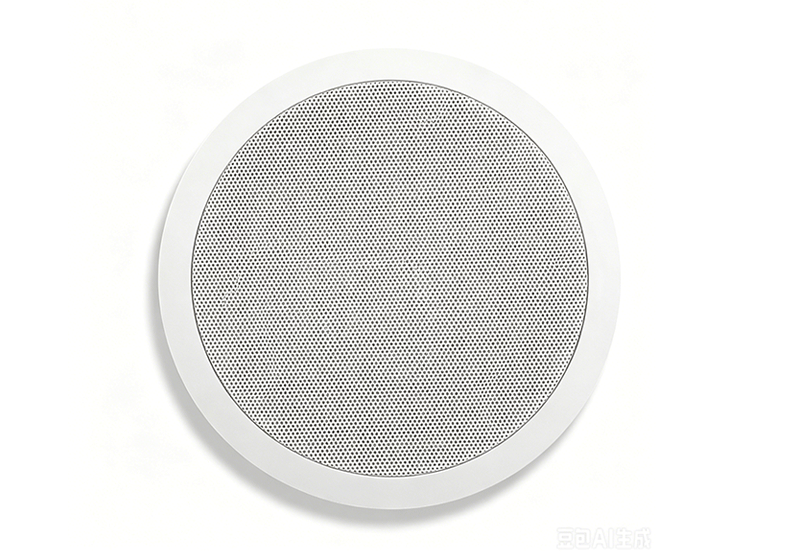
Etched Dust Filter for Bluetooth Speakers
Dust filters are critical protective and acoustic components for Bluetooth speakers, installed on the front of speaker drivers to block external dust, debris and liquid splashes while ensuring sound waves transmit smoothly. Their filtration accuracy, acoustic transparency and structural durability directly determine audio fidelity, service life and appearance grade of finished speakers. Traditional manufacturing methods such as woven wire mesh, stamping perforation and laser drilling have inherent flaws: woven mesh suffers from uneven gaps, loose wires and filament breakage; stamping produces burrs and tapered holes that accumulate dust and distort sound; laser drilling creates heat-affected zones and rough hole walls that degrade acoustic consistency. As an advanced cold subtractive process, photochemical etching has become the premium solution for high-end Bluetooth speaker dust filters. It forms highly uniform micron hole arrays on thin metal sheets with burr-free edges and stress-free structure, perfectly balancing dust protection, acoustic performance and appearance design demands of modern Bluetooth speakers.
Key Product Characteristics of Etched Bluetooth Speaker Dust Filters
The photochemical etching process grants speaker dust filters unique performance advantages unreachable by conventional processes, covering acoustic accuracy, surface quality, structural stability and design flexibility. All specifications can be precisely tuned via etching parameters to meet consumer electronic quality standards and acoustic tuning requirements.
1. Uniform Micron Apertures & Optimized Acoustic Transparency
Precision etching delivers stable dimensional tolerance of ±0.005mm to ±0.01mm, with open area ratio controllable between 50% and 70% to match different acoustic tuning schemes. All holes across the entire filter share highly consistent size and spacing, with deviation controlled within 5 microns. By contrast, woven mesh has random gap sizes due to wire interlacing, leading to uneven sound resistance and partial acoustic diffraction; stamped holes form tapered bell-mouth structures that cause sound reflection and frequency response distortion.
Etched filters can be designed with gradient hole layouts and acoustic-optimized arrangements calculated via acoustic simulation, minimizing sound wave attenuation and diffraction. The smooth vertical hole walls reduce high-frequency scattering, ensuring transparent treble, full midrange and tight bass, and preserving original sound quality to the maximum extent. This level of acoustic control is essential for premium Bluetooth speakers pursuing HiFi-level sound performance.
2. Burr-Free Smooth Edges & Anti-Clogging Surface
Stamping and laser drilling inevitably produce burrs, flanging and molten slag at hole edges. These sharp protrusions trap dust, hair and oil stains, causing gradual clogging that deteriorates sound quality and creates breeding grounds for bacteria. Tiny burrs may also fall off and enter the speaker cavity, causing abnormal vibration and noise of the diaphragm.
Etching removes metal through uniform chemical dissolution, forming smooth, vertical, rounded edges completely free of burrs, sharp corners and loose debris. The smooth hole walls and flat surface greatly reduce dust and grease adhesion; daily cleaning only requires simple wiping with a cloth, and deep clogging is not easy to occur even after long-term use in dusty environments. This feature significantly extends the effective service life of the speaker and maintains stable acoustic performance for a long time.
3. Stress-Free Ultra-Thin Structure & Seamless Assembly
Etching is a room-temperature cold processing technology that introduces no mechanical extrusion force or high-temperature thermal impact, and generates no residual internal stress or lattice deformation. The finished filter maintains excellent flatness within ≤0.01mm, with no warping, curling or arching deformation. It fits tightly with the speaker housing and sealing structure without side gaps that would let dust leak in.
Supporting substrate thickness from 0.05mm to 0.3mm, etched ultra-thin dust filters adapt to the lightweight and thin design trend of Bluetooth speakers, saving valuable internal space. Compared with stamped filters that easily deform and woven meshes with uneven surfaces, etched filters achieve higher assembly consistency, which helps improve the waterproof and dustproof grade of the whole machine.
4. Broad Material Compatibility & Weather Resistance
The etching process is compatible with 304/316L stainless steel, aluminum alloy, nickel alloy and other common speaker filter materials. Custom etchant formulas are configured for different materials to fully retain the original corrosion resistance, weather resistance and mechanical properties of the substrate.
304 stainless steel filters are suitable for indoor and daily portable speakers with good cost performance; 316L stainless steel filters offer stronger salt spray corrosion resistance and sweat resistance, ideal for outdoor sports and waterproof Bluetooth speakers; aluminum alloy filters are lighter in weight, suitable for ultra-light wearable audio products. All materials can withstand long-term operation in the temperature range of -40℃ to 120℃, adapting to complex vehicle-mounted and outdoor temperature environments.
5. High Design Flexibility & Integrated Branding
Etching imposes no restrictions on graphic complexity. The outer contour of the filter, mounting positioning holes, snap-fit structures, reinforcing ribs, brand LOGO and decorative textures can all be integrally formed in a single etching pass without secondary laser marking or CNC machining.
Round, square, racetrack-shaped, special-shaped and curved adaptive filters can be customized to match various industrial design schemes. Design modifications such as aperture adjustment, hole layout optimization and shape change only require adjusting the digital photomask, with prototype delivery within 24–48 hours, greatly shortening the product R&D cycle and helping brands quickly launch differentiated products.
6. High Batch Consistency & Stable Mass Production
Etching production relies on digital photomask imaging and uniform chemical reaction, ensuring that every filter on the same sheet has identical dimensions, hole patterns and performance. Automated closed-loop production lines achieve stable quality across millions of pieces in mass production, with aperture deviation always controlled within the design range.
Compared with stamping, which suffers from gradual tool wear and quality drift in long-term mass production, etching maintains consistent accuracy from the first part to the millionth part, with a yield rate stable above 98.5%. It is highly suitable for large-scale supply demands of consumer electronics brands and reduces quality fluctuation risks in mass production.
Tags: custom speaker dust screen etched dust filter for bluetooth speaker micro-hole speaker dust screen photo etched speaker filter portable speaker dust filter speaker dust mesh etching stainless steel speaker grille water resistant speaker mesh