
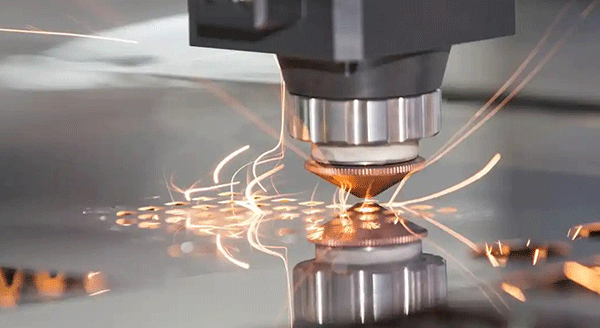
OEM Laser Cutting Service: Custom Precision Metal Fabrication for Industrial Supply Chains
OEM laser cutting service refers to a professional contract manufacturing solution that delivers custom laser-cut metal parts according to client-provided drawings, specification requirements and quality standards, serving original equipment manufacturers, brand owners and system integrators. Different from standard laser cutting workshops that focus on sporadic individual orders, OEM-oriented laser cutting services are built around long-term supply chain cooperation, with standardized process control, complete quality traceability and scalable production capacity to match the mass production and quality system requirements of industrial clients.
Against the backdrop of deepening specialization in global manufacturing, more and more equipment brands and OEMs choose to outsource non-core laser cutting processes to professional service providers, concentrating internal resources on product R&D, system assembly and market expansion. A reliable OEM laser cutting service partner can not only guarantee stable part quality and on-time delivery, but also help clients reduce fixed asset investment, optimize total production costs and improve the agility of the entire supply chain.
I. Core Characteristics of OEM Laser Cutting Service
OEM laser cutting services are designed around long-term industrial cooperation, with a set of service attributes different from ordinary sporadic processing, which directly determine supply chain stability and cooperation value.
1. Fully Customizable Specification & Standard Alignment
OEM laser cutting services are fully aligned with the client’s design documents and quality system requirements. All processing parameters, tolerance grades, material grades and acceptance criteria are formulated according to the client’s BOM and quality specifications, rather than applying a unified universal standard. Whether it is special tolerance requirements, designated material brands or specific surface treatment rules, the service can be customized to match the client’s product standards, ensuring 100% compatibility with the client’s subsequent assembly and application scenarios.
2. Scalable Production Capacity for Volatile Demand
Professional OEM laser cutting service providers are equipped with multi-station automated production lines and intelligent scheduling systems, which can flexibly adjust production capacity according to the client’s order fluctuations. From single-digit prototype verification to tens of thousands of pieces per month for mass production, the service can respond quickly without the client needing to invest in additional equipment, labor or site resources. This scalability effectively helps clients cope with seasonal order peaks and troughs, reduces idle capacity costs and order delivery risks, and improves the operational flexibility of the entire supply chain.
3. Stable Batch Consistency & Full Process Traceability
To meet the strict quality requirements of industrial mass production, OEM laser cutting lines adopt fully closed-loop CNC control and automated loading and unloading systems, ensuring that the dimensional accuracy and edge quality of each part remain highly consistent from the first piece to the ten-thousandth piece. The whole production process is equipped with complete quality records and batch number management, which can trace the raw material batch, processing parameters, inspection results and delivery time of each batch of parts, fully meeting the traceability requirements of industries such as automobiles and medical treatment for product quality.
4. Integrated Secondary Process & One-Stop Delivery
In addition to core laser cutting, OEM laser cutting services usually integrate a full range of secondary processes such as bending, welding, tapping, grinding, surface spraying and passivation. Clients can get finished parts that meet the final assembly requirements through a single order, without coordinating multiple suppliers for split processing. This one-stop delivery mode reduces the logistics cost and quality risk caused by cross-supplier transfer, simplifies the client’s supplier management work, and shortens the total order fulfillment cycle.
5. Strict Quality Control System & Industry Certification Compliance
Formal OEM laser cutting service providers have established a complete quality management system and passed corresponding industry certification audits. From incoming material inspection, first-piece inspection in production to finished product delivery inspection, each link has clear operating specifications and quality standards. For clients in special industries such as automobiles, medical treatment and aerospace, the service can provide corresponding compliance documents and test reports to help clients smoothly pass industry quality audits and product certification.
6. Confidentiality Protection for Design & Intellectual Property
OEM cooperation involves a large number of client design drawings, product solutions and process parameters. Professional service providers will sign strict confidentiality agreements with clients, set up authority management for design documents, and ensure that client’s intellectual property and product information are not disclosed to third parties. They will not use the client’s design solutions for other customers or promote them as public cases, fully protecting the competitive advantage of the client’s products.
7. Wide Material & Thickness Compatibility
OEM laser cutting services cover almost all common engineering metal materials, including carbon steel, stainless steel, aluminum alloy, copper alloy, galvanized steel and titanium alloy, with applicable thickness ranging from 0.1mm ultra-thin foil to 20–30mm thick structural plates. Different power laser equipment and process parameters are configured for materials of different thicknesses and properties to ensure stable cutting quality and processing efficiency, and meet the diversified material needs of customers in different industries.
II. Core Functions & Industrial Value
As an important part of the modern manufacturing supply chain, OEM laser cutting services deliver six core values for downstream industrial clients, solving common pain points in self-built production and multi-supplier management.
1. Reduce Fixed Asset Investment & Focus on Core Business
Outsourcing laser cutting processes eliminates the need for clients to purchase expensive laser equipment, build production sites and hire professional operation and maintenance teams. This greatly reduces fixed asset investment and daily operation and management costs, allowing enterprises to concentrate capital and human resources on core links such as technology research and development, brand operation and market expansion, so as to improve their core competitiveness.
2. Smooth Order Fluctuation & Reduce Operational Risk
The demand for parts of many enterprises shows obvious seasonal or project-based fluctuation characteristics. If they build their own cutting production lines, they will face the pressure of idle capacity in the off-season and insufficient capacity in the peak season. OEM laser cutting services can flexibly undertake orders of different scales, helping enterprises balance capacity demand, reduce the operational risks caused by demand fluctuations, and avoid the waste of resources caused by self-built production lines.
3. Guarantee Stable Mass Production Quality & Reduce Defect Rate
Professional laser cutting service providers have long-term accumulated process experience and a perfect quality control system, and the stability of mass production quality is often higher than that of self-built production lines of non-professional manufacturers. Stable batch consistency can reduce the scrap rate and rework rate in the production process, reduce the after-sales maintenance cost caused by part quality problems, and effectively improve the overall yield of finished products.
4. Shorten Product R&D Cycle & Accelerate Time-to-Market
For new product development projects, OEM laser cutting service providers can quickly deliver prototype samples with the support of mature process libraries and rapid response mechanisms, helping engineering teams verify design schemes faster. After the prototype is verified, the production line can be quickly switched to mass production mode, realizing seamless connection from R&D to mass production, greatly shortening the product development cycle and helping enterprises seize market opportunities faster.
5. Meet Industry Compliance Requirements & Lower Certification Threshold
Industries such as automobiles, medical treatment and aerospace have very strict requirements for the quality system of parts suppliers. If enterprises build their own production lines, they need to invest a lot of resources to build a quality system that meets industry standards and pass relevant certification audits. Professional OEM service providers already have complete industry qualifications and certification systems, and customers can directly use the supplier’s qualification system to meet industry compliance requirements, reducing the cost and threshold of certification.
6. Optimize Total Manufacturing Cost & Improve Profit Margin
Through large-scale raw material centralized procurement, high equipment utilization efficiency and lean production management, professional OEM laser cutting services can provide more competitive unit prices than self-built production lines under the same quality standard. At the same time, it saves management costs, equipment depreciation costs and labor costs, comprehensively reduces the total manufacturing cost of parts, and helps improve the profit margin of end products.
III. Main Industrial Application Fields
Thanks to its professional service capability and stable supply chain value, OEM laser cutting service has been widely adopted in almost all industrial manufacturing sectors.
1. Automotive & New Energy Mobility
The automotive industry is one of the core application fields of OEM laser cutting services. Service providers supply various laser-cut parts to automobile OEMs and tier-1 suppliers, including body structural brackets, chassis accessories, interior trim parts, new energy battery tray components and sensor housings. The products meet strict automotive quality standards and full batch traceability requirements, and stably support the large-scale mass production rhythm of automobile manufacturing.
2. Electronics & Electrical Manufacturing
In the electronics and electrical industry, OEM laser cutting services produce chassis cabinets, equipment housings, heat sinks, electromagnetic shielding covers and connector parts for electrical brands and communication equipment manufacturers. High-precision cutting ensures good assembly fit, and burr-free edges avoid the risk of short circuits, meeting the high requirements of the electronics industry for dimensional accuracy and electrical safety.
3. Medical Device & Healthcare Equipment
Medical device manufacturers entrust OEM laser cutting services to process surgical instrument blanks, equipment housing parts, medical filter components and medical cart structural parts. The processing process strictly follows medical-grade quality management requirements, with smooth burr-free edges that are easy to clean and sterilize, and complete batch traceability records, complying with strict medical safety and hygiene standards.
4. Industrial Automation & General Machinery
Industrial automation equipment manufacturers and general machinery factories outsource laser cutting of equipment frames, mounting panels, precision shims, sensor brackets and protective covers to professional service providers. Stable dimensional accuracy ensures the assembly accuracy and operation stability of the equipment, and flexible capacity matching adapts to the project-based order characteristics of the automation equipment industry.
5. Aerospace & Aviation Engineering
Aerospace equipment manufacturers cooperate with OEM laser cutting service providers with aviation-level qualification to produce lightweight structural brackets, duct parts, filter elements and precision shims. The processing process strictly controls the thermal impact on materials, retains the original mechanical properties of high-performance alloys to the greatest extent, and meets the extreme reliability requirements of aerospace products.
6. HVAC & Refrigeration Equipment
HVAC and refrigeration equipment brands use OEM laser cutting services to produce air duct components, heat dissipation fins, unit housings and installation accessories. Batch stable quality and efficient delivery capacity match the mass production demand of HVAC equipment, and diversified material adaptation meets the processing needs of different specifications of products.
7. Commercial Kitchen & Food Processing Equipment
Food equipment manufacturers customize stainless steel cavity parts, filter screens, conveyor chain plates and equipment brackets through OEM laser cutting services. Food-grade raw materials are used, with smooth and burr-free edges that are easy to clean and disinfect, meeting international food contact safety standards and adapting to the hygienic requirements of food processing scenarios.
Conclusion
In summary, OEM laser cutting service is a typical product of deepening division of labor in the manufacturing industry. It provides industrial clients with customized, scalable and high-stability precision metal cutting solutions with professional process capabilities, perfect quality management system and flexible production scheduling capacity. It not only helps enterprises reduce fixed investment and operational risks, but also effectively improves product quality and supply chain efficiency, and has become an important part of the modern industrial supply chain.
With the continuous development of global manufacturing toward specialization and lean production, the market demand for professional OEM laser cutting services will continue to grow. In the future, with the support of intelligent production and digital management technology, OEM laser cutting services will further improve production efficiency, quality stability and supply chain synergy, and provide more reliable support for the innovation and development of various manufacturing industries.