Photo Etching Metal Parts: Precision Burr-Free Components for Industrial Applications
Photo etching metal parts, also known as photochemically etched metal components, are precision-manufactured metal parts produced through a non-contact cold subtractive process that combines photolithographic pattern transfer with controlled chemical dissolution. The process transfers digital CAD designs onto metal sheets via UV-sensitive photoresist and high-precision photomasks, then selectively removes unprotected metal areas with temperature-regulated etchant solutions at room temperature, producing finished parts with micron-level accuracy and intricate feature details. Unlike stamped, laser-cut or CNC-machined parts that are shaped by mechanical force or thermal energy, photo-etched metal parts are formed at the molecular level, resulting in zero residual stress, zero burrs and complete retention of the base material’s native mechanical, chemical and electrical properties.
As global industrial products continue to evolve toward miniaturization, higher functional density and stricter reliability requirements, traditional metal fabrication methods increasingly fall short of demand for complex, high-precision thin-sheet components. Photo etching metal parts fill this critical gap by delivering exceptional precision, design flexibility and cost efficiency for medium- to high-volume production. Today, photo-etched components serve as foundational parts across a wide range of high-tech sectors, enabling product designs that would be technically impractical or economically unfeasible with older manufacturing methods.
I. Core Characteristics of Photo Etched Metal Parts
The room-temperature chemical forming mechanism gives photo-etched metal parts a unique set of inherent advantages over parts produced by traditional fabrication methods. These characteristics directly determine component performance, long-term reliability and total cost of ownership over the product lifecycle.
1. Burr-Free Stress-Free Cold Forming & Full Material Property Retention
Photo etched metal parts are produced through pure cold processing with no mechanical extrusion, punching impact or high-temperature thermal load applied to the substrate. Material is removed by uniform molecular-level dissolution rather than mechanical shearing or thermal melting, resulting in perfectly smooth, vertically rounded edges completely free of burrs, flanging, tool marks and sharp protrusions. No residual internal stress, lattice deformation or heat-affected zone is introduced into the workpiece, preserving 100% of the base metal’s native mechanical strength, corrosion resistance, elasticity and electrical conductivity.
By comparison, stamped parts typically carry significant residual stresses that gradually release during temperature cycling and long-term service, causing dimensional drift and fatigue fracture. Laser-cut parts develop a distinct heat-affected zone that degrades corrosion resistance and alters elastic properties. The stress-free, burr-free nature of photo etching eliminates all these defects, making photo-etched parts indispensable for high-reliability and high-cleanliness application scenarios.
2. Micron-Level Dimensional Accuracy & Uniform Feature Consistency
Photo etching achieves stable dimensional tolerances of ±0.005mm to ±0.01mm for standard production, with a minimum machinable line width of 0.02mm. The minimum through-hole diameter is approximately 1.1 times the material thickness per mature process standards. Since all features across the entire production sheet form simultaneously through uniform chemical reaction, there is no cumulative positioning error, and dimensional consistency across the full sheet exceeds 99.5%.
Unlike laser cutting, which processes features one by one with accumulated positioning deviation, or stamping, which suffers from die wear and springback error, photo etching delivers uniform accuracy across every part on every sheet. This level of precision is essential for high-density components such as encoder gratings, micro-filter arrays and fine-pitch connectors where consistent dimensions directly determine functional performance.
3. Zero Complexity Premium & Unlimited Design Freedom
There is no cost penalty for geometric complexity in photo etched metal parts. Intricate curves, multi-track composite patterns, dense micro-hole arrays, fine spring fingers and irregular custom contours all form in a single process step at the same unit cost as simple basic shapes. Every feature etches simultaneously in one pass, so design complexity does not increase cycle time, labor cost or material waste.
This gives product engineers complete freedom to optimize part performance based on functional requirements, without being constrained by manufacturing limitations. Designs optimized through optical simulation, fluid dynamics simulation or mechanical finite element analysis can be reproduced 1:1 with high fidelity, enabling higher-performance part designs that were previously impossible or prohibitively expensive to manufacture.
4. Broad Metal Material & Alloy Compatibility
Photo etching is compatible with virtually all common engineering metals and high-performance alloys. Commonly processed materials include 304/316L stainless steel, beryllium copper, phosphor bronze, pure copper, titanium alloy, nickel alloy, Invar, Hastelloy, Monel and aluminum alloy. Dedicated etchant formulations and process parameters are optimized for each material to ensure uniform etch rate and high surface quality, while fully retaining the native properties of each grade.
Notably, highly reflective materials such as copper and aluminum that are challenging for laser cutting are processed reliably with no energy loss or back-reflection damage. Hard, brittle alloys that are prone to cracking during stamping also form cleanly without mechanical damage. Customers can select the optimal material for functional requirements without being constrained by manufacturing process limitations.
5. Precision Half-Etching for Integrated 3D Features
Beyond full through-etching for complete part separation, photo etching supports highly accurate half-etching (partial depth etching) for three-dimensional surface features. By precisely controlling etching time, accurate partial-depth recesses can be created on the sheet surface without penetrating the material, with depth tolerance controlled within ±0.005mm.
This enables integrated formation of 3D features such as bending positioning grooves, sealing grooves, reinforcing ribs, brand logos and step structures in a single process. Half-etching is a unique advantage of photo etching that cannot be easily achieved by stamping or laser processes. It eliminates secondary machining operations, improves assembly alignment accuracy and enables integrated functional design that reduces overall part count and assembly complexity.
6. Superior Batch-to-Batch Consistency & Stable Yield
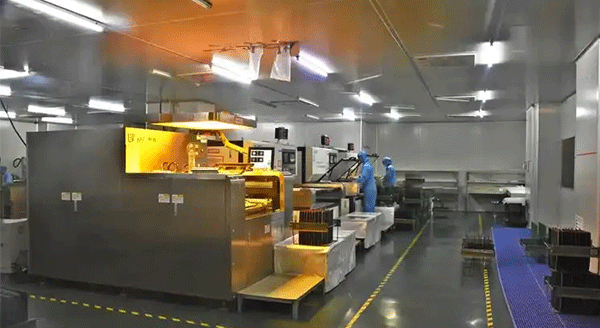
Photo etching production runs on automated closed-loop systems that maintain precise, constant control over etchant concentration, temperature, spray pressure and conveyor speed. Every part across the entire sheet etches at the same rate, delivering highly uniform dimensions and surface quality. Dimensional uniformity across the full production sheet exceeds 99.5%, and comprehensive yield remains stable above 98.5%.
Unlike CNC and stamping, which suffer from gradual tool wear and quality drift over long production runs, photo etching maintains completely consistent accuracy from the very first part to the millionth part. There is no tool wear or recurring maintenance cost, and long-term batch-to-batch repeatability meets the strict quality traceability requirements of automotive, medical and aerospace customers.
7. Low-Cost Rapid Tooling & Agile Prototyping
Unlike stamping which requires expensive hardened steel dies with a production cycle of tens of days, photo etching uses digital photomask films as tooling. The production cost of a single photomask is less than 1/50 of a typical stamping die, and the production cycle is only a few hours. Design modifications only require updating the electronic drawing file and plotting a new mask, with no additional mold modification costs.
Prototype samples can be delivered within 24–48 hours after drawing confirmation, greatly shortening product R&D cycles and reducing trial-and-error costs. The process supports order quantities from single-digit prototype samples to millions of mass-produced parts, with no minimum order threshold, making it ideal for today’s multi-variety, small-batch customized manufacturing model.
II. Core Functions & Industrial Value of Photo Etched Metal Parts
Beyond basic metal shaping, photo-etched components deliver six core functional values that solve long-standing pain points in precision manufacturing and create tangible economic benefits for downstream industries.
1. Precision Filtration & Controlled Fluid Regulation
The most widely applied function of photo-etched metal parts is precision filtration and flow control. Uniformly sized micron apertures deliver accurate particle interception and stable flow resistance across the entire filter surface. Smooth, burr-free hole walls prevent clogging and maintain consistent flow rates over long service lives, avoiding the gradual resistance increase common with punched or laser-cut filters.
This function is indispensable in beverage processing, hydraulic systems, medical infusion equipment and water treatment systems, where reliable filtration and stable fluid performance directly affect product quality and equipment safety.
2. Reliable Elastic Contact & Stable Electrical Interconnection
Photo-etched spring contacts and connector springs provide reliable electrical connection and consistent elastic preload. The stress-free forming process preserves the full elastic properties of the base material, delivering stable contact force and extended fatigue life. They maintain consistent contact resistance through millions of insertion cycles, avoiding signal interruption caused by poor contact.
These components are widely used in automotive connectors, industrial control equipment, consumer electronics and household appliance circuits, serving as critical connection points that ensure stable electrical performance over long product service lives.
3. Motion Sensing & High-Precision Signal Feedback
Photo-etched encoder discs, grating scales and sensing elements serve as the core detection components in motion control systems, enabling high-precision measurement of rotational position, linear displacement and speed. The stress-free structure ensures stable signal output with zero drift during long-term operation, improving the control accuracy and repeatability of automated equipment.
They are foundational components in servo motors, CNC machine tools, industrial robots and precision measuring instruments, directly determining the positioning accuracy and operational stability of the entire system.
4. Precision Shimming & Accurate Positioning Reference
Photo-etched metal shims and spacers provide precise gap filling and positioning reference for mechanical assembly. Micron-level thickness accuracy and flat, stress-free structure enable tight control of assembly gaps, compensate for manufacturing tolerances of mating parts, and improve overall assembly accuracy and operational stability.
They are widely used in mold manufacturing, industrial automation and precision instrumentation to ensure repeatable positioning accuracy and long-term service life of equipment.
5. Lightweight Integrated Structure & Part Consolidation
Photo etching enables integration of multiple functional features — including filter holes, elastic beams, mounting holes and positioning notches — onto a single thin metal sheet in one processing step. This eliminates the need to assemble multiple separate components, reduces overall product volume and weight, improves structural reliability and lowers total system cost.
For miniaturized devices such as medical implants and wearable electronics, integrated design can reduce component size by more than 30% while increasing functional density and assembly accuracy.
6. High Cleanliness & Hygienic Compliance
Photo-etched metal parts have smooth, burr-free surfaces with no hidden crevices or loose debris, making them easy to clean and sterilize. They meet electronic-grade and medical-grade cleanliness requirements, and can withstand repeated high-temperature autoclave sterilization without harboring bacteria or shedding particles.
This makes them suitable for the most sensitive applications including medical implants, semiconductor processing equipment and food contact components, where cleanliness and hygiene are non-negotiable requirements.
III. Key Industrial Application Fields
Thanks to their unique combination of precision, flexibility and material compatibility, photo-etched metal parts serve a growing range of high-tech and industrial sectors.
1. Electronics & Semiconductor Packaging
This is the largest and most mature application field for photo-etched metal parts. Common components include semiconductor lead frames, EMI shielding cans, heat pipe and vapor chamber wick structures, connector spring contacts and ceramic package lids. The process’s micron-level precision, burr-free quality and stress-free structure perfectly support the ongoing trend toward smaller, denser and more reliable electronic components.
2. Medical Devices & Life Sciences
Medical-grade photo-etched components include surgical instrument parts, implantable electrodes, infusion filter meshes, biosensor chips and orthodontic brackets. Burr-free surfaces, biocompatibility and resistance to autoclave sterilization comply with strict medical safety standards. The technology supports advanced medical applications from minimally invasive surgical instruments to in-vitro diagnostic devices.
3. Food & Beverage Processing Equipment
Food-grade photo-etched parts include coffee filter meshes, beer brewing screens, beverage filling orifice plates and food machinery accessories. They meet international food contact safety standards, with accurate filtration performance and easy-clean surfaces that ensure consistent product taste, quality and hygienic safety. They are core components of high-end coffee machines, commercial brewing equipment and automated filling lines.
4. Automotive & New Energy Mobility
In the automotive sector, photo etching produces transmission filter screens, sensor shims, connector springs, encoder discs and battery system components for new energy vehicles. High batch consistency, corrosion resistance and long-term durability satisfy strict automotive quality requirements, and the technology is growing rapidly alongside the global expansion of electric and fuel cell vehicles.
5. Industrial Automation & Motion Control
Photo-etched encoder discs, precision shims, flat springs and hydraulic filter screens are foundational components in servo motors, CNC machine tools, industrial robots and automated production lines. They deliver the stable, high-accuracy position feedback and reliable fluid control required for modern smart manufacturing, ensuring consistent production quality and equipment uptime.
6. Aerospace & Defense Aviation
Aerospace customers use photo-etched precision shims, hydraulic filter screens, sensor components and elastic contacts in aircraft, satellites and missile systems. Full material property retention, stress-free stability and high fatigue reliability meet the extreme reliability demands of aerospace applications, where parts must withstand wide temperature ranges, intense vibration and corrosive environments over decades of service.
7. Consumer Electronics & Wearable Devices
Smartphones, wireless earbuds, camera modules and wearable devices incorporate large numbers of photo-etched parts: speaker dust meshes, VCM camera springs, SIM contact springs, button domes and decorative trim. Ultra-thin forming capability, complex pattern freedom and high-volume consistency match the consumer electronics industry’s requirements for slim design, rapid product iteration and stable mass supply.
Conclusion
Photo etching metal parts represent a high-precision manufacturing solution that combines photolithographic pattern accuracy with uniform chemical material removal, delivering burr-free, stress-free, micron-accurate metal components without mechanical force or thermal damage. Their unique advantages in design freedom, batch consistency, cost efficiency and material compatibility make them a key enabling technology for modern precision manufacturing.
As global manufacturing continues to advance toward higher precision, miniaturization and faster innovation, photo-etched metal parts will grow in importance across nearly every high-tech industry. Looking ahead, the technology will continue evolving toward higher resolution, wider material compatibility and more intelligent production, further expanding its application scope and providing stronger technical support for the innovation and upgrading of various high-end manufacturing industries.