
Precision Laser Cutting Services: Custom Metal Fabrication, Tolerances & Industrial Applications
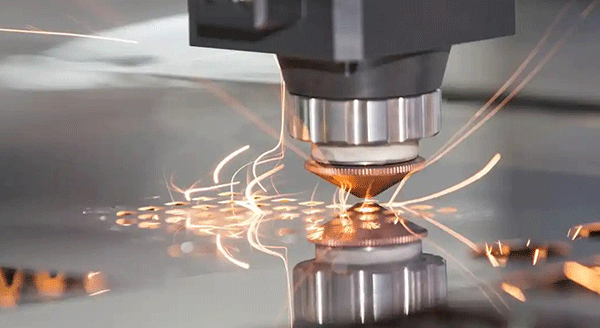
Precision laser cutting services represent a mainstream advanced metal fabrication solution that utilizes focused high-power laser beams to melt, vaporize or ablate workpiece materials, achieving accurate contour separation and pattern forming. As a non-contact thermal processing technology, it eliminates the physical force and tool wear inherent in mechanical stamping and CNC milling, delivering outstanding flexibility, accuracy and efficiency for custom sheet metal and structural component manufacturing. From single-piece prototype development to large-volume mass production, laser cutting services have become an indispensable core process in modern manufacturing, supporting product innovation and cost optimization across a wide range of industrial sectors.
Driven by the ongoing advancement of fiber laser technology and automated production systems, precision laser cutting has evolved from a supplementary profiling process into a full-spectrum fabrication solution. It supports material thicknesses from ultra-thin foils to heavy structural plates, handles simple straight cuts as well as complex irregular contours, and provides consistent quality across both small custom batches and large production runs. For engineering and procurement teams, partnering with professional laser cutting services enables access to high-precision fabrication capability without heavy upfront investment in equipment and operation teams, greatly improving production flexibility and reducing total manufacturing cost.
I. Core Characteristics of Precision Laser Cutting Services
The non-contact optical processing mechanism gives laser cutting services a unique set of technical attributes that distinguish them from traditional mechanical fabrication methods. These inherent characteristics directly determine processing accuracy, production efficiency, material adaptability and overall cost performance.
1. Tight Dimensional Tolerance & High Positioning Accuracy
Professional precision laser cutting services deliver stable cutting tolerances of ±0.03mm to ±0.05mm for thin and medium-thickness metal sheets, with repeat positioning accuracy controlled within ±0.02mm. High-end precision systems can achieve tolerance levels down to ±0.01mm for thin materials, meeting the accuracy requirements of most industrial precision components. Guided by digital CNC systems, the laser beam follows programmed paths with minimal deviation, ensuring consistent feature positions and contour dimensions across every workpiece.
Unlike stamping which suffers from springback error and die wear drift, or manual cutting which has large human-induced deviation, laser cutting maintains highly consistent accuracy across every production run. This level of precision is sufficient for the vast majority of industrial structural parts, mounting brackets and functional components, eliminating the need for secondary finishing for most applications.
2. Non-Contact Processing & Minimal Material Deformation
Laser cutting is a pure non-contact fabrication process: the focused laser beam interacts with the material surface without any physical tool pressing or mechanical extrusion. There is no clamping stress, no shearing force and no tool impact on the workpiece, so even ultra-thin foils as thin as 0.1mm can be processed with minimal deformation and warpage. Auxiliary gas blowing removes molten material in real time, reducing heat accumulation and further controlling thermal deformation.
For thin-walled parts, appearance panels and precision components that are sensitive to mechanical stress, laser cutting avoids the deformation and surface damage common in stamping and shearing processes. It preserves the flatness and surface quality of raw materials to the maximum extent, reducing scrap rates and improving final product yield.
3. Wide Material & Thickness Compatibility
Precision laser cutting services cover almost all common engineering metal materials, including carbon steel, stainless steel, aluminum alloy, copper alloy, galvanized steel and titanium alloy. With appropriate laser power and process parameters, they can handle material thicknesses from 0.1mm ultra-thin foil up to 20–30mm thick structural plates, adapting to both lightweight thin-plate parts and heavy load-bearing components.
Different power configurations match different thickness ranges: low and medium power systems are optimized for high-speed fine cutting of thin and medium plates, while high-power systems handle thick plate cutting with stable quality. This wide adaptability allows one service facility to serve diverse customer needs across multiple industries, avoiding the process limitations of single-purpose fabrication equipment.
4. Zero Tooling Wear & Stable Batch Consistency
Since there is no physical cutting tool in contact with the workpiece, there is no tool wear, edge chipping or dimensional drift during long-term production. The same digital cutting program produces identical results for the first part and the ten-thousandth part, with no gradual quality degradation caused by tool consumption.
Automated loading and unloading systems further improve production consistency, reducing manual operation errors. For medium and large batch orders, laser cutting services deliver highly stable dimensional uniformity and edge quality across the entire batch, meeting the strict consistency requirements of automotive, electronics and industrial equipment manufacturing.
5. Unlimited Geometry Flexibility & No Tooling Cost
There is no dedicated hard tooling required for laser cutting. Processing starts immediately after importing digital CAD files, with no mold design, manufacturing and debugging costs. Any contour shape, irregular curves, special-shaped holes and complex hollow patterns can be cut as long as they can be drawn in CAD, and pattern complexity does not significantly increase processing cost.
Design modifications only require updating the digital cutting file, with no mold rework cost or long lead time. This makes laser cutting services extremely suitable for multi-variety, small-batch customized production and new product development, allowing engineering teams to iterate designs quickly at very low trial cost.
6. Smooth Cut Edges & Reduced Post-Processing
With optimized process parameters and auxiliary gas selection, precision laser cutting produces clean, smooth cut sections with minimal dross and burrs. For thin and medium-thickness plates, the cut edge roughness can reach Ra 1.6–3.2μm, meeting most industrial assembly requirements without secondary deburring or polishing. Nitrogen-assisted cutting delivers oxide-free bright cut edges suitable for appearance parts and direct welding.
Reduced post-processing not only lowers secondary operation costs, but also avoids dimensional damage and surface scratches caused by deburring and grinding. It shortens the overall production cycle and improves final part surface quality, which is particularly valuable for appearance-sensitive decorative parts and assembly-critical structural parts.
7. Fast Setup & Rapid Prototyping Turnaround
Laser cutting lines have very short setup times between different orders. Switching between different part designs only requires loading a new CNC program, with no lengthy mold changeover or fixture adjustment. Prototype samples can usually be produced within 24–48 hours after drawing confirmation, enabling extremely fast product development cycles.
For urgent orders and small-batch trial production, laser cutting services provide much faster delivery than stamping and other tooling-dependent processes. They help customers shorten R&D cycles, seize market opportunities faster and reduce the risk and cost of new product introduction.
II. Core Functions & Industrial Value of Precision Laser Cutting Services
Beyond basic metal profile cutting, professional laser cutting services deliver six core functional values that solve common pain points in manufacturing and create tangible economic benefits for downstream customers.
1. Custom Contour Cutting & Rapid Prototype Fabrication
The most fundamental function of precision laser cutting services is to produce custom-shaped metal blanks according to customer CAD drawings. They support arbitrary contour design and deliver finished cut parts directly, serving as the core fabrication method for prototype development and customized equipment manufacturing. For new product R&D projects, rapid laser prototyping allows design teams to verify fit, form and function in a very short time, accelerating product iteration and reducing trial-and-error costs.
This function eliminates the high threshold of mold investment for small-batch and customized products, making low-volume custom fabrication economically feasible. It supports the personalized and diversified development of downstream products and meets the growing demand for small-batch multi-variety manufacturing.
2. Precision Hole & Perforation Array Processing
In addition to outer contour cutting, laser cutting services excel at processing various precision holes, special-shaped openings and dense perforation arrays on metal sheets. Round holes, waist holes, square holes and custom-shaped holes can all be formed in one pass, with consistent aperture size and accurate position. For dense hole arrays such as filter screens, ventilation panels and heat dissipation plates, laser cutting delivers high processing efficiency and uniform hole quality.
Compared with traditional punching and drilling processes, laser cutting does not cause hole edge deformation and burrs, and does not require frequent drill bit replacement and sharpening. It is more economical and flexible for small-batch porous parts, and can easily handle hole patterns that are difficult to achieve with mechanical punching.
3. Structural Component Fabrication & Load-Bearing Part Processing
For medium and thick metal plates, laser cutting services provide high-quality blanking of load-bearing structural parts, equipment brackets, base frames and mechanical components. High-power laser systems cut thick steel plates cleanly with vertical sidewalls and minimal taper, meeting the strength and assembly requirements of heavy industrial equipment.
Compared with flame cutting and plasma cutting, precision laser cutting delivers significantly higher accuracy, narrower kerf width and better edge quality, reducing subsequent machining allowance and material waste. It improves the fabrication efficiency of structural parts and reduces the workload of secondary CNC machining, lowering overall manufacturing cost.
4. High-Efficiency Batch Production & Scalable Output
Equipped with automated loading and unloading systems, material storage towers and sorting units, modern laser cutting production lines can run continuously for long hours, supporting stable large-batch mass production. Nested layout optimization software maximizes material utilization, reduces leftover scrap and lowers unit part cost.
For customers with periodic large-volume orders, laser cutting services provide flexible production capacity that scales up and down on demand. There is no need for customers to maintain idle equipment and labor during low seasons, which effectively reduces fixed production costs and improves operational flexibility.
5. Multi-Process Integrated Fabrication Support
Most professional laser cutting providers support integrated secondary processes including bending, welding, tapping, grinding and surface treatment, delivering fully finished end-use parts directly. This one-stop fabrication service eliminates the need for customers to coordinate multiple suppliers, reduces logistics and handling costs, and shortens the total order fulfillment cycle.
Integrated processing also avoids dimensional deviation and quality inconsistency caused by transferring parts between different processing vendors. It ensures unified quality control throughout the production flow and improves the overall pass rate of finished parts.
6. Material Optimization & Waste Reduction
Professional laser cutting services use advanced nesting software to automatically arrange parts on the sheet according to order quantity and size, maximizing material utilization and minimizing leftover scrap. For expensive metal materials, optimized nesting can significantly reduce material cost, and centralized processing of multiple orders further improves material utilization rate.
Centralized batch processing also reduces energy consumption and management cost per unit of output, creating economies of scale that individual small and medium-sized manufacturers cannot achieve. This allows downstream customers to enjoy lower per-part cost than in-house processing, especially for small and medium batch orders.
III. Main Industrial Application Fields
Thanks to its high flexibility, wide material adaptability and stable quality, precision laser cutting service is widely used across almost all industrial manufacturing sectors.
1. General Sheet Metal & Industrial Equipment
This is the largest and most basic application field. Laser cutting is used to fabricate equipment housings, machine frames, mounting panels, equipment brackets and protective covers for various industrial machinery and automation equipment. Its ability to handle diverse custom designs and fast delivery perfectly matches the multi-variety, small-batch characteristics of non-standard equipment manufacturing, and has become the standard blanking process for the sheet metal fabrication industry.
2. Automotive & Transportation Manufacturing
In the automotive industry, laser cutting services produce body structural parts, chassis brackets, seat components, interior trim panels and battery system structural parts for new energy vehicles. High batch consistency and stable dimensional accuracy meet strict automotive quality standards, and flexible production adjustment capability adapts to the rapid model update rhythm of the automotive industry. For new energy vehicles in particular, laser cutting supports the fabrication of various battery tray components and motor housing parts.
3. Aerospace & Aviation Industry
Aerospace manufacturing uses laser cutting for lightweight structural brackets, skin parts, duct components and interior trim parts. High processing accuracy and minimal material deformation meet the strict quality requirements of aerospace applications, and the ability to process high-performance alloys such as titanium alloy and stainless steel supports the fabrication of various aerospace-grade components. Non-contact processing avoids internal stress and material damage, preserving the fatigue performance of high-value aerospace materials.
4. Electronics & Electrical Manufacturing
In the electronics and electrical industry, laser cutting services produce chassis cabinets, electrical enclosures, heat sinks, shielding covers and various fixture and tooling parts. High precision ensures good assembly fit of electrical equipment, and smooth burr-free edges avoid short-circuit risks caused by metal burrs. For small and medium-sized electrical equipment manufacturers, outsourced laser cutting provides flexible fabrication capability without investing in expensive in-house equipment.
5. Medical Device & Healthcare Equipment
Medical equipment manufacturing relies on laser cutting to produce equipment housings, surgical instrument blanks, medical cart structural parts and medical device accessory components. Smooth, clean cut edges are easy to clean and disinfect, meeting medical hygiene requirements. High dimensional accuracy ensures reliable assembly of precision medical equipment, supporting stable performance of medical and healthcare products.
6. Architectural Decoration & Metal Hardware
Laser cutting services fabricate various decorative metal screens, hollow partitions, signage, door and window hardware, craft ornaments and architectural decorative parts. It can easily produce various complex artistic patterns and hollow designs that are difficult to achieve with traditional stamping processes, creating delicate high-end decorative effects. Fast custom design adjustment also adapts to the personalized needs of architectural decoration projects.
7. New Energy & Power Engineering
In the new energy sector, laser cutting is used for photovoltaic support structures, energy storage equipment components, power battery structural parts and wind turbine accessory processing. It supports large-scale batch production while maintaining stable quality, meeting the rapid growth demand of the new energy industry. High material utilization also helps reduce the manufacturing cost of new energy equipment and supports the popularization of clean energy technologies.
Conclusion
Precision laser cutting services provide flexible, efficient and high-quality custom metal fabrication capability through advanced optical processing technology and digital production systems. With core advantages including tight dimensional tolerance, non-contact low-deformation processing, zero tooling cost and wide material adaptability, they have become a foundational manufacturing service supporting modern industrial production.
As laser technology continues to advance toward higher power, higher precision and greater intelligence, precision laser cutting services will further expand their processing scope and improve production efficiency. They will play an increasingly important role in supporting customized manufacturing, accelerating product development and optimizing manufacturing costs, and will continue to serve as a key supporting force for the high-quality development of the global manufacturing industry.