
# Stainless Steel Laser Cutting: Precision Fabrication for Stainless Steel Components
Stainless steel laser cutting adopts high-power fiber laser equipment to cut stainless steel sheets into customized shapes. It is one of the most widely adopted processing technologies for stainless steel fabrication. Common stainless steel grades include 304, 316L, 201, 310S, 430 and spring stainless steel. Thanks to excellent corrosion resistance, stainless steel laser cut parts are extensively used in electronics, new energy, medical equipment, food machinery, automotive, environmental protection and architectural decoration industries. Choosing reliable stainless steel laser cutting processing ensures smooth cutting surfaces, stable dimensional tolerance and outstanding anti-rust performance of finished components.
Process Principle of Stainless Steel Laser Cutting
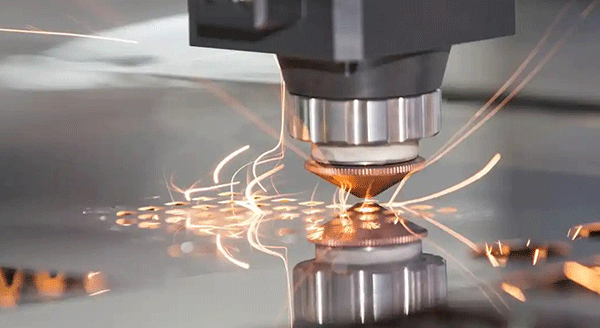
A focused high-energy laser beam melts the stainless steel material along the programmed contour. High-pressure nitrogen is normally used as auxiliary gas during stainless steel laser cutting. Nitrogen blows away molten metal, inhibits oxidation on cutting edges, and delivers bright, slag-free cutting surfaces. Oxygen cutting is rarely applied to stainless steel, because oxygen will cause serious oxidation and form black oxide layers on cut edges, requiring extra polishing treatment. Laser cutting belongs to non-contact processing, no mold is required, suitable for complex curves, special-shaped holes and customized outlines.
Standard Workflow of Stainless Steel Laser Cutting
- Drawing Review & DFM Analysis Customers provide CAD files in DXF, DWG or PDF. Engineers check structural rationality, give optimization advice for small holes, sharp corners and thin strips to reduce burning and deformation risks.
- Quotation & Order Confirmation Confirm stainless steel grade, sheet thickness, quantity, tolerance and surface requirements, then issue formal quotation.
- Material Preparation & Nesting Programming Arrange raw stainless steel plates. Technicians carry out optimized nesting layout to improve material utilization and control costs.
- Laser Cutting Production Adjust laser power, cutting speed, focal length and nitrogen pressure according to plate thickness to guarantee complete penetration and clean cutting seams.
- Inspection & Secondary Processing Finished stainless steel parts go through dimension and appearance inspection. Optional processes: deburring, bending, tapping, welding, polishing, passivation, sandblasting.
- Packaging & Delivery Components are separated by protective film to avoid scratches, then packaged and shipped as scheduled.
Processable Stainless Steel Materials & Thickness Range
Common grades for laser cutting:
- 304 stainless steel: general purpose, good corrosion resistance, widely used for brackets, housings, shielding parts and decorative panels.
- 316L stainless steel: superior acid and alkali resistance, suitable for medical, chemical, marine and new energy equipment.
- 201 stainless steel: cost-effective, commonly used for decorative structural parts.
- Spring stainless steel: ultra-thin stainless steel sheets for elastic shims and contact pieces.
Processing thickness: from ultra-thin sheets of 0.1 mm up to thick plates over 20 mm.
Core Advantages of Stainless Steel Laser Cutting
- No mold cost, flexible for prototype trial and small-batch customization. Designs can be modified quickly.
- High precision, stable tolerance can reach ±0.05mm ~ ±0.2mm according to thickness. Complex graphics and continuous curved outlines can be finished in one operation.
- Nitrogen cutting obtains bright oxide-free edges, greatly reducing subsequent polishing workload.
- Wide thickness coverage, meets demands from ultra-thin shims to thick structural stainless steel plates.
- Fast production cycle, digital programming shortens preparation time and supports urgent orders.
Common Challenges & Design Tips
Stainless steel features high thermal conductivity. Thin stainless steel sheets are prone to thermal warping under laser heat. Sharp inner corners easily lead to overburning. Design suggestions:
- Add rounded fillets for internal corners to reduce overburn.
- The minimum hole diameter should preferably not be less than plate thickness.
- Avoid long and narrow thin strips to prevent deformation during cutting.
- For ultra-thin stainless steel below 0.3mm, consider photochemical etching if ultra-high flatness and zero stress are required.
Stainless Steel Laser Cutting VS Photochemical Etching
Stainless steel laser cutting suits medium and thick stainless steel plates and large-size parts. But laser thermal impact may cause warping of ultra-thin stainless steel and affect flatness. Photochemical etching is more suitable for 0.01~1.5mm ultra-thin stainless steel sheets, micro holes, dense meshes and elastic components. It achieves stress-free processing without thermal deformation. Buyers select processes based on thickness, flatness requirements and part structures.
Typical Applications of Laser Cut Stainless Steel Parts
EMI shielding components, precision gaskets, filter screens, equipment brackets, battery structural parts, medical instrument housings, food machinery accessories, chemical anti-corrosion parts, decorative metal panels, sensor fixing sheets.
Conclusion
Stainless steel laser cutting is a mature, efficient processing method for custom stainless steel components. With flexible production, high precision and bright cutting edges, it meets diversified demands from prototype development to mass production. When selecting suppliers, buyers should confirm nitrogen cutting capacity, experience with target stainless steel grade, quality control and available post-processing services to achieve stable finished quality.