
Chemical Etching Stainless Steel: Complete Process, Etchant Formula, Technical Advantages and Application Scenarios
1. Overview of Stainless Steel Chemical Etching
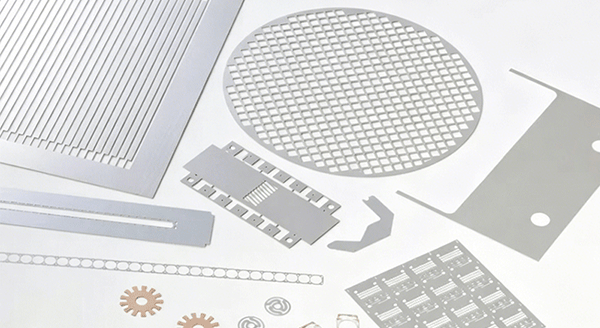
Stainless steel chemical etching, also called stainless steel photochemical machining (PCM), is a room-temperature cold precision processing technology specially for stainless steel sheets and foils. It relies on photolithography to form an acid-resistant photoresist protective mask on the stainless steel surface, then uses formulated ferric chloride etching solution to dissolve the exposed metal area through redox reaction, so as to obtain the required two-dimensional outline, micro holes, grid structures and controllable half-etched grooves.
Common applicable stainless steel grades cover 201, 304, 316L, 321, 430 series, with applicable thickness ranging from 0.01mm ultra-thin stainless steel foil to 2.0mm medium-thick plate. Different from laser cutting that causes heat-affected zone oxidation and edge discoloration, stamping that brings mechanical stress and material hardening, and CNC machining with high cost for tiny complex structures, chemical etching stainless steel realizes molecular-level uniform material removal. The finished products feature stress-free substrate, burr-free smooth edges, unchanged corrosion resistance of stainless steel itself and excellent batch dimensional consistency, which has become the mainstream manufacturing process for high-reliability stainless steel micro-components in high-end industries.
2. Standard Full Process of Stainless Steel Chemical Etching
The whole production flow is strictly customized for the passive film characteristics of stainless steel to avoid poor photoresist adhesion, uneven etching and pitting defects caused by the natural chromium oxide protective layer on the surface.
Step 1: Raw Material Inspection & Specialized Surface Pre-Treatment for Stainless Steel
Stainless steel is easy to form a dense inert passive film in the air, so pre-treatment is more critical than ordinary carbon steel.
- Incoming material inspection: Verify material grade, thickness tolerance, surface scratches, rolling lines and flatness; warped sheets need leveling first.
- Alkaline ultrasonic degreasing: Remove pressing oil, fingerprints, protective film residue and organic pollutants completely. Oil stains will lead to local photoresist falling off and missing etching.
- Weak acid pickling & micro-etching: Use diluted mixed acid to slightly remove the surface chromium-rich passive film, and form a micro rough matte surface on the stainless steel substrate. This step greatly enhances the bonding force between the metal base and dry film photoresist.
- Pure water rinsing + hot air drying: Eliminate acid residue thoroughly to prevent residual liquid from causing local over-corrosion in subsequent processes.
Step 2: Dry Film Photoresist Lamination
Almost all stainless steel etching adopts photosensitive dry film hot roller laminating on both sides. For ultra-thin stainless steel foil below 0.05mm, low-pressure slow-speed lamination parameters are used to avoid foil deformation and wrinkling. Ensure no bubbles, wrinkles and gaps between dry film and stainless steel surface, otherwise the etching liquid will seep under the film and cause pattern damage.
Step 3: CAD Pattern Output & UV Double-Sided Exposure
- Convert customer drawings into high-precision phototool negative film, reserve undercut compensation according to stainless steel thickness to offset isotropic side etching.
- Carry out vacuum alignment double-sided exposure, make the upper and lower graphic positions completely coincident, especially for through-hole parts and symmetrical structural parts.
- Ultraviolet light cures the exposed area of the dry film to form a corrosion-resistant protective layer, while the unexposed area remains soluble for developing.
Step 4: Developing & Post-Bake Curing
- Alkaline developer sprays to wash away unpolymerized dry film, accurately exposing the stainless steel area that needs to be etched. Conduct full inspection to eliminate broken lines, residual film blockage of micro holes.
- Low-temperature baking curing: Strengthen the acid resistance of the remaining dry film mask. Stainless steel etching needs relatively high liquid temperature, so sufficient curing can effectively prevent mask swelling and edge biting by hot ferric chloride solution.
Step 5: Core Spraying Etching with Stainless Steel Dedicated Etchant
This is the core working procedure determining the dimensional accuracy and surface quality of stainless steel parts.
5.1 Main Etching Solution for Stainless Steel
The universal standard etchant is ferric chloride (FeCl₃) acidic solution, with small amount of hydrochloric acid as accelerator, plus wetting agent, defoamer and side etching inhibitor as additives.
- Reaction principle: Fe³⁺ oxidizes zero-valent stainless steel metal into soluble metal chloride ions for continuous dissolution;
- Conventional working temperature: 45℃ ~ 55℃;
- Baume degree control: 38 ~ 42 °Bé for stable etching speed and controllable undercut.
5.2 Process Parameter Control
- Adopt automatic double-sided balanced spray etching machine to ensure uniform liquid impact on both sides of stainless steel plate;
- Adjust conveyor speed to control etching time: fast speed for half etching (grooves, indentations), slow speed for full penetration cutting;
- Real-time monitor solution concentration and metal ion saturation degree, regularly filter precipitated metal sludge and replenish new liquid to guarantee batch consistency.
5.3 Feature of Stainless Steel Etching
Stainless steel belongs to alloy containing chromium and nickel, the etching rate is slower than pure copper and brass, and the requirement for solution stability is higher. Improper formula is easy to produce surface pitting and uneven foggy surfaces. Modified additives can effectively improve surface smoothness.
Step 6: Resist Stripping & Multi-Stage Rinsing
After reaching the preset etching depth, use alkaline stripping solution to completely peel off the dry film protective layer. Then pass through multiple tanks of overflow pure water rinsing to wash away residual ferric chloride liquid and tiny metal particles, avoiding residual chemicals leading to rust spots and surface discoloration of stainless steel.
Step 7: Post-Treatment, QC Inspection and Packaging
7.1 Post-surface treatment (commonly used for stainless steel)
- Passivation treatment: The most essential process for etched stainless steel. Use dedicated stainless steel passivation solution to rebuild a compact chromium oxide passive film on the surface, significantly improving salt spray resistance and anti-rust performance, restoring the original corrosion resistance of stainless steel.
- Optional treatments: Electrolytic blackening, matte brushing, light polishing, sandblasting, anti-fingerprint oil coating.
7.2 Quality Inspection Items
- Dimensional tolerance measured by 2D optical projector, including outline size, hole diameter, half-etched depth;
- Appearance inspection: no pitting, no residual etching, smooth edges, no burrs;
- Flatness test for thin stainless steel foil to exclude warpage caused by internal stress.
Finally, qualified products are dried and packed with anti-static, moisture-proof PE bags for delivery.
3. Unique Advantages of Chemical Etching Stainless Steel
3.1 Zero Internal Stress, No Destruction of Stainless Steel Corrosion Resistance
The whole process is completed in liquid at room temperature without mechanical extrusion and high-temperature heat input. It will not cause stainless steel work hardening, warping deformation and fatigue performance decline. After passivation, the anti-rust and salt spray performance of the substrate is fully restored, which is very suitable for outdoor equipment, marine environment and humid working conditions.
3.2 Naturally Burr-Free Edges, No Secondary Deburring
Stainless steel is dissolved uniformly at the molecular level, the inner wall and edge of holes and outlines are smooth and rounded without sharp burrs. It avoids the hidden danger of burr falling off scratching other parts or causing circuit short circuit, especially critical for medical devices and precision electronic assemblies.
3.3 Realize Precise Half-Etching One-Step Forming
Stainless steel elastic shrapnels, bending parts often need half-etched indentations for pre-bending. Chemical etching can control the depth tolerance within ±0.003mm, forming bending lines, positioning steps and anti-slip grooves on a single stainless steel plate in one process, simplifying subsequent assembly procedures.
3.4 Tooling-Free Flexible Customization, Low Proofing Cost
No expensive stamping die is required for stainless steel etching. Complex irregular graphics, dense hole arrays, encoder gratings and ultra-narrow slits only need to modify the phototool film according to CAD drawings. The prototype can be finished within 24–48 hours, greatly reducing the mold opening cost of small-batch customized stainless steel parts.
3.5 Wide Adaptability of Stainless Steel Grades and Thickness
It can stably process low-cost 201 stainless steel, general-purpose 304 stainless steel, high-corrosion-resistant 316L medical grade stainless steel, as well as magnetic 430 ferritic stainless steel. The thickness range covers ultra-thin conductive foils to structural thin plates, meeting differentiated cost and performance requirements of different industries.
3.6 Excellent Batch Production Stability
Automatic closed-loop production equipment dynamically adjusts etching liquid temperature, concentration and spraying pressure. Without tool wear loss, the dimensional accuracy and surface quality of thousands of batches of stainless steel etched parts remain consistent, meeting the strict batch traceability requirements of automotive, medical and aerospace industries.
4. Main Industrial Application Fields of Chemically Etched Stainless Steel Parts
4.1 Electronics & Semiconductor Industry
The largest application scenario: 304/316L stainless steel EMI/RFI electromagnetic shielding covers for PCB and chip modules, heat dissipation grid sheets, battery elastic contact shrapnels, wafer carrier trays and precision positioning gaskets. Stress-free performance ensures stable elastic contact and long service life.
4.2 Medical Devices & Healthcare Equipment
Mainly adopt medical-grade 316L stainless steel chemical etching products: infusion liquid filter meshes, cell culture sieve plates, surgical instrument marking parts, minimally invasive device micro components and implant auxiliary parts. Smooth burr-free edges prevent scratch damage to human tissue, and passivation treatment meets repeated high-temperature sterilization and biocompatibility standards.
4.3 Aerospace & Precision Instruments
Ultra-thin stainless steel adjusting shims, hydraulic oil filter screens, pressure sensor diaphragms, optical encoder grating discs and light barrier diaphragms. Stable size accuracy guarantees the detection precision of precision instruments, and excellent corrosion resistance adapts to high-altitude temperature difference and harsh vibration environments.
4.4 New Energy & Automobile Manufacturing
New energy battery stainless steel current collector nets, fuel cell auxiliary flow field plates, automobile sensor elastic gaskets, new energy vehicle battery pack protective nets and exhaust system micro filter elements. Strong vibration resistance and corrosion resistance meet automotive-grade long-term reliability standards.
4.5 Industrial Filtration & Environmental Protection Equipment
Mass production of various aperture stainless steel etching filter sheets for water treatment, chemical liquid filtration, food and beverage processing equipment. Uniform hole diameter, smooth hole wall and anti-clogging performance improve filtration efficiency and service life.
4.6 Hardware Decoration & Custom Nameplates
Etched stainless steel LOGO signs, hollow decorative panels, metal craft pendants and equipment nameplates. After blackening or brushing treatment, they have strong metallic texture and wear resistance, widely used in equipment identification and architectural interior decoration.
5. Limitations & Matters Needing Attention
- Mainly applicable to flat stainless steel thin plates; curved surface and thick solid stainless steel block are not suitable, which can be replaced by electrochemical etching for local marking.
- Isotropic etching will inevitably produce a small amount of undercut, ultra-high aspect ratio deep micro-structures cannot be realized.
- Ferric chloride etching liquid belongs to hazardous chemicals, which needs standardized waste liquid treatment and metal ion recovery to meet environmental protection discharge regulations.
- 316L high-alloy stainless steel has stronger corrosion resistance, requiring appropriately higher etching solution concentration and longer processing time than 304.
Conclusion
Chemical etching stainless steel is a mature and reliable precision cold processing solution developed aiming at the passive film characteristics of stainless steel alloys. Relying on ferric chloride dedicated etching system, standardized pre-treatment, photolithography transfer and closed-loop spray etching technology, it perfectly solves the processing pain points of stainless steel thin plates, complex planar microstructures and high-reliability elastic components that traditional stamping and laser cutting cannot handle well.
With the core advantages of stress-free processing, burr-free edges, controllable half-etching, material corrosion resistance retention and flexible digital customization, chemically etched stainless steel components are irreplaceable in electronics, medical treatment, aerospace, new energy and filtration industries. In the future, the process will continue to be optimized toward lower undercut value, higher surface finish and greener recyclable etching liquid formulas, providing more stable and high-quality manufacturing support for high-end precision equipment upgrading.