
Products Description
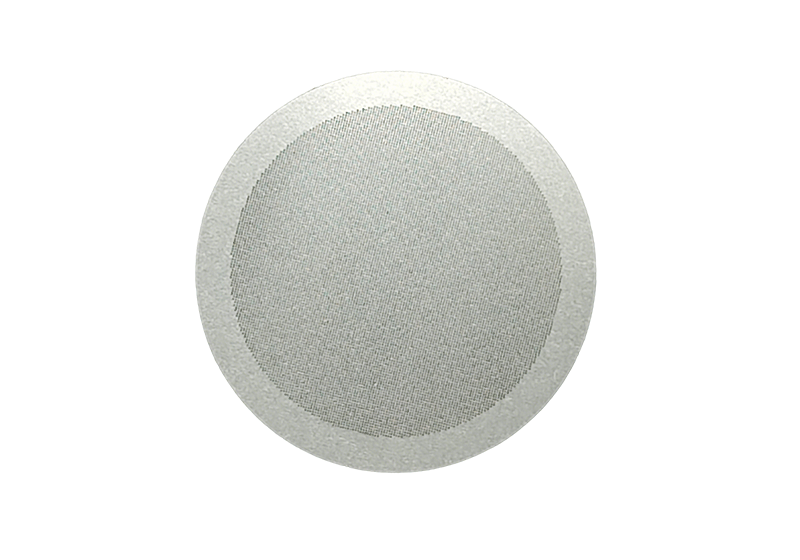
Key Product Characteristics of Etched Microporous Filter Screens
1. Uniform Micron Apertures with Ultra-High Precision
Precision etching delivers a stable dimensional tolerance of ±0.005mm to ±0.01mm, with a minimum machinable aperture of 0.02mm. All holes across the entire screen share highly consistent size and spacing, with deviation controlled within 5 microns. By contrast, woven filter mesh has random gap sizes due to wire interlacing, with gap deviation reaching up to 40%, resulting in uneven filtration accuracy. Stamped holes often form a tapered bell-mouth structure with inconsistent upper and lower diameters, while laser-drilled holes have irregular inner walls and large dimensional deviation.
Etched filter screens support custom aperture gradients and zoning layouts, such as dense holes in the center and sparse holes at the edge, to match specific fluid flow paths and optimize filtration efficiency. Complex hole shapes including round holes, slotted holes, diamond holes and special-shaped holes can be formed in a single process, perfectly reproducing designs optimized by CFD fluid simulation.
2. Burr-Free Smooth Surface & Dead-Zone-Free Structure
Etched holes feature smooth vertical sidewalls and rounded edges, completely free of burrs, flanging or sharp corners. Traditional woven mesh has numerous interwoven gaps that easily trap impurities and dirt, breeding bacteria and causing blockage. Stamped and laser-drilled screens carry burrs at hole edges that fall off during operation, contaminating filtered media and scratching downstream components.
The smooth burr-free structure greatly reduces adhesion of particles, grease and impurities. The screen can be quickly cleaned via simple flushing, with no hidden dead corners for dirt accumulation. This feature is particularly critical for medical, food and semiconductor scenarios with strict hygiene requirements, and extends filter screen service life by more than 3 times compared with woven mesh.
3. Ultra-Thin Flat Structure & High Mechanical Strength
Etched filter screens support substrate thickness from 0.03mm to 1.0mm, with ultra-thin models as thin as 0.03mm for micro-instruments and portable filtration devices. The stress-free cold processing ensures exceptional flatness of the whole screen, controlled within ≤0.01mm, with no warping or deformation, and fits tightly with filter housings without side leakage.
Unlike woven mesh that relies on interwoven wires for strength, etched screens are fabricated from an integrated metal sheet with uniform tensile and compressive strength. They can withstand filtration pressures of 1–5MPa without deformation, hole expansion or rupture, and maintain stable filtration accuracy under long-term high-pressure operating conditions.
4. Wide Material Compatibility & Excellent Corrosion Resistance
The etching process is compatible with almost all common metal filter materials, including 304/316L stainless steel, TA1/TA2 titanium alloy, copper alloy, nickel alloy, Hastelloy and Monel. Dedicated etching liquid systems are configured for different materials to retain the original corrosion resistance, temperature resistance and mechanical properties of the substrate.
316L stainless steel etched screens resist weak acid and alkali corrosion, suitable for conventional industrial and food scenarios; titanium alloy screens offer outstanding corrosion resistance for seawater filtration, chemical media and high-end medical applications; special alloy screens adapt to extreme environments such as high temperature and strong corrosion. All materials are fully traceable, with corresponding material certification and compliance test reports available.
5. Highly Integrated One-Step Forming
The etching process imposes no restrictions on graphic complexity. The outer contour of the filter screen, mounting positioning holes, sealing grooves, reinforcing ribs, brand logos and microporous arrays can all be integrally formed in one etching pass without secondary CNC machining. It supports single-sided etching and double-sided differential depth etching, and enables custom composite structures such as coarse filtration layer + fine filtration layer to realize multi-stage filtration in a single component.
Custom shapes including round, square, rectangular, special-shaped and framed filter screens can be produced flexibly to adapt to various filter installation structures. No expensive hard molds are required, and design modifications only require adjusting the photomask, with a sample delivery cycle of 24–48 hours.
Tags: burr-free filter screen custom perforated metal filter etched metal filter mesh industrial metal filter disc microporous filter screen etching photochemical etched filter screen precision chemical etching filter screens stainless steel micro filter screen titanium filter disc etching