
High Precision Laser Cutting: Micron Tolerance, Core Benefits & Industrial Applications
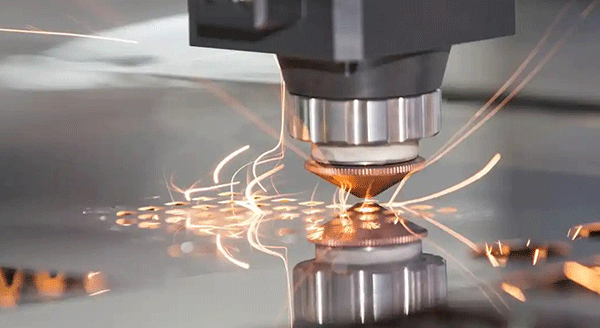
High precision laser cutting is an advanced non-contact thermal fabrication technology that utilizes optimized focused laser beams and closed-loop motion control systems to achieve micron-level dimensional accuracy for custom metal and non-metal components. Different from standard industrial laser cutting which focuses on general-purpose profiling and medium accuracy, high precision laser cutting upgrades the entire system from laser source quality, motion platform precision to real-time feedback control, delivering stable cutting tolerances down to ±0.01mm and repeat positioning accuracy within ±0.002mm. It retains all the flexibility and tooling-free advantages of conventional laser cutting, while pushing dimensional accuracy, detail resolution and edge quality to a level comparable to high-end mechanical machining, making it the preferred solution for high-end micro-precision part manufacturing.
As global high-end manufacturing continues to push toward product miniaturization, higher integration and stricter reliability, conventional fabrication methods including standard laser cutting, stamping and ordinary CNC milling can no longer meet the processing requirements of ultra-precision components. High precision laser cutting fills the gap between semiconductor lithography and general metal fabrication, providing a cost-effective mass production solution for micron-level precision parts. It has been widely adopted across semiconductor packaging, medical devices, optical instruments and aerospace sectors, enabling product innovations that would be technically or economically unfeasible with traditional processing methods.
I. Core Characteristics of High Precision Laser Cutting
The upgraded optical system and closed-loop motion control endow high precision laser cutting with a set of unique technical attributes that distinguish it from conventional laser processing. These inherent characteristics define its irreplaceable position in the high-precision component manufacturing chain.
1. Micron-Level Dimensional Tolerance & Sub-Micron Positioning Accuracy
High precision laser cutting delivers stable cutting tolerances of ±0.008mm to ±0.015mm for thin and medium-thickness metal sheets, with repeat positioning accuracy controlled within ±0.002mm. Equipped with high-precision linear motor platforms, grating scale feedback and closed-loop control systems, it achieves near-nanometer level motion resolution, ensuring every contour and feature position strictly matches the CAD design with minimal deviation.
Compared with standard laser cutting which typically offers ±0.03mm to ±0.05mm tolerances, high precision systems improve accuracy by 3 to 5 times. This level of precision meets the strict assembly requirements of high-end components such as optical parts, semiconductor packaging parts and medical micro components, eliminating the need for secondary finishing and ensuring full interchangeability of mass-produced parts. For high-precision assembly scenarios, micron-level accuracy directly reduces tolerance stack-up and improves final equipment performance.
2. Ultra-Fine Focused Spot & Exceptional Detail Resolution
High precision laser cutting systems use high-quality single-mode laser sources and precision focusing lenses to produce extremely small focused spots, with a minimum spot diameter down to 10μm. This ultra-fine spot enables processing of extremely fine features that cannot be achieved by conventional laser cutting, including 0.05mm narrow slits, 0.08mm micro holes and ultra-thin connecting beams. The edge sharpness of cut patterns is also significantly improved, with almost no rounded corners at pattern turning points.
For dense micro-hole arrays, grating structures and fine-pitch components, ultra-high detail resolution ensures that every tiny feature is formed accurately and uniformly. This capability allows product designers to implement more compact and higher-density functional structures, supporting the ongoing trend of product miniaturization and integration. In many cases, high precision laser cutting can replace more expensive etching and EDM processes for medium-precision micro parts, significantly reducing manufacturing costs.
3. Minimal Heat-Affected Zone & Ultra-Low Material Deformation
Through optimized pulse control, auxiliary gas configuration and energy parameter tuning, high precision laser cutting controls the heat-affected zone (HAZ) at the cut edge within 5–15μm, which is far smaller than the 50–200μm HAZ of conventional laser cutting. For ultra-thin foils below 0.1mm, the thermal impact is further reduced, avoiding problems such as edge oxidation, material warpage and performance degradation caused by heat accumulation.
As a non-contact process with extremely low thermal impact, high precision laser cutting can process ultra-thin metal foils as thin as 0.02mm without obvious deformation and curling. It also does not cause mechanical stress and impact damage to the workpiece, fully preserving the native mechanical, electrical and corrosion properties of the base material. For fatigue-sensitive and heat-sensitive precision components, this low-damage processing characteristic directly translates into higher product reliability and longer service life.
4. Smooth Burr-Free Edge Quality & Clean Cut Surface
With optimized process parameters and high-purity auxiliary gas, high precision laser cutting produces extremely smooth cut sections with almost no burr and molten slag. For thin stainless steel and copper alloy parts, cut edge roughness can reach Ra 0.8–1.6μm, which is close to the effect of fine grinding, and meets the requirements of most high-precision applications without secondary deburring and polishing.
Smooth burr-free edges are particularly critical for micro components in electronics, medical and optical fields. Burrs may cause short circuits in electronic products, affect fluid stability in medical filter elements, and produce stray light in optical components. High precision laser cutting eliminates these hidden dangers at one time, reduces post-processing costs and improves product yield and reliability.
5. Broad Material Compatibility & Multi-Process Integration
High precision laser cutting covers almost all common precision engineering materials, including stainless steel, beryllium copper, phosphor bronze, titanium alloy, nickel-based alloy and aluminum alloy, and can also process non-metallic materials such as ceramics, glass and engineering plastics. Different laser sources and process parameters are matched for different materials to ensure optimal cutting quality and minimum thermal impact.
In addition to full through-cutting, high precision laser systems also support half-cutting, scoring, surface marking and micro-grooving functions. Multiple processing requirements can be completed in one clamping, eliminating secondary positioning errors and improving overall processing accuracy. This integrated processing capability simplifies the production process, reduces handling damage and shortens the total production cycle.
6. Excellent Batch Consistency & Stable Long-Term Accuracy
High precision laser cutting systems operate under fully automatic closed-loop control, with real-time monitoring and compensation for laser power, motion speed and focusing state. Since there is no physical tool wear, the processing accuracy remains completely consistent from the first part to the ten-thousandth part, with no gradual quality degradation caused by tool consumption.
For medium and large batch production of precision parts, this excellent batch consistency ensures that every part has the same size and performance, meeting the strict interchangeability requirements of industrial mass production. It also reduces the workload of incoming inspection and quality control, and lowers the overall quality management cost. For industries with strict traceability requirements such as medical treatment and aerospace, stable and consistent processing quality is the core foundation of process qualification.
7. Zero Hard Tooling Cost & Rapid Design Iteration
Like conventional laser cutting, high precision laser cutting requires no dedicated hard tooling. Production starts immediately after importing digital CAD files, with no mold design, manufacturing and debugging costs. Design modifications only require updating the digital file, with no mold rework cost and long lead time.
For the R&D and trial production of high-precision products, this feature greatly shortens the prototype development cycle and reduces trial-and-error costs. Engineers can quickly verify multiple design iterations and accelerate the time-to-market of new products. The process supports order quantities from single-digit prototype samples to tens of thousands of mass-produced parts, seamlessly connecting prototype verification and large-scale mass production.
II. Core Functions & Industrial Value of High Precision Laser Cutting
As an ultra-precision manufacturing technology, high precision laser cutting delivers six core functional values for downstream high-end products, providing fundamental support for product miniaturization, performance improvement and reliability enhancement.
1. Ultra-Precise Dimensional Control for Precision Assembly
The most core function of high precision laser cutting is to provide micron-level dimensional accuracy for precision parts, ensuring tight assembly fit and full interchangeability between mating components. It effectively reduces tolerance stack-up in multi-part assembly, improves the overall assembly accuracy of equipment, and avoids jamming, poor contact and sealing failure caused by dimensional deviation.
For precision instruments, optical systems and semiconductor packaging equipment, stable dimensional accuracy directly determines the working accuracy and repeatability of the whole machine. High precision laser cut parts provide reliable dimensional benchmarks for high-precision assembly, supporting the continuous improvement of end-product performance.
2. Micro-Structure Forming for High-Density Integration
High precision laser cutting can fabricate various fine micro-structures such as dense micro-hole arrays, narrow slit gratings and micro elastic beams, supporting the design of high-density and miniaturized products. Multiple functional features can be integrated on a single thin substrate, replacing the assembly of multiple discrete parts, reducing product volume and improving structural reliability.
For miniaturized devices such as medical implants, wearable sensors and micro-electronic components, integrated micro-structure design can reduce component size by more than 30% while improving functional density and assembly accuracy. This function is an important enabler for the continuous miniaturization and lightweight development of end products.
3. Damage-Free Processing for High-Performance Materials
For heat-sensitive, fatigue-sensitive and brittle high-performance materials, high precision laser cutting with minimal heat-affected zone and zero mechanical stress achieves almost damage-free processing. It does not destroy the material’s crystal structure, does not introduce residual stress, and fully preserves the native excellent properties of high-performance alloys and functional materials.
This is particularly important for high-value components in aerospace, medical and optical fields. For example, titanium alloy medical implants and nickel-based alloy aerospace parts can maintain their original fatigue strength and corrosion resistance after cutting, avoiding performance degradation caused by processing damage. This damage-free characteristic directly improves the service life and reliability of end products.
4. Stable Batch Quality for Mass Production Reliability
High precision laser cutting provides stable and consistent processing quality for medium and large batch production of precision parts, ensuring that the performance of each part is uniform and reliable. This reduces the scrap rate and rework rate in the production process, lowers quality management costs, and supports the large-scale application of high-precision products.
For industries such as automotive electronics, consumer electronics and medical devices that require large-scale stable supply, reliable batch consistency is the premise of large-scale production. High precision laser cutting combines the advantages of high precision and mass production capacity, providing an optimal solution for the industrialization of high-precision components.
5. Rapid Prototyping for Accelerated Product Development
Zero tooling cost and fast processing capability enable high precision laser cutting to quickly deliver prototype samples of high-precision parts, supporting rapid iterative verification of new product designs. This shortens the R&D cycle, reduces early investment and trial-and-error risks, and helps enterprises seize market opportunities faster.
In high-tech fields with rapid product upgrading such as semiconductors and consumer electronics, fast prototype verification capability directly affects the market competitiveness of enterprises. High precision laser cutting provides strong support for enterprises to accelerate innovation and maintain technological leadership.
6. Multi-Process Integration for Simplified Production Flow
The integrated capability of cutting, marking and grooving simplifies the original multi-process production flow into one-time clamping processing. This not only improves production efficiency, but also avoids positioning errors caused by multiple clamping, further improving the overall processing accuracy of parts.
Simplified production flow also reduces work-in-progress inventory and handling links, lowers management costs and quality risks, and helps manufacturing enterprises achieve lean production. For complex precision parts, integrated processing can significantly shorten the production cycle and reduce total manufacturing costs.
III. Main Industrial Application Fields
Driven by the global trend of product miniaturization and high precision, high precision laser cutting is expanding into more and more high-end industrial fields.
1. Semiconductor & Advanced Packaging
In the semiconductor industry, high precision laser cutting is used to manufacture ultra-fine pitch lead frames, miniaturized EMI shielding cans, ceramic package lids and micro heat dissipation structures. Its micron-level accuracy, burr-free quality and minimal thermal damage perfectly match the strict requirements of advanced packaging for miniaturization, high cleanliness and high reliability, supporting the development of chips toward higher density and smaller size.
2. Medical Devices & Life Sciences
Medical-grade high precision laser cut parts include surgical instrument accessories, implantable electrode arrays, precision infusion filter meshes, biosensor chips and microfluidic structural parts. The burr-free, low thermal damage and high cleanliness characteristics fully comply with strict medical safety standards, and can withstand high-temperature and high-pressure sterilization without performance degradation. It provides core component support for minimally invasive surgery, in vitro diagnosis and implantable medical devices.
3. Optical Instruments & Optoelectronic Equipment
High precision laser cutting is used to fabricate optical slits, diaphragms, encoder gratings and light shielding sheets for spectrometers, laser equipment, industrial cameras and precision measuring instruments. Micron-level edge accuracy and burr-free sharp edges ensure excellent optical performance, avoiding stray light and diffraction noise, and providing reliable optical path control for various optoelectronic systems.
4. Aerospace & Defense Aviation
Aerospace manufacturers use high precision laser cut components including lightweight structural brackets, sensor parts, filter elements and elastic contacts for aircraft and satellite systems. Full material property retention, stress-free stability and high fatigue reliability meet the extreme reliability requirements of aerospace applications, where parts must withstand wide temperature ranges, intense vibration and corrosive environments over decades of service.
5. Automotive Electronics & Sensors
In the automotive industry, high precision laser cutting produces various sensor components, encoder discs, connector springs and battery system precision parts for new energy vehicles. High batch consistency and dimensional stability meet strict automotive quality requirements, and adapt to the complex operating environment of vehicles. With the rapid development of intelligent and electrified automobiles, the demand for high-precision laser cut automotive electronic parts continues to grow rapidly.
6. Consumer Electronics & Wearable Devices
Smartphones, wireless earbuds, smart watches and wearable devices incorporate a large number of high precision laser cut parts, including ultra-fine speaker dust meshes, VCM camera springs, mini SIM contact springs and micro shielding structures. Ultra-thin forming capability, high pattern density and mass production consistency perfectly match the consumer electronics industry’s requirements for slim design, miniaturization and stable large-scale supply.
7. Precision Instruments & Industrial Automation
High precision laser cut encoder discs, ultra-thin shims, flow orifice plates and instrument core components are foundational parts for servo motors, CNC machine tools, industrial robots and precision measuring instruments. They deliver stable high-precision signal feedback and fluid control required by modern intelligent manufacturing, ensuring consistent production quality and equipment precision.
Conclusion
High precision laser cutting represents the high-end development direction of laser processing technology. It combines micron-level dimensional accuracy, ultra-fine detail resolution, minimal thermal damage and zero tooling flexibility, providing a cost-effective mass production solution for high-precision components. It fills the process gap between general metal fabrication and high-end semiconductor manufacturing, and has become an indispensable core technology in high-end manufacturing fields such as semiconductors, medical treatment, optoelectronics and aerospace.
With the continuous advancement of global product miniaturization, integration and intelligence, the market demand for ultra-precision components will continue to grow rapidly. High precision laser cutting technology will also continue to evolve toward higher resolution, smaller thermal impact and more intelligent production control, further expanding its application scope and providing stronger technical support for the innovation and upgrading of various high-end manufacturing industries.