
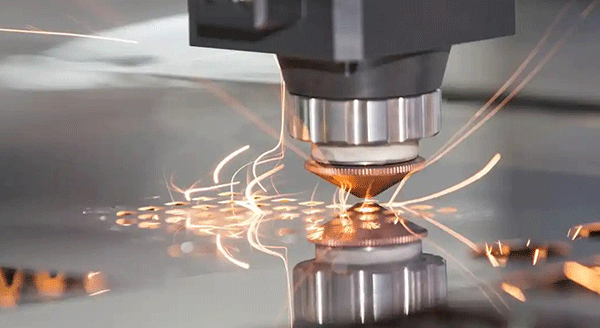
Precision Laser Cutting Photos: Sample Effects, Process Features & Industrial Applications
When searching for precision laser cutting photos, engineering teams, procurement specialists and product designers typically seek intuitive, visual proof of process capability to evaluate whether laser cutting matches their project requirements. A set of high-quality laser cut sample photos does more than showcase finished part appearance — it directly reflects the process’s core performance in dimensional accuracy, edge quality, detail resolution and batch consistency. As a mainstream advanced non-contact fabrication technology, precision laser cutting utilizes focused high-power fiber laser beams to melt and vaporize metal materials with digital CNC control, delivering accurate contour shaping for custom sheet metal parts. The visual results captured in sample photos are the most direct and credible reflection of the process’s real performance, helping customers quickly match process capabilities with their own application needs.
From dense micro-hole arrays and intricate artistic contours to thick structural brackets and thin foil components, precision laser cutting photos cover a wide range of materials, thicknesses and design complexities. They allow customers to visually verify edge smoothness, verticality of cut sidewalls, surface finish of cut sections and dimensional uniformity across parts, without requiring on-site inspection in the initial project consultation stage. For most custom fabrication projects, reviewing representative sample photos is the first critical step in process selection and supplier evaluation, as it quickly filters out processes that cannot meet basic quality requirements and reduces subsequent communication and prototyping costs.
I. Core Product Characteristics Reflected in Precision Laser Cutting Photos
Every visual detail presented in laser cut sample photos corresponds to an inherent technical attribute of the precision laser cutting process. These characteristics jointly determine the final quality, functional performance and applicable scope of finished parts.
1. Sharp Burr-Free Edge Quality with Controllable Finish
In standard precision laser cutting photos, the most intuitive feature is the clean, sharp cut edge with minimal burr and dross. With optimized process parameters and nitrogen-assisted cutting, the cut section presents a uniform, bright metallic luster, with no burnt oxide layer, molten slag accumulation or sharp burr protrusions. For thin and medium-thickness stainless steel and aluminum sheets, edge roughness can reach Ra 1.6–3.2μm, which is comparable to the effect of fine grinding, and meets most industrial assembly and appearance requirements without secondary deburring.
Different from the rough, oxidized edges produced by flame cutting and the sheared burrs left by stamping and punching, laser cut edges shown in sample photos have a smooth, vertically consistent profile. This visual quality directly corresponds to actual functional performance: burr-free edges avoid short-circuit risks in electronic applications, eliminate dirt traps in food and medical scenarios, and reduce the risk of hand injury during assembly. For appearance parts, the bright, clean cut edge directly improves product perceived quality and reduces post-processing costs.
2. Ultra-Fine Detail Resolution & High Contour Fidelity
Precision laser cutting photos of intricate parts clearly demonstrate the process’s excellent detail reproduction capability. Complex curved contours, dense micro-hole arrays, narrow slits and special-shaped notches can all be formed at one time with high fidelity, with no deformation, tearing or edge chipping. The minimum machinable hole diameter can be close to 1.1 times the material thickness, and the minimum slit width can reach 0.1mm for thin sheets, far exceeding the capability of traditional mechanical punching.
In sample photos of encoder gratings, filter screens and decorative hollow parts, every fine feature is uniformly and clearly presented, with consistent size and sharp edges. This high detail resolution comes from the small focused laser spot and closed-loop CNC positioning system, which ensures that every detail in the CAD design is accurately transferred to the metal sheet. For products with complex functional patterns or decorative patterns, this characteristic means that design optimization will not be restricted by manufacturing capabilities, and engineers can maximize part performance according to functional needs.
3. Consistent Dimensional Accuracy Across Full Batches
Side-by-side comparison photos of mass-produced parts intuitively reflect the excellent batch consistency of precision laser cutting. All parts produced with the same program have completely consistent contour dimensions, hole positions and feature sizes, with no gradual dimensional deviation caused by tool wear. The stable cutting tolerance of ±0.03mm to ±0.05mm ensures that every part in a batch can meet assembly interchangeability requirements.
Unlike stamping processes where die wear causes gradual quality drift over long production runs, laser cutting maintains the same accuracy from the first part to the ten-thousandth part. This consistency visible in sample photos is particularly important for medium and large batch production projects, as it ensures stable assembly fit and reduces rework and scrap rates caused by dimensional differences. For industries with strict quality traceability requirements such as automotive and aerospace, stable batch consistency is a core indicator of process reliability.
4. Zero Mechanical Distortion on Thin & Ultra-Thin Sheets
Photos of laser cut thin foil and ultra-thin sheet parts clearly show that the finished parts remain flat and smooth, with no warping, curling or surface indentation. As a non-contact processing technology, laser cutting applies no mechanical extrusion force or clamping pressure to the workpiece, so even 0.1mm thick ultra-thin stainless steel and copper foils can be processed without obvious deformation.
In contrast, thin sheet parts processed by stamping and shearing often have different degrees of bending deformation and surface indentation, which require subsequent leveling treatment and increase process costs. The flat, distortion-free effect shown in laser cutting sample photos is of great value for thin-walled parts, appearance panels and precision electronic components, as it ensures assembly accuracy and surface quality, reduces scrap rate and shortens the production cycle.
5. Wide Material & Thickness Adaptability
A complete set of precision laser cutting photos usually covers sample parts of various materials and thicknesses, from 0.1mm ultra-thin copper foil to 20mm thick carbon steel structural plates, including stainless steel, aluminum alloy, galvanized steel, titanium alloy and other common engineering metals. This intuitively demonstrates the wide material and thickness compatibility of laser cutting technology.
Different power laser systems match different thickness ranges: low and medium power systems are optimized for high-speed fine cutting of thin and medium plates, while high-power systems can stably cut thick plates with good vertical sidewall quality. This wide adaptability means that one production line can meet the diversified processing needs of different customers, and is suitable for projects that require simultaneous processing of multiple materials and specifications.
6. No Tooling Marks & Preserved Original Surface Finish
Sample photos of laser cut parts with brushed, mirror or coated surfaces show that the original surface finish of the raw material is completely preserved in the non-cut area, with no tool indentation, friction marks or surface damage. Since there is no physical tool in contact with the workpiece surface during the entire cutting process, the decorative and functional properties of the original surface are not damaged.
This feature is particularly important for appearance parts and functional parts with special surface requirements. For example, brushed stainless steel decorative parts and mirror-finish sanitary hardware can maintain the original surface effect after laser cutting, without additional surface repair procedures. This not only reduces processing costs, but also ensures uniform appearance quality of products.
7. Flexible Half-Cut & Surface Engraving Capability
In addition to full through-cutting, many precision laser cutting photos also show half-cut, scoring and surface engraving effects. By adjusting laser power and speed, controlled partial-depth marking and grooving can be achieved on the metal surface, which can be used to produce scale lines, identification marks, bending positioning grooves and other structures.
This integrated cutting and marking capability can complete multiple processing requirements in one process, eliminating secondary marking and grooving procedures. It improves production efficiency and positioning accuracy, and is widely used in gauge parts, structural brackets and decorative parts.
II. Core Functional Values Demonstrated via Laser Cutting Sample Photos
Beyond visual display, precision laser cutting photos carry rich process information and deliver six core functional values for project evaluation, design optimization and production decision-making.
1. Intuitive Process Capability Verification for Early Project Evaluation
The most direct functional value of precision laser cutting photos is to provide visual, credible process capability proof for customers in the early project evaluation stage. Customers can quickly judge whether the process can meet their own requirements for edge quality, detail precision and surface effect by viewing representative sample photos, without the need to make expensive trial parts first.
This greatly reduces the communication cost and trial-and-error cost in the early stage of the project, and helps customers quickly screen out inappropriate processes and suppliers. For custom fabrication projects with clear quality requirements, targeted sample photos can directly answer core questions such as whether a design can be produced and what the final effect will be, improving the efficiency of project advancement.
2. Design Optimization Reference for Product Development
For product designers and R&D engineers, precision laser cutting photos of similar parts can provide intuitive reference for design optimization. By observing the actual molding effect of different structures, different hole diameters and different thicknesses, designers can adjust design schemes according to process characteristics, avoid structures that are difficult to process, and give full play to the advantages of laser cutting technology.
For example, designers can learn the minimum achievable hole diameter and slit width from sample photos, and adjust the feature size of the design accordingly; they can also understand the edge quality under different cutting processes to choose the most suitable cutting scheme. This design-for-manufacturing optimization helps reduce subsequent production problems and improve product manufacturability.
3. Quality Benchmark for Mass Production Consistency
Precision laser cutting photos of batch parts can be used as an intuitive quality benchmark for mass production, helping customers understand the stability level of the process in long-term mass production. By comparing the dimensional and appearance consistency of multiple parts, customers can judge the process control capability of the fabrication side, and then evaluate whether it can meet the quality requirements of their own mass production projects.
For industries with strict requirements on batch consistency such as automotive, electronics and medical treatment, batch sample photos are an important reference for evaluating process reliability. They can intuitively reflect whether the process can maintain stable quality for a long time without gradual degradation, and help customers reduce quality risks in mass production.
4. Material Selection Guidance for Functional Matching
Sample photos of different materials and different surface effects can provide intuitive guidance for customers’ material selection work. Customers can compare the cutting effect of stainless steel, aluminum alloy, copper and other materials, and combine their own requirements for corrosion resistance, strength, weight and cost to select the most suitable material scheme.
For example, customers can intuitively see the bright cutting effect of nitrogen-cut stainless steel and the matte effect of oxygen cutting from photos, and choose the appropriate cutting process according to appearance and cost requirements. This visual reference is more direct and effective than simple text parameter description, and helps customers make more accurate material and process decisions.
5. Secondary Process Matching Reference for Subsequent Processing
Precision laser cutting photos can also provide reference for the matching of subsequent secondary processes. Customers can judge whether the cut parts can directly enter subsequent processes such as bending, welding, polishing and spraying according to the edge quality and surface state shown in the photos, and whether additional deburring and grinding are needed.
For example, nitrogen-cut stainless steel parts with bright edges can be directly used for welding and assembly without polishing; parts with slight dross on thick plates need simple deburring before subsequent treatment. Understanding these information in advance helps customers reasonably arrange the production process and accurately estimate the total processing cost and cycle.
6. Visual Communication Tool for Cross-Team Collaboration
In the internal collaboration of customer teams, precision laser cutting photos can be used as a unified visual communication tool to help personnel of different positions such as design, engineering, procurement and quality reach a consistent understanding of the final product effect. This avoids understanding deviation caused by pure text and 2D drawings, and improves internal communication efficiency.
For projects that require multi-departmental review and confirmation, representative sample photos can speed up the review process, reduce repeated communication and modification, and shorten the overall project cycle.
III. Main Industrial Application Fields Represented in Typical Laser Cutting Samples
Precision laser cutting photos cover typical parts of almost all industrial manufacturing sectors, and each type of sample corresponds to specific industry needs and application scenarios.
1. Food & Beverage Processing Equipment
In laser cutting sample photos for the food and beverage industry, the most common parts are stainless steel filter screens, filling orifice plates, conveyor chain plates, equipment housings and pipeline accessories. The photos show uniformly sized micro holes, smooth burr-free edges and flat surfaces, which directly correspond to the industry’s requirements for hygiene, easy cleaning and accurate filtration.
These parts are usually made of 304 or 316L food-grade stainless steel. The burr-free cut edge shown in the photos will not hide dirt and breed bacteria, and can withstand repeated high-temperature cleaning and disinfection. This makes precision laser cutting the preferred processing technology for food and beverage equipment parts.
2. Medical Device & Healthcare Equipment
Medical industry laser cutting sample photos mostly show small precision parts such as surgical instrument blanks, infusion filter meshes, equipment housing accessories and instrument components. The photos highlight fine feature size, smooth edge and no burr, reflecting the industry’s strict requirements for hygiene, safety and dimensional accuracy.
Medical-grade stainless steel parts processed by laser cutting can maintain clean and smooth surfaces, adapt to repeated high-pressure sterilization environments, and will not produce falling debris and hidden dirt. This makes laser cutting widely used in the production of various medical equipment and in vitro diagnostic device parts.
3. Automotive & New Energy Mobility
Automotive industry sample photos cover a wide range of parts, including body structural brackets, chassis accessories, interior trim parts, exhaust system components and new energy vehicle battery tray parts. The photos show both thin decorative parts and thick structural parts, reflecting the wide thickness adaptability of laser cutting and its ability to meet the diversified needs of the automotive industry.
High batch consistency and stable dimensional accuracy ensure that parts can meet the strict interchangeability requirements of automotive mass production. At the same time, the non-contact processing feature avoids material internal stress damage, and ensures the long-term reliability of parts in complex operating environments such as vibration and temperature change.
4. Electronics & Electrical Manufacturing
Sample photos for the electronics and electrical industry mainly include chassis cabinets, shielding covers, heat sinks, fixture parts and electrical enclosure components. The photos show fine contour, smooth edge and no burr, which meet the industry’s requirements for assembly accuracy and electrical safety.
Burr-free edges avoid the risk of short circuit caused by metal debris falling off, and high dimensional accuracy ensures good assembly fit of electrical equipment. For small and medium-sized electronic product manufacturers, laser cutting can flexibly meet the processing needs of various customized housings and structural parts, with short delivery cycle and low trial cost.
5. Architectural Decoration & Premium Hardware
Decorative laser cutting sample photos show various complex artistic hollow patterns, metal screens, decorative partitions, signage and hardware accessories. The photos highlight exquisite pattern details, smooth lines and uniform overall effect, reflecting the strong decorative expression ability of laser cutting technology.
Laser cutting can easily realize various complex artistic designs that are difficult to complete by traditional stamping and shearing processes, and can quickly adjust patterns according to personalized customization needs. This makes it widely used in high-end architectural decoration, luxury hardware, craft gifts and other fields, helping to create high-end product visual effects.
6. Industrial Automation & Precision Instruments
Sample photos for industrial automation and instrumentation mainly include encoder discs, precision shims, equipment panels, sensor housings and mechanical structural parts. The photos highlight high position accuracy, fine feature size and good flatness, meeting the industry’s requirements for precision and stability.
These precision parts are the basic components of automation equipment and precision instruments. Their dimensional accuracy and stability directly determine the working accuracy and service life of the whole equipment. The stable precision of laser cutting provides reliable basic component support for the development of industrial automation and precision instrumentation industry.
7. Aerospace & Aviation Engineering
Aerospace industry sample photos mostly show lightweight structural brackets, duct parts, skin accessories and special alloy components. The photos reflect the ability of laser cutting to process high-performance alloys such as titanium alloy and stainless steel, and the characteristics of small material deformation and no internal stress damage.
Non-contact processing avoids the impact of mechanical force on the fatigue performance of high-value aerospace materials, and high precision ensures the assembly accuracy of aircraft parts. Although the aerospace industry has very strict process qualification requirements, laser cutting, as an advanced precision processing technology, has been more and more widely used in this field.
Conclusion
In conclusion, precision laser cutting photos are not only an intuitive display of finished part effects, but also a concentrated reflection of the core capabilities of laser cutting technology. From edge quality, detail precision and batch consistency to material adaptability and deformation control, every visual detail in the photos corresponds to the actual technical performance of the process, providing reliable reference for project evaluation, design optimization and supplier selection.
With the continuous progress of fiber laser technology and digital control systems, the precision, efficiency and material adaptability of precision laser cutting will continue to improve, and the corresponding sample effect will also reach a higher level. As a mainstream advanced fabrication technology, laser cutting will play a more important role in more industrial fields, providing stronger support for product innovation and manufacturing efficiency improvement of various industries.