
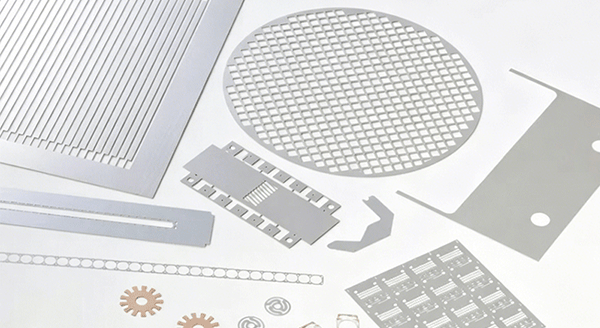
Chemical Etching Solution: Formulations, Features & Industrial Applications
Chemical etching solution refers to specially formulated liquid chemical mixtures used in the wet chemical etching and photochemical machining industry to selectively dissolve exposed metal substrates under protected photoresist masks. Relying on oxidation-reduction reactions, acidic or alkaline components in the etchant convert solid metal into soluble metal ions, realizing accurate pattern replication on sheet metals ranging from 0.01mm ultra-thin foils to 2mm medium-thick plates.
Different metal materials require completely matched etching solutions due to differences in corrosion resistance, surface passive films and chemical activity. Ferric chloride-based acidic solution remains the most widely adopted universal industrial etching solution for stainless steel, copper alloys and nickel alloys, while dedicated mixed acid or alkaline formulas are customized for aluminum, titanium and other hard passive metalsAlibaba.co…. The performance of etching solution directly determines etching rate stability, dimensional undercut value, edge smoothness, surface roughness and batch production yield. High-quality industrial-grade etching solutions add buffers, wetting agents and stabilizers to improve reaction uniformity, enhance material selectivity and extend recyclable service life. As precision metal manufacturing demands higher pattern fidelity and greener production, optimized chemical etching solutions have become the core consumable that restricts the final quality of photo etched metal parts, widely applied in electronics, medical devices, aerospace, new energy and filtration equipment industries.
I. Mainstream Classifications & Material-Matched Formulations of Chemical Etching Solutions
According to base composition and applicable metal substrates, industrial chemical etching solutions are divided into four major categories, each with fixed mature formulas and applicable scenarios.
1. Ferric Chloride-Based Acidic Etching Solution (Most Universal Industrial Type)
This is the dominant etching solution for stainless steel, brass, phosphor bronze, beryllium copper and nickel alloys, with ferric chloride as the main oxidizing component, supplemented by hydrochloric acid as accelerator and multiple functional additives. The redox reaction converts zero-valent metal into soluble metal chloride complexes for uniform dissolution.
- Advantages: stable etching rate, controllable undercut ratio, low surface pitting risk, long recyclable cycle after filtration and replenishment, cost-effective for mass production;
- Applicable metals: 201/304/316L stainless steel, various copper alloys, low-carbon steel, nickel sheets;
- Typical usage scenario: large-scale photochemical etching production for EMI shielding frames, filter meshes, elastic shrapnels and precision gaskets.
2. Mixed Acid Etching Solution for Passive High-Resistance Metals
For titanium alloy, aluminum alloy and other metals that easily form dense inert oxide films on the surface, single ferric chloride cannot break through the passive layer, so mixed acid composite formulas are adopted.
- Titanium alloy dedicated formula: mixed system of hydrofluoric acid and nitric acid. Hydrofluoric acid dissolves titanium oxide passive film, nitric acid acts as oxidant to control excessive isotropic corrosion and surface roughness; strictly parameter-controlled to avoid over-etching and pitting defects; widely used for medical titanium implant parts and aerospace lightweight components.
- Aluminum alloy dedicated formula: phosphoric acid + nitric acid + acetic acid buffered acidic solution or diluted sodium hydroxide alkaline solution. Phosphoric acid continuously removes regenerated alumina film, acetic acid improves surface wettability for uniform reaction, avoiding local uneven etching caused by oxide barrier layers.
3. Alkaline Etching Solution for Special Precision Requirements
Alkaline etching solutions represented by sodium hydroxide and potassium hydroxide are mainly used for thin aluminum sheet micro-patterning, PCB copper foil fine line etching and surface texturing treatment. The reaction mechanism is metal amphoteric dissolution in strong alkaline environment. Although the selectivity to photoresist is slightly lower than acidic etchants, it features milder side etching and smoother inner wall finish, suitable for ultra-fine line structures that require high dimensional fidelity.
4. Additive-Modified High-Precision Special Etching Solution
On the basis of the above base fluids, professional manufacturers add different functional additives to upgrade solution performance:
- Wetting agents: reduce liquid surface tension, ensure full attachment on vertical sidewalls of tiny holes, improve aperture uniformity;
- Buffering stabilizers: stabilize pH value and reaction rate, inhibit excessive local over-etching, narrow tolerance fluctuation;
- Inhibitors: slightly slow down lateral side etching, reduce undercut amount and improve pattern dimensional accuracy for micro-components;
- Defoaming agents: eliminate a large number of bubbles generated during spraying etching, avoid bubble retention leading to pinhole defects on parts.
II. Core Technical Features of Qualified Industrial Chemical Etching Solutions
1. High Material Selectivity & Excellent Mask Compatibility
Premium chemical etching solutions can efficiently dissolve target metal substrates while causing almost no erosion to UV-cured photoresist protective layers. The etching rate ratio of metal to photoresist can reach more than 30:1, effectively preventing mask swelling, peeling and edge biting during long spraying etching. High selectivity guarantees high-fidelity transfer of CAD digital patterns to physical metal workpieces, which is the basic premise for producing micron-level precision microstructures such as dense hole arrays and ultra-narrow slits.
2. Controllable Etching Rate & Stable Batch Uniformity
The reaction speed of standard etching solution can be linearly adjusted by changing liquid concentration, working temperature and spraying pressure. Under closed-loop automatic production conditions, the etching depth deviation on the same metal plate is controlled within ±0.003mm, and batch-to-batch rate fluctuation is lower than 5%. Stable reaction consistency eliminates the common problem of inconsistent depth between the edge and center of large-format sheets, greatly improving the finished product qualification rate of mass production lines.
3. Tunable Undercut Ratio for Different Precision Needs
Through formula adjustment, the lateral side etching degree of the etching solution can be precisely regulated. Conventional formulas adopt moderate isotropic etching to form smooth rounded edges for general structural parts; high-precision modified formulas reduce undercut value to the minimum, suitable for encoder gratings, optical slits and other high-dimensional-tolerance precision parts. This tunability enables one set of production equipment to meet both decorative etching and ultra-precision functional component processing requirements.
4. Wide Metal Grade & Thickness Adaptability
Matched etching solution systems cover almost all commonly processed industrial metals: stainless steel series, multiple copper alloys, aluminum alloys, titanium alloys and nickel-based alloys. It can stably etch 0.01mm ultra-thin easily-wrinkled foils as well as 2mm thick rigid plates, solving the difficulty of unstable etching quality caused by different material hardness and corrosion resistance. Enterprises only need to replace the etching liquid formula to realize multi-material one-stop processing.
5. Long Service Life & Recyclable Regeneration Performance
Mainstream ferric chloride etching solutions have outstanding recyclability. After the metal ion concentration reaches saturation in the reaction process, the solution can be filtered, precipitated, supplemented with new raw materials and put back into production again. Closed-loop regeneration greatly reduces single-piece chemical consumption, cuts long-term production costs and lowers waste liquid discharge volume, complying with modern factory green manufacturing standards.
6. Adjustable Surface Finish & Low Defect Rate
Optimized etching formulas can control the surface roughness of etched areas within a certain range. It can achieve smooth matte surfaces for high-cleanliness electronic and medical parts, or uniform frosted textures for anti-slip and decorative components. Meanwhile, well-formulated etching solutions effectively avoid common defects such as pitting, orange peel surface and residual metal nodules, reducing the reject rate caused by surface poor quality.
7. Good Process Compatibility with Full Production Flow
All qualified industrial etching solutions are compatible with the complete photo chemical etching workflow including pre-treatment, exposure, development, etching, stripping and passivation. The residual liquid after etching is easy to be washed away by multi-stage pure water rinsing, will not remain on the metal surface to cause delayed oxidation and discoloration, and will not affect the subsequent passivation anti-rust treatment effect.
III. Core Functional Values of Chemical Etching Solutions
1. Realize Selective Material Removal for Precision Patterning
The most fundamental function of chemical etching solution is to complete selective molecular-level metal dissolution cooperatively with photoresist masks. It accurately carves out complex outlines, micro holes, grid structures and step half-etched features that cannot be efficiently completed by stamping and laser cutting, laying the chemical foundation for the manufacturing of all photo etched precision metal parts.
2. Guarantee Stress-Free, Burr-Free Cold Processing Effect
The liquid-phase room-temperature reaction driven by etching solution belongs to pure cold processing, without mechanical impact and thermal ablation. The dissolved metal edges are naturally smooth and rounded without burrs and molten slag, retaining 100% of the original mechanical, conductive and anti-corrosion properties of the base metal, which is crucial for elastic shrapnels, ultra-thin conductive foils and high-reliability safety components.
3. Reduce Production Defect Rate & Improve Mass Production Yield
Stable etching rate, good wettability and low bubble tendency of high-quality etching solutions minimize defective products caused by uneven etching, mask damage and surface pitting. For long-term large-volume continuous production, the improvement of yield brought by optimized etching liquid can bring considerable economic benefits to manufacturing workshops.
4. Lower Comprehensive Production & Consumable Costs
Recyclable regenerable etching solutions greatly reduce the unit consumption of raw chemicals. In addition, stable etching quality decreases the workload of post-inspection and rework, and the burr-free effect omits secondary deburring and polishing procedures, comprehensively reducing labor and auxiliary processing costs for enterprises.
5. Support Green Production & Environmental Compliance
Modern upgraded low-corrosion, low-toxicity etching formulas, matched with waste liquid precipitation and metal recovery treatment equipment, can effectively reduce pollutant emission. Closed-loop recycling mode reduces hazardous waste output, helping factories pass environmental assessment and meet global sustainable manufacturing requirements.
6. Support Agile Customized R&D & Rapid Prototyping
Different etching solution formulas can be quickly switched according to prototype material and thickness changes. Combined with photomask rapid proofing, it shortens the sample verification cycle of new products, reduces R&D trial-and-error costs, and accelerates the market launch speed of customized precision components.
IV. Main Industrial Application Fields Supported by Chemical Etching Solutions
1. Electronics & Semiconductor Packaging
Ferric chloride etching solution is widely used for stainless steel EMI shielding covers, copper alloy lead frames and micro connector shrapnels. High selectivity ensures tiny feature dimensional stability, adapting to the miniaturization and high-density trend of chip packaging.
2. Medical Devices & Biocompatible Components
Special mixed acid titanium etching solution and 316L stainless steel dedicated etching formula produce surgical instrument accessories, infusion filter meshes and implant electrode sheets. Smooth non-irritating surfaces meet medical sterilization and biocompatibility standards.
3. Aerospace & High-End Precision Equipment
Titanium alloy and high-strength stainless steel matched etching solutions fabricate lightweight structural grids, hydraulic filter screens and sensor diaphragms. Damage-free etching retains material fatigue resistance for long-term operation in extreme temperature and vibration environments.
4. New Energy & Energy Storage Equipment
Copper alloy and stainless steel etching solutions process battery current collector meshes, fuel cell flow field plates and heat dissipation grids. Uniform etching aperture improves electrochemical reaction efficiency and energy storage device cycle life.
5. Precision Instruments & Optoelectronic Products
High-precision modified low-undercut etching solutions manufacture optical slits, encoder gratings and precision diaphragms, ensuring edge sharpness and avoiding optical diffraction errors in testing instruments.
6. Industrial Filtration & Environmental Protection Facilities
Universal ferric chloride etching liquid mass-produces stainless steel filter elements for chemical industry, water treatment and food processing equipment, with consistent hole size ensuring stable filtration accuracy and anti-clogging performance.
7. Architectural Decoration & Custom Artwork
Adjustable surface finish etching solutions create hollow decorative panels, texture patterns and metal photo etched artworks for building facades and interior decoration, enriching metal surface visual effects and added value.
Conclusion
In summary, chemical etching solution is the core reaction medium of the entire wet chemical etching and photochemical machining industry, and its formula composition directly determines the upper limit of processing precision, surface quality and production stability. With differentiated matching formulas for stainless steel, copper alloys, aluminum and titanium, it delivers core advantages including high material selectivity, controllable etching rate, adjustable undercut, recyclable regeneration and wide metal compatibility. It not only realizes high-precision stress-free micro-component forming in industrial manufacturing, but also promotes the development of etching technology toward higher precision and greener production.
With the continuous upgrading of downstream industries’ requirements for part miniaturization, surface cleanliness and batch consistency, the market demand for high-performance, low-pollution customized chemical etching solutions will keep expanding. In the future, etching solution technology will further develop toward lower undercut, longer service life, easier waste liquid treatment and higher material adaptability, providing more reliable consumable support for the iterative upgrading of global precision metal manufacturing industry.