
Welcome to SHENZHEN FENGXIANG TECHNOLOGY CO., LTD!

Email

info@lasercutoem.com

Laser Cutting of Metal Encoder Discs

Metal encoder discs, also referred to as code wheels, are core sensing components inside rotary encoders that convert mechanical rotation into measurable electrical signals for motion control systems.

Send Inquiry
Description
Argument
Products Description
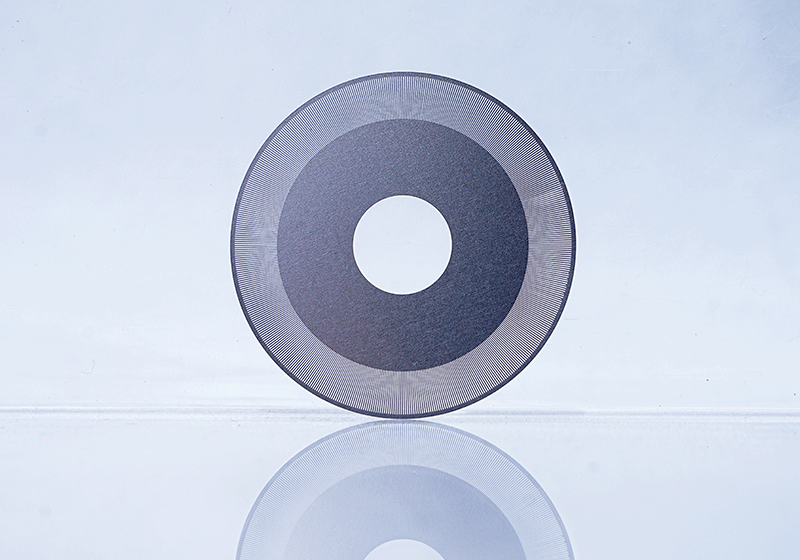
Laser Cutting of Metal Encoder Discs

Metal encoder discs, also referred to as code wheels, are core sensing components inside rotary encoders that convert mechanical rotation into measurable electrical signals for motion control systems. Their structural rigidity, contour accuracy and environmental durability directly determine the reliability of position feedback and speed regulation for entire equipment sets. While photochemical etching dominates ultra-thin, high-resolution encoder disc production, traditional stamping and CNC milling face notable limitations for medium-to-thick gauge and heavy-duty applications: stamping causes severe residual stress and deformation on thick plates, CNC milling has low mass production efficiency, and wire EDM comes with high costs and long lead times.
Advanced fiber laser cutting has emerged as a highly competitive manufacturing process for medium-thickness and heavy-duty metal encoder discs. As a non-contact thermal processing technology, it delivers high-precision contour cutting on metal sheets from 0.5mm to 10mm thick, with no hard tooling required, fast prototyping and strong structural integrity. It fills the market gap left by etching processes that struggle with thick materials, and has become the preferred solution for heavy industrial encoders, large-diameter code wheels and custom low-volume encoder projects.

Key Product Characteristics of Laser-Cut Metal Encoder Discs

Laser cutting technology imparts unique structural and processing attributes to metal encoder discs that set them apart from etched and stamped counterparts, with outstanding advantages in thickness range, load-bearing capacity, customization flexibility and production efficiency. All performance indicators can be precisely tuned via laser power, cutting speed and assist gas parameters to meet industrial, wind power and heavy-duty grade quality standards.

1. Wide Thickness Range & High Structural Rigidity

Fiber laser cutting supports metal substrate thicknesses from 0.5mm up to 10mm and above, covering the full spectrum from light industrial standard code wheels to heavy-duty large-diameter encoder discs. For 0.5–3mm stainless steel sheets, typical cutting tolerance reaches ±0.05mm; for 3–8mm thick plates, tolerance remains within ±0.1mm, meeting the assembly accuracy requirements of most industrial encoders.
Unlike ultra-thin etched encoder discs that require additional support structures, laser-cut thick-plate code wheels have inherently high structural rigidity. They can withstand greater installation preload, torque impact and vibration shock without bending or deformation, and maintain stable coaxiality during long-term high-speed operation. This makes them particularly suitable for heavy equipment scenarios where impact resistance and load-bearing capacity are prioritized over ultra-high line density.

2. Precision Contour Accuracy & Complex Geometry Freedom

High-precision fiber laser systems achieve positioning accuracy of ±0.02mm and repeatability of ±0.01mm, enabling one-step forming of complex encoder disc features including outer contours, central mounting holes, keyways, positioning notches and reference marks. There is no restriction on graphic complexity: circular, sector-shaped, spoke-type and special-shaped encoder discs can all be processed directly from CAD drawings without additional process development costs.
For multi-hole combined mounting structures and irregular positioning features, laser cutting achieves higher one-time forming accuracy than stamping, with no cumulative error from multiple stamping strokes. The concentricity between the inner bore and outer contour can be stably controlled within 0.02mm, ensuring consistent alignment between the code wheel and rotating shaft, and reducing signal jitter caused by eccentric operation.

3. Non-Contact Processing & Minimal Residual Stress

As a non-contact processing method, laser cutting applies no mechanical extrusion force or punching impact to the workpiece, and produces far less residual stress than stamping and shearing processes. When paired with nitrogen-assisted cutting and optimized cutting parameters, the heat-affected zone on the cut section can be controlled below 0.1mm, with negligible impact on the overall structural performance of medium-thick plates.
Stamped encoder discs typically carry large residual stresses that gradually release during temperature cycling and long-term operation, leading to dimensional drift and reduced detection accuracy. Laser-cut encoder discs have minimal internal stress, and maintain stable dimensional performance under long-term load, frequent cold-heat cycles and high-frequency vibration, with dimensional fluctuation of less than 0.01mm throughout the service cycle.

4. Broad Metal Material Compatibility

The laser cutting process is compatible with almost all common encoder disc metal materials, including 304/316L stainless steel, carbon steel, aluminum alloy, copper alloy, titanium alloy and high-temperature alloy. It handles thick plates and high-hardness alloys that are difficult or impossible to process with chemical etching, providing broader material options for different working conditions.
Stainless steel code wheels offer good corrosion resistance and cost performance for general industrial scenarios; carbon steel code wheels have high strength and low cost for heavy load-bearing applications; aluminum alloy code wheels are lightweight and low-inertia for high-speed dynamic response scenarios; titanium alloy code wheels adapt to highly corrosive and extreme temperature environments.

5. Tooling-Free Rapid Prototyping & Fast Iteration

Unlike stamping, which requires expensive hard dies with a lead time of tens of days, laser cutting requires no tooling investment. Production can start immediately upon receipt of CAD drawings, and prototype samples can be delivered within 24–48 hours. For design modifications such as adjusted mounting hole positions, modified outer diameter size or optimized keyway dimensions, only the electronic drawing file needs to be updated, with no additional mold modification costs.
This feature greatly reduces R&D costs and cycle time for custom encoder projects, making it ideal for equipment development stages, small-batch specialized equipment and custom automation projects. It supports trial production from 1 piece to hundreds of pieces, and can quickly scale up to mass production of tens of thousands of pieces after design verification.

6. Clean Cut Edge & Secondary Process Compatibility

With nitrogen-assisted precision cutting, the section of laser-cut encoder discs is smooth and flat, with almost no burrs and no oxide layer, eliminating the need for secondary deburring processes in most cases. The verticality of the cut surface is good, and the mounting surface fits tightly, which helps improve assembly coaxiality and reduce installation runout.
The smooth, oxide-free cut surface has excellent compatibility with subsequent surface treatments such as electroplating, blackening, passivation and spraying, and will not cause poor coating adhesion or corrosion hidden dangers due to residual burrs and oxide layers. This meets the anti-corrosion and appearance requirements of encoder discs for different application scenarios.


Tags:

Technical parameter
stainless steel code disc cutting

stainless steel code disc cutting

Core Product Functions of Laser-Cut Metal Encoder Discs

As core sensing and structural components for heavy-duty and custom motion control systems, laser-cut metal encoder discs perform six key functions: rotary position and speed detection, high-load structural torque transmission, integrated mounting positioning, harsh environment adaptation, multi-stack absolute encoding support, and low-volume custom adaptation. The reliable realization of all these functions is highly dependent on the high rigidity and high precision brought by laser cutting technology.

1. Rotary Position & Speed Feedback Sensing

This is the most fundamental core function of encoder discs. When the motor drives the code wheel to rotate, the grating or tooth structure on the disc periodically passes the detection position of the photoelectric or electromagnetic sensor, and the sensor converts the periodic change into an electrical pulse signal. The control system calculates the current rotation angle, position and real-time speed of the device by counting pulses and pulse frequency.
Laser-cut thick-plate encoder discs maintain stable structural accuracy under high load and strong vibration, ensuring reliable signal output without missing pulses or signal distortion due to disc deformation. They provide stable position feedback for heavy equipment such as mining machinery, hoisting equipment and wind power systems, and are the basis for realizing closed-loop control of heavy motion systems.

2. High-Load Structural Support & Torque Transmission

Different from ultra-thin etched code wheels that only undertake sensing functions, laser-cut thick encoder discs have high structural rigidity and can simultaneously serve as structural load-bearing parts to directly transmit torque and bear installation stress. They do not require additional support backplanes, which simplifies the encoder structure and reduces overall volume and assembly costs.
For large-diameter and high-torque application scenarios, the integrated metal disc structure has higher fatigue resistance than assembled thin code wheels, and will not fail such as loosening and falling off under long-term torque impact. It effectively improves the overall reliability of the encoder and reduces later maintenance and replacement costs.

3. Integrated Mounting & Precise Positioning Alignment

Laser cutting can integrally form various mounting structures such as central shaft holes, keyways, positioning pin holes and flange mounting surfaces on the encoder disc at one time, with high position accuracy between features, which is suitable for various assembly methods such as shaft sleeve fixing, flange connection and snap-fit installation.
The high-precision integrated mounting structure reduces assembly errors, ensures coaxial alignment between the code wheel and the rotating shaft, avoids signal drift and pulse loss caused by eccentric operation, and improves the stability and detection accuracy of the encoder during long-term operation. Customized mounting structures can also be designed according to special assembly requirements to match non-standard equipment.

4. Harsh Environment Adaptation & Long Service Life

Laser-cut metal encoder discs made of thick metal substrates have excellent impact resistance, vibration resistance and temperature adaptability, and can work stably for a long time in harsh industrial environments such as heavy load, strong vibration, wide temperature range and dust. They will not be brittle and broken like glass code discs, nor will they soften and deform like plastic code discs at high temperatures.
In outdoor equipment such as wind power and engineering machinery, laser-cut stainless steel code wheels also have good corrosion resistance, can adapt to rain, salt spray and temperature difference changes, and have a service life 3–5 times that of thin etched code wheels under the same harsh conditions, which effectively reduces the failure rate and maintenance cost of equipment.

5. Multi-Disc Stacking for Absolute Encoder Solutions

Laser cutting can process encoder discs of different thicknesses and different code track structures respectively, and form a multi-turn absolute encoder code wheel set through stacking assembly. This solution has high structural flexibility, and can flexibly combine code discs of different resolutions according to the number of turns and accuracy requirements, which is suitable for custom absolute encoder projects.
Compared with the integral processing scheme of multi-track code discs, the stacked combination scheme has lower processing difficulty and cost, and is more convenient for later adjustment and upgrade. It is a cost-effective solution for small-batch customized absolute encoders.

6. Low-Volume Customization for Specialized Equipment

Laser cutting does not require mold investment, and has a very low threshold for small-batch customization. It can meet the special needs of special equipment, scientific research projects and non-standard automation production lines for encoder discs of special size, special structure and special material. It can quickly respond to personalized customization needs and shorten the project development cycle.
For equipment renovation, prototype trial production and scientific research experiments, laser cutting can provide customized code wheel products with fast delivery and low cost, without the problem of high mold cost that cannot be borne by small-batch demand.

Main Application Fields of Laser-Cut Metal Encoder Discs

With the continuous development of heavy industry, new energy and high-end equipment manufacturing, the demand for high-reliability heavy-duty encoders continues to grow. Laser-cut metal encoder discs, with their comprehensive advantages of high structural strength, strong environmental adaptability and fast customized production, are widely used in multiple industrial fields.

1. Heavy Industrial Machinery & Mining Equipment

Heavy machine tools, mining machinery, metallurgical equipment and construction machinery mostly work in harsh environments such as heavy load, strong vibration and dust. Laser-cut thick-plate encoder discs have high impact resistance and structural stability, which can ensure accurate and reliable position and speed detection under long-term harsh working conditions, and provide core feedback guarantee for the operation control of heavy equipment.

2. Wind Power & Renewable Energy

In wind power generation systems, encoder discs are used in pitch systems, yaw systems and generator speed detection. They face harsh outdoor environments such as high altitude, large temperature difference, strong wind vibration and salt spray corrosion. Laser-cut stainless steel and alloy encoder discs have excellent weather resistance and structural reliability, adapt to the long-life and low-maintenance requirements of wind power equipment, and are key components to ensure the stable operation of wind turbines.

3. Elevator & Hoisting Machinery

Elevators, cranes, hoists and other lifting equipment have extremely high requirements for the safety and reliability of encoders. Laser-cut encoder discs have stable structure and high load-bearing capacity, which can ensure accurate position detection during lifting operation, avoid safety accidents caused by control deviation, and meet the strict safety standards of the lifting industry.

4. Heavy CNC Machine Tools & Metalforming Equipment

Heavy CNC lathes, gantry milling machines, forging equipment and stamping equipment have large spindle torque and strong operation vibration. Laser-cut thick encoder discs have strong structural rigidity and good anti-vibration performance, which can provide stable spindle position feedback, ensure the machining accuracy of equipment, and adapt to the long-term continuous operation requirements of industrial production.

5. Aerospace & Ground Defense Equipment

Ground test equipment for aerospace, defense weapon systems and special equipment have strict requirements for encoder reliability and environmental adaptability. Laser-cut high-temperature alloy and titanium alloy encoder discs can adapt to extreme working conditions such as wide temperature range, strong impact and high reliability requirements, and provide stable position detection guarantee for special equipment.

6. Custom Automation & Special-Purpose Machinery

Non-standard automation production lines, special testing equipment and customized mechanical equipment often require encoder discs of special size and structure. Laser cutting, with its advantages of rapid prototyping and no mold cost, can quickly respond to various customized needs, provide matching code wheel products for special equipment, and support the smooth implementation of non-standard projects.

7. Commercial Vehicle & Construction Machinery

Commercial vehicles, engineering vehicles and construction machinery have complex on-board environments with strong vibration and wide temperature range. Laser-cut metal encoder discs are used in engine control, steering system and transmission system to provide reliable speed and position detection, adapt to the harsh use environment of vehicles, and ensure the stable operation of vehicle power and control systems.
Against the backdrop of continuous upgrading of global high-end equipment manufacturing and rapid development of new energy industries, the demand for heavy-duty, high-reliability custom encoder discs is growing rapidly. Fiber laser cutting, with its unique advantages of wide thickness adaptation, high structural rigidity, tooling-free rapid prototyping and strong material compatibility, has become an important manufacturing process for medium-thick and heavy-duty metal encoder discs, forming a complementary pattern with photochemical etching that covers thin high-precision scenarios.
Laser-cut metal encoder discs provide reliable motion control feedback guarantee for heavy industry, wind power, lifting machinery and other fields. With the continuous expansion of downstream markets such as new energy and intelligent manufacturing, the market demand for high-precision laser-cut encoder discs will maintain sustained growth, presenting broad market prospects and application value.

Leave Your Message


Leave a message