Metal Chemical Etching: Features, Key Functions & Industrial Applications
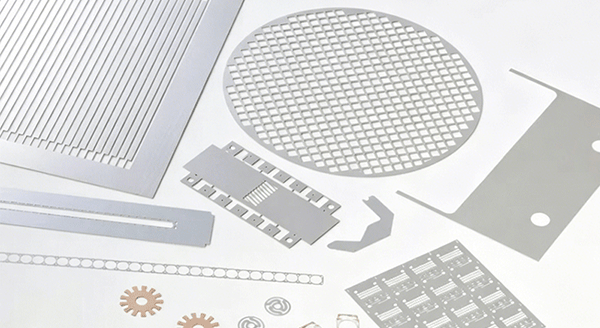
Metal chemical etching, also known as photochemical machining, is a precision cold fabrication technology designed for micro and thin metal component manufacturing. Different from traditional stamping, laser cutting, and CNC machining that rely on physical force or thermal ablation, metal chemical etching removes excess metal materials through controlled chemical corrosion based on photolithographic pattern transfer. This advanced manufacturing process effectively solves common defects in traditional metal processing, including mechanical deformation, thermal damage, burrs, and material performance attenuation. Compatible with most common industrial metals and alloy materials, chemical etching has become a mainstream solution for high-precision, customized, and high-reliability metal micro-components, widely adopted in high-end industrial manufacturing fields worldwide.
1. Core Technical Features of Metal Chemical Etching
Metal chemical etching possesses unique technical advantages that distinguish it from conventional metal processing technologies, laying the foundation for high-quality precision metal manufacturing.
1.1 Stress-Free and Thermal-Damage-Free Cold Processing
Metal chemical etching is a pure room-temperature cold processing technology with no mechanical extrusion, impact force, or high-temperature heat input during the entire production process. Metal materials are removed via molecular-level chemical dissolution, completely avoiding work hardening, residual stress, warping, and tearing. This feature fully retains the original physical and chemical properties of metals, including elasticity, conductivity, thermal conductivity, and corrosion resistance, which is irreplaceable for processing ultra-thin metal foils and high-precision elastic components.
1.2 Burr-Free and Smooth Edge Quality
Unlike stamping that produces sharp burrs and laser cutting that leaves molten slag and recast layers, chemical etching forms smooth, rounded, and flat metal edges. There are no sharp protrusions, metal debris, or edge defects on etched metal parts. Finished components do not require secondary deburring, grinding, or polishing, effectively reducing post-processing procedures while avoiding hidden dangers such as circuit short circuits, signal interference, and structural friction damage caused by burrs.
1.3 High Dimensional Precision and Uniformity
Optimized metal chemical etching processes support micron-level dimensional accuracy, with stable tolerance control for thin and medium-thickness metal materials. All pattern structures on the entire metal sheet are formed simultaneously through uniform chemical reaction, without cumulative positioning errors. The batch dimensional consistency rate exceeds 99.5%, ensuring uniform structural size and performance of every component in mass production, and meeting the strict precision requirements of microelectronic and precision instrument industries.
1.4 Wide Multi-Metal Compatibility
This etching technology adapts to almost all industrial metal materials, including stainless steel, copper alloys, aluminum alloys, titanium alloys, nickel alloys, and brass. Targeted etching solution formulas and process parameters are configured according to different metal hardness, corrosion resistance, and alloy characteristics. It can stably process both soft easily-deformable metals and hard difficult-to-machine alloys, realizing one-stop processing of multi-specification and multi-material metal components.
1.5 Tooling-Free Design Flexibility
Metal chemical etching requires no rigid molds or cutting tools. Complex patterns, irregular contours, dense hole arrays, and ultra-fine slits that cannot be processed by traditional machinery can be realized through digital photomask patterns. Design modifications only need to update electronic drawing files, with no mold modification cost or long debugging cycle. There is no geometric complexity premium, providing maximum design freedom for product R&D and customized production.
1.6 Precise Half-Etching and Integrated Structuring
In addition to full through-etching, metal chemical etching supports high-precision partial half-etching. It can stably fabricate step structures, positioning grooves, concave platforms, and textured surfaces on metal surfaces with controllable etching depth. Multiple functional structures can be integrally formed on a single metal workpiece in one process, avoiding assembly errors caused by multi-part splicing and improving the overall structural stability of components.
1.7 Stable Batch Repeatability
The entire etching process adopts automated closed-loop control, with real-time monitoring and adjustment of etching solution concentration, temperature, spray pressure, and processing speed. Without tool wear and mechanical fatigue problems, the product quality remains consistent from the first batch to the mass production batch, effectively avoiding quality drift and meeting the strict batch traceability standards of high-end industries.
2. Core Functional Values of Metal Chemical Etching
2.1 Precision Micro-Structure Forming
Metal chemical etching realizes high-fidelity transfer of micro-patterns, accurately producing ultra-fine holes, slits, grids, and special-shaped structures. It solves the processing bottleneck of micro-components with complex geometries and ultra-small sizes, supporting the miniaturization and high integration development of modern industrial products.
2.2 Full Material Performance Retention
Thanks to stress-free and heat-free processing, etched metal parts retain 100% of the base material’s original mechanical, electrical, and chemical properties. It ensures stable elastic fatigue resistance, efficient electrical and thermal conductivity, and long-term corrosion resistance of components, greatly improving the service reliability and service life of high-reliability industrial parts.
2.3 Rapid R&D Iteration and Prototyping
With low-cost photomask production and short process cycles, chemical etching can quickly complete sample proofing and design verification. It shortens the product R&D cycle, reduces trial-and-error costs, and efficiently supports iterative upgrading of new products, which is highly suitable for small-batch customization and new product development scenarios.
2.4 Integrated Multi-Functional Processing
The technology integrates multiple processing functions such as pattern cutting, surface texturing, half-etching, and hole forming in one step. It replaces traditional multi-process and multi-equipment processing modes, simplifies the production process, reduces assembly links, and lowers the overall manufacturing and assembly costs of products.
2.5 High-Yield Mass Production
Automated etching production lines achieve large-scale continuous processing with extremely low defect rates. Compared with traditional processing with high scrap rates for thin metal parts, chemical etching significantly improves production yield, reduces material waste, and realizes cost-effective mass production of precision metal components.
2.6 Clean and Compliant Processing
Modern metal chemical etching processes adopt environmentally friendly etching formulas and closed-loop waste liquid treatment systems. The processing process produces no metal dust, thermal pollution, or residual debris. The clean and smooth surface of finished parts meets the high cleanliness requirements of medical, semiconductor, and aerospace industries, complying with global green manufacturing standards.
3. Main Industrial Application Fields of Metal Chemical Etching
3.1 Electronics and Semiconductor Packaging
Metal chemical etching is widely used to produce semiconductor lead frames, EMI shielding parts, micro connector shrapnels, heat dissipation grids, and wafer carrier components. Its high precision, burr-free surface, and stable conductivity perfectly adapt to the miniaturization and high-density development trend of electronic packaging, ensuring stable signal transmission and electromagnetic shielding performance.
3.2 Medical Devices and Bioscience
It processes medical-grade stainless steel, titanium alloy, and copper alloy components including surgical instrument accessories, implantable micro-parts, medical filter meshes, and biosensor substrates. The smooth non-toxic surface, no residual stress, and high biocompatibility meet strict medical sterilization and safety standards, supporting minimally invasive medical equipment and in vitro diagnostic device manufacturing.
3.3 Aerospace and High-End Equipment
Aerospace fields adopt etched precision metal shims, hydraulic filter screens, sensor diaphragms, and lightweight structural parts. The damage-free processing feature retains the high fatigue resistance and corrosion resistance of metals, enabling components to stably operate in extreme environments such as high temperature, strong vibration, and salt spray for a long time.
3.4 New Energy and Energy Storage Industry
Chemical etching produces new energy battery current collectors, fuel cell flow field plates, energy storage device heat dissipation structures, and new energy vehicle sensor parts. The uniform microstructure and stable metal performance improve energy conversion efficiency and cycle life of energy storage equipment, supporting lightweight and high-performance new energy product upgrades.
3.5 Precision Instruments and Optoelectronic Equipment
It is used to manufacture optical slits, encoding gratings, precision diaphragms, and instrument damping shims. The micron-level precise size and smooth edge effectively avoid optical diffraction and signal deviation, ensuring high-precision detection and stable operation of optoelectronic instruments and precision testing equipment.
3.6 Industrial Filtration and Automation Equipment
Etched metal filter meshes, hydraulic orifice plates, and micro flow control components are widely used in chemical industry, water treatment, and industrial automation fields. The uniform pore size and smooth hole wall achieve stable filtration and flow control effects, with strong wear resistance and corrosion resistance for long-term industrial operation.
3.7 Automotive Electronics
In automotive manufacturing, the process produces vehicle sensor shrapnels, battery protection meshes, electromagnetic shielding components, and precision gasket parts. Stable batch quality and high environmental adaptability meet automotive-grade reliability standards, adapting to complex working conditions such as vehicle vibration and temperature changes.
Conclusion
Metal chemical etching has become an indispensable core technology in precision metal manufacturing by virtue of its stress-free, burr-free, high-precision, and flexible processing advantages. It makes up for various defects of traditional physical processing, and can efficiently process diversified precision components of different metal materials and thicknesses. With unique functional advantages in material performance retention, micro-structure forming, and rapid customized production, it covers multiple high-end industrial fields such as electronics, medical treatment, aerospace, and new energy. As industrial manufacturing continues to develop toward miniaturization, high precision, and high reliability, metal chemical etching technology will be further optimized in precision, environmental protection, and efficiency, providing more solid technical support for the innovation and upgrading of global precision manufacturing industry.