
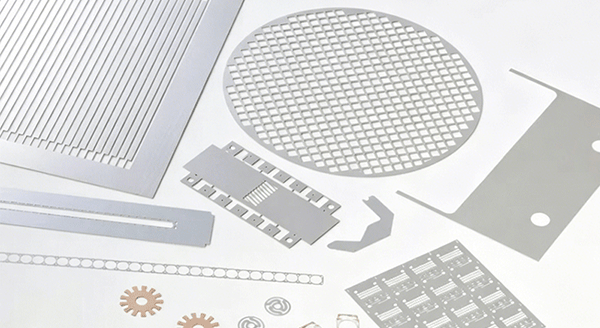
Stainless Steel Etching Chemicals: Formulations, Core Features & Industrial Applications
Stainless steel etching chemicals are the core reaction media that drive the chemical etching process for stainless steel components, directly determining etching rate, dimensional accuracy, edge profile and final surface quality. The dominant industrial formulation is built on ferric chloride-based acidic systems, blended with specialized additives including buffers, wetting agents and stabilizers to achieve controlled, uniform material removal on exposed stainless steel surfaces protected by photoresist masks. Unlike mechanical machining and laser cutting that rely on physical force or thermal energy, chemical etching removes material at the molecular level through homogeneous redox reactions, and the performance of etching chemicals forms the fundamental foundation for process stability and batch-to-batch consistency. As global precision manufacturing continuously raises requirements for stainless steel part quality, etching chemical formulations keep evolving toward higher precision, stronger stability and better environmental compatibility, supporting the expanding adoption of chemical etching across electronics, medical, aerospace and other high-end industrial sectors.
I. Core Technical Features of Stainless Steel Etching Chemicals
Optimized for the corrosion resistance and process requirements of stainless steel materials, professional etching chemicals possess a set of inherent technical attributes that define the upper limit of etching quality and production efficiency.
1. Controllable Etching Rate with Excellent Uniformity
Mature stainless steel etching chemicals deliver highly stable reaction rates that can be precisely adjusted by tuning concentration, temperature and acidity. Under automated closed-loop production conditions, the etch rate fluctuation across the full workpiece surface is controlled within 5%, ensuring consistent etching depth from center to edge. This high uniformity eliminates the common defect of uneven depth caused by local reaction rate differences, guarantees consistent functional performance across all parts on a single sheet, and provides a reliable basis for large-scale mass production.
2. High Material Selectivity & Mask Compatibility
High-quality etching formulas deliver strong selective corrosion performance: they efficiently dissolve stainless steel substrates while causing minimal attack on photoresist masking layers. The etch rate ratio between stainless steel and qualified photoresist can reach more than 30:1, effectively preventing mask peeling, edge erosion and pattern distortion during the etching process. This high selectivity ensures high-fidelity pattern transfer from mask to workpiece, and is a prerequisite for processing high-precision micro-structures such as fine slits and dense hole arrays.
3. Tunable Side Etch & Controllable Profile Morphology
By adjusting formulation composition and process parameters, the level of isotropic etching and undercut ratio can be precisely controlled. Standard formulas produce moderate undercut with smooth rounded edges, suitable for general structural parts; precision optimized formulas reduce side etching to achieve higher pattern fidelity, suitable for micron-level fine structure processing. This tunability enables the etching process to adapt to different design requirements for edge profile and dimensional accuracy, covering both decorative and high-precision functional component scenarios.
4. Broad Compatibility Across Stainless Steel Grades
Professional etching chemicals adapt to almost all common stainless steel grades, including 201, 304, 316L, 321, 430 and duplex stainless steel. By adjusting acidity, oxidant content and additive ratios, stable etching quality can be achieved for different alloy compositions. Whether for austenitic stainless steel with excellent corrosion resistance or ferritic and martensitic grades with different hardness, matching chemical solutions are available to meet processing requirements, supporting one-stop production of multi-grade stainless steel parts.
5. Long Service Life with Recyclable Capability
High-quality stainless steel etchants have a long effective service life. With filtration systems and component replenishment mechanisms, etchant activity can be continuously maintained, greatly extending the replacement cycle and reducing unit consumption of chemicals per part. Some closed-loop production systems are also equipped with etchant regeneration units to recover active components and reduce waste liquid discharge. This recyclability not only lowers production costs but also reduces environmental impact, complying with green manufacturing standards.
6. Room-Temperature Operation & Process Compatibility
Most mainstream stainless steel etching formulas work efficiently at ambient or slightly elevated temperatures, eliminating the need for extreme high-temperature conditions and reducing energy consumption and safety risks. The room-temperature reaction mechanism is also highly compatible with upstream photolithography processes, avoiding thermal damage to photoresist masks caused by high-temperature environments. At the same time, the liquid-phase reaction mode perfectly adapts to automated conveyor-type etching production lines, supporting continuous and stable large-scale production.
7. Adjustable Surface Roughness & Finish
By adjusting etchant composition and processing parameters, the surface roughness of etched areas can be controlled within a certain range. It can achieve a smooth, near-mirror finish for decorative and high-cleanliness applications, or produce a uniform matte textured surface for functional scenarios requiring anti-slip or light diffusion properties. This adjustability eliminates the need for additional secondary surface treatment in many cases, shortening the overall production process.
II. Core Functions and Industrial Value
As the core medium of the chemical etching process, stainless steel etching chemicals deliver six key functional values, solving multiple long-standing processing pain points and creating tangible economic benefits for downstream manufacturing.
1. Precision Selective Material Removal
The most fundamental function is to achieve highly selective material removal on stainless steel surfaces in cooperation with masking layers. With the protection of photoresist or hard masks, only the exposed target area is etched away while the protected area remains completely intact, accurately reproducing complex patterns, contours and micro-structures. This selective removal capability enables the fabrication of intricate geometries that are difficult or impossible to achieve with traditional stamping and punching processes.
2. Damage-Free Retention of Base Material Properties
The room-temperature liquid-phase reaction mechanism introduces no mechanical stress, work hardening or thermal damage to the stainless steel substrate. The original mechanical strength, corrosion resistance and fatigue performance of the base material are 100% preserved. For high-reliability parts used in aerospace, medical and new energy fields, this damage-free characteristic directly improves long-term service safety and extends product service life.
3. Stable Batch Consistency for Mass Production
Stabilized chemical formulas combined with automated concentration control ensure highly consistent etching results across different production batches. There is no quality drift caused by tool wear as in mechanical processing, and the dimensional and surface quality of parts remains stable from the first batch to the thousandth batch. This long-term consistency meets strict quality traceability requirements in regulated industries, reduces incoming inspection workload and improves overall supply chain efficiency.
4. Surface Functional Structuring
In addition to through-etching for complete part separation, etching chemicals can also be used to fabricate surface micro-structures such as micro-pits, micro-channels, texture patterns and step structures. These functional micro-structures can optimize the surface tribological properties, heat dissipation performance, lubrication effect and optical properties of stainless steel parts, adding additional functional value beyond basic shape forming.
5. Total Manufacturing Cost Optimization
Recyclable etchant formulas reduce consumable costs per unit of production; the single-step forming process eliminates secondary deburring and polishing procedures, reducing labor and time costs. For medium and large batch production of complex stainless steel parts, the comprehensive manufacturing cost of chemical etching is significantly lower than that of CNC machining and laser cutting, helping enterprises optimize overall production costs.
6. Support for Green & Compliant Production
Modern optimized etching formulas reduce the use of highly toxic components, and closed-loop production systems with waste liquid treatment equipment minimize pollutant discharge. Compared with some traditional surface treatment processes, the chemical etching process with well-managed etchant systems is easier to meet environmental protection compliance requirements and supports the sustainable development of manufacturing enterprises.
III. Main Industrial Application Fields
Thanks to the stable performance and wide adaptability of stainless steel etching chemicals, the chemical etching process serves a growing range of industrial sectors.
1. Electronics & Semiconductor Packaging
This is one of the largest application fields. Etching chemicals are used to fabricate stainless steel EMI shielding cans, lead frames, heat dissipation meshes, wafer carrier plates and package lids. High etching precision and burr-free edges meet the high cleanliness and miniaturization requirements of semiconductor and electronic packaging, and fully retain the corrosion resistance and electrical performance of stainless steel.
2. Medical Devices & Life Sciences
Medical-grade etching chemicals process 304/316L stainless steel into surgical instrument accessories, infusion filter meshes, implantable device components and biosensor parts. The burr-free, stress-free processing effect complies with strict medical safety standards, and the smooth surface is easy to clean and sterilize, supporting applications from minimally invasive surgical instruments to in vitro diagnostic equipment.
3. Aerospace & High-End Equipment
In the aerospace field, etching chemicals are used to process precision shims, hydraulic filter screens, heat dissipation grids and sensor components made of high-performance stainless steel. The damage-free processing characteristic fully retains the fatigue resistance and corrosion resistance of materials, meeting the strict reliability requirements of aerospace products for long-term service under extreme environments such as wide temperature ranges and strong vibration.
4. Automotive & New Energy Mobility
The automotive industry uses etched stainless steel parts including transmission filter screens, sensor shims, connector springs and fuel cell bipolar plate auxiliary structures. Stable batch consistency and corrosion resistance meet strict automotive quality requirements, and the process is cost-effective for large-scale mass production, supporting the development of automotive electronics and new energy vehicles.
5. Industrial Filtration & Separation Equipment
Etching chemicals produce various precision stainless steel filter screens, orifice plates and filter elements for chemical processing, hydraulic systems, food and beverage production and water treatment. Uniform pore size and smooth hole walls ensure stable filtration accuracy and anti-clogging performance, and stainless steel substrates withstand high temperature, high pressure and corrosive working environments.
6. Architectural Decoration & Premium Hardware
In commercial buildings, high-end hotels and landscape projects, etching chemicals are used to create decorative patterns, textures and logos on stainless steel panels, railings and hardware fittings. Adjustable surface finish and high pattern fidelity deliver excellent decorative effects and metallic texture, enhancing the overall grade of architectural and consumer products.
7. Optical & Precision Instrumentation
Precision etching chemicals fabricate optical slits, diaphragms, encoder gratings and light shielding sheets for spectrometers, laser equipment and precision measuring instruments. Micron-level edge accuracy and burr-free sharp edges ensure excellent optical performance, avoiding stray light and diffraction noise, and providing reliable optical path control for various optoelectronic systems.
Conclusion
In summary, stainless steel etching chemicals are the core foundation of the chemical etching process, achieving precise, controllable and damage-free material removal through optimized formulation systems. With core technical advantages including adjustable etching rate, high material selectivity, wide grade compatibility and recyclable use, they support the wide application of stainless steel chemical etching in electronics, medical, aerospace, automotive and other fields, and have become an indispensable industrial chemical system in precision manufacturing.
With the continuous improvement of global requirements for manufacturing precision, environmental protection and product performance, stainless steel etching chemicals will continue to evolve in the direction of higher precision, lower environmental impact and more intelligent process matching. In the future, more environmentally friendly and high-precision etching formulas will further expand the application scope of chemical etching technology, providing stronger support for the innovation and upgrading of high-end manufacturing industries.