Metal Laser Cut Supplier | Precision Custom Laser Cutting Fabrication
Metal Laser Cut Supplier: How to Select a Trusted Precision Fabrication Partner
A professional metal laser cut supplier delivers custom precision metal components through fiber laser cutting technology, supporting global OEMs, engineering firms and product developers from prototype validation to mass production. As demand for complex thin sheet metal parts, elastic spring sheets, structural brackets and shielding components continues to rise, choosing a qualified metal laser cut supplier directly affects dimensional accuracy, delivery stability, production yield and overall project costs. Many buyers encounter common risks including inconsistent edge quality, unstable tolerances, delayed lead times and poor communication on design feasibility. This guide outlines core capabilities of qualified suppliers, key selection standards, service workflow, material coverage and typical industrial applications for metal laser cut parts.
Core Capabilities of a Qualified Metal Laser Cut Supplier
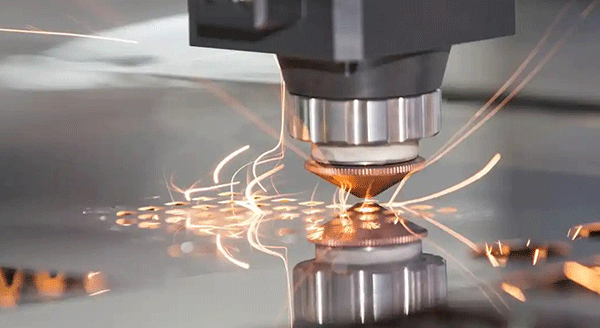
The foundation of reliable manufacturing lies in complete in-house production capacity. Top-tier metal laser cut suppliers deploy modern fiber laser equipment with adjustable power ranges, suitable for processing ultra-thin foils as well as medium-thick metal plates. Advanced CNC control systems guarantee stable cutting precision, with typical tolerance reaching ±0.05mm to ±0.1mm for sheet metal. Optimized laser parameters for different metals control heat-affected zones effectively, preventing thermal deformation and local annealing, which is critical for spring steel and precision elastic components.
Beyond laser cutting equipment, a competitive supplier provides one-stop secondary processing services. Available operations include deburring, bending, tapping, welding, surface grinding, passivation, sandblasting, blackening and anti-fingerprint treatment. One-stop fabrication avoids coordination difficulties between multiple vendors, shortens overall lead time and ensures consistent quality standards for finished assemblies.
Engineering support is another indispensable advantage. Professional metal laser cut suppliers offer free Design for Manufacturability (DFM) review after receiving CAD drawings in DXF, DWG or PDF formats. Engineers will point out unreasonable structures such as undersized holes, sharp inner corners and overly narrow gaps, and provide practical optimization suggestions to reduce defective risks before production starts. This technical consultation helps buyers avoid repeated drawing revisions and unnecessary prototype waste.
Standard Service Workflow of Metal Laser Cut Supplier
Cooperation with a formal metal laser cut supplier follows a standardized transparent workflow. First, buyers send RFQ including drawing files, material grade, thickness, quantity, tolerance requirements and surface finish demands. Second, technical teams complete drawing review and issue an accurate quotation within a reasonable cycle. Third, after order confirmation, the supplier arranges raw material preparation, programming and nesting layout to improve material utilization.
Fourth, formal laser cutting production begins. Operators select matched auxiliary gas: nitrogen for stainless steel, aluminum and elastic metals to achieve oxidation-free clean edges; oxygen for carbon steel to raise cutting efficiency. Fifth, finished components go through multi-stage quality inspection, covering dimension measurement, flatness testing and appearance inspection. Finally, parts are packaged properly to prevent scratches and deformation during transportation before delivery. Many suppliers support prototype sampling first, so buyers can verify quality before launching bulk orders.
Available Materials and Processing Range
A versatile metal laser cut supplier supports a wide portfolio of industrial metals. Common options cover carbon steel, 304 / 316L stainless steel, aluminum alloy, brass, phosphor bronze, beryllium copper, spring steel and nickel alloys. Processing thickness ranges widely from ultra-thin sheets below 0.1mm up to thick steel plates over 20mm. This flexibility meets diversified demands from micro precision electronic components to heavy mechanical structural parts.
Different materials require targeted parameter adjustment by suppliers. Thin stainless steel and spring sheets need carefully controlled laser energy to retain original elasticity. Highly conductive metals such as aluminum and copper demand higher laser power and optimized focal settings to achieve complete penetration without rough cutting seams. Buyers should confirm whether the supplier has mature processing experience for their target material before formal cooperation.
Key Standards to Choose the Right Metal Laser Cut Supplier
Many procurement teams focus merely on unit price while ignoring long-term hidden costs. Here are essential criteria for screening qualified metal laser cut suppliers.
First, verify equipment level and in-house workshop. Suppliers relying on outsourcing often face unstable quality and uncontrollable delivery time. Prioritize factories with self-owned laser cutting machines and independent quality control teams.
Second, confirm precision capacity and past case experience. If your project involves thin sheet metal, elastic spring sheets or micro perforated structures, check whether the supplier has similar production experience. Improper parameter settings easily cause warping, burrs and performance loss of elastic components.
Third, evaluate lead time flexibility. Reliable suppliers support urgent prototype orders and stable mass production scheduling. Clear communication on delivery schedule helps buyers arrange downstream assembly plans smoothly.
Fourth, pay attention to quality control standards. Ask about inspection methods, measurement tools and acceptable defective rates. Long-term partnerships require consistent batch-to-batch quality rather than good quality only for initial samples.
Fifth, confirm communication efficiency. Professional technical support ensures timely problem solving when design adjustments or technical emergencies occur.
Typical Application Fields for Laser Cut Metal Components
Components manufactured by professional metal laser cut suppliers are widely adopted across numerous high-end industries. In electronics and communication, typical products include EMI shielding frames, conductive contact shims, heat dissipation panels and precision gaskets. Automotive and new energy sectors use laser cut sensor brackets, battery module fixing sheets and cooling components. Medical equipment requires clean, low-burr laser cut structural parts that meet strict hygiene standards. Precision machinery, aerospace and architectural decoration also continuously place orders for custom laser cut metal panels, filter meshes and support frames.
Common Pitfalls When Cooperating with Suppliers
Buyers often face avoidable problems without clear technical specifications. Unmarked tolerance requirements may lead to assembly mismatch. Unspecified surface standards cause disputes over oxidation marks and slag. For elastic metal parts, many suppliers fail to control laser heat input properly, resulting in local annealing and shortened service life. It is recommended to write all technical requirements clearly in order documents, including material certification, dimensional tolerance, edge quality and packaging standards. Regular technical communication during mass production further stabilizes output quality.
Conclusion
A reliable metal laser cut supplier acts as an extended manufacturing partner rather than a simple processing vendor. Strong equipment configuration, professional engineering support, complete post-processing capacity and strict quality control together ensure high-precision, cost-effective custom metal components. By comparing technical capability, service flow and past industrial cases, buyers can select suitable suppliers to support product development from prototype testing to continuous mass production. As precision manufacturing develops toward miniaturization and customization, qualified metal laser cut suppliers will keep providing flexible digital laser cutting solutions for global industrial clients.