Metal Laser Cutting Services: Precision Custom Fabrication for Industrial Metal Parts
Metal laser cutting services utilize advanced fiber laser equipment to cut flat metal materials into custom-designed shapes without expensive molds. As a flexible digital processing solution, these services are widely adopted by OEM manufacturers, engineering companies and product developers across electronics, automotive, new energy, medical equipment and precision machinery sectors. Reliable metal laser cutting services cover drawing review, material processing, quality inspection and optional secondary finishing, delivering ready-to-assemble metal components from prototype samples to mass production.
Working Principle of Metal Laser Cutting Services
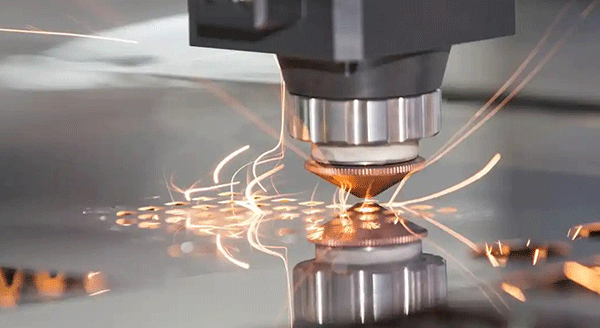
The whole process relies on a high-energy focused laser beam. Guided by programmed CAD data, the laser melts or vaporizes metal along predefined cutting paths. High-pressure auxiliary gas blows away molten residues to form continuous, clean cutting seams. Operators select suitable gas types according to different metals: oxygen for carbon steel to improve cutting efficiency; nitrogen for stainless steel, aluminum and spring steel to achieve oxidation-free bright edges. This non-contact processing avoids mechanical extrusion and surface scratches compared with shearing and stamping.
Standard Workflow of Professional Metal Laser Cutting Services
-
RFQ & Drawing Evaluation
Clients submit CAD files in DXF, DWG or PDF format together with requirements on material, thickness, quantity, tolerance and surface finish. Engineers carry out DFM checks, identify unmanufacturable structures such as undersized holes and sharp inner corners, and provide optimization suggestions.
-
Quotation & Order Confirmation
After technical verification, a formal quotation is issued. Once confirmed, the factory arranges raw material preparation, graphic programming and nesting layout to maximize material utilization and lower costs.
-
Laser Cutting Production
Metal sheets are fixed firmly on the worktable. Operators adjust laser power, cutting speed, focal height and gas parameters based on material characteristics and plate thickness to guarantee penetration and smooth cutting edges.
-
Inspection & Secondary Processing
Cut parts are sorted and inspected dimensionally and visually. Clients can select extra services including deburring, bending, tapping, welding, sandblasting, passivation and surface coating.
-
Packing & Shipment
Qualified components are packed properly to prevent scratches and deformation during transit and delivered according to agreed lead time.
Processable Materials & Typical Products
Qualified metal laser cutting services support a wide range of industrial metals: carbon steel, 304 / 316L stainless steel, aluminum alloy, brass, phosphor bronze and spring steel. Processing thickness ranges from thin sheets less than 0.5 mm to medium-thick plates above 12 mm.
Common finished components include equipment brackets, EMI shielding housings, heat dissipation panels, precision gaskets, sensor accessories, battery fixing plates, perforated decorative panels and mechanical structural parts.
Major Advantages of Metal Laser Cutting Services
- High flexibility
No custom molds required. Design modifications can be completed quickly, perfectly fitting prototype verification and low-volume customized orders.
- High cutting precision
Stable dimensional tolerance reaches ±0.05~±0.2 mm depending on material thickness. Complex outlines, curved contours and dense hole arrays can be finished in one step.
- Broad material compatibility
Suitable for most common industrial ferrous and non-ferrous metals, covering thin sheet and medium plate processing demands.
- Short lead time
Digital programming greatly shortens preparation cycles, supporting urgent sample orders and stable mass delivery.
Design Tips for Better Laser Cutting Results
Avoid sharp internal right angles; rounded fillets effectively reduce overburn marks and stress concentration. Set hole diameters reasonably, generally not smaller than material thickness. For thin metal sheets, disperse densely arranged patterns to relieve thermal stress and prevent warping. Clearly mark tolerance, edge quality and surface requirements on drawings to reduce communication disputes.
Metal Laser Cutting Services VS Photochemical Etching
Many purchasers confuse the two processes. Laser cutting services excel at medium-thick metal plates and large simple outlines. However, laser heat may cause thermal deformation and local annealing on ultra-thin elastic sheets. Photochemical etching performs better for 0.01–1.5 mm thin metal, micro holes and complex elastic components with zero processing stress. Buyers can select proper technology according to material thickness, structure complexity and application scenarios.
Conclusion
Professional metal laser cutting services provide efficient and economical customized metal fabrication solutions. With flexible production capacity, stable precision and diversified post-processing options, they satisfy diversified demands from new product development to continuous mass manufacturing. When selecting service providers, buyers should evaluate equipment configuration, quality control standards and technical support capability to obtain consistent high-quality laser cut metal parts.