Sheet Metal Laser Cut Supplier | Custom Precision Laser Cutting Service
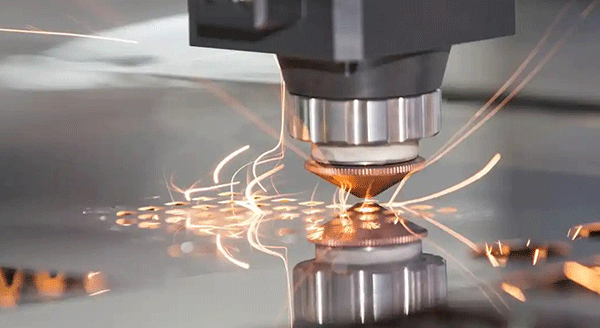
When sourcing custom metal components, choosing a qualified sheet metal laser cut supplier directly determines part accuracy, surface finish, delivery stability and overall project cost. Professional sheet metal laser cut suppliers adopt fiber laser cutting technology to process flat metal sheets into customized shapes without expensive molds. This flexible manufacturing solution serves global clients across electronics, automotive, new energy, medical instruments and precision machinery industries, supporting prototype sampling, small-batch trial production and mass manufacturing.
Core Competencies of a Trusted Sheet Metal Laser Cut Supplier
A competitive sheet metal laser cut supplier maintains complete in-house production facilities. Modern fiber laser equipment can handle thin foils as well as medium-thick metal plates. Skilled technicians adjust laser power, cutting speed, focal position and auxiliary gas parameters according to different materials to achieve clean cutting edges and control thermal deformation, especially important for thin sheet metal.
Apart from laser cutting, top suppliers provide one-stop secondary processing. Available services include deburring, bending, tapping, welding, grinding, passivation, sandblasting and surface coating. Customers can receive finished components ready for assembly instead of coordinating multiple vendors, simplifying the supply chain and shortening lead times.
Technical engineering support is another key advantage. After receiving CAD drawings in DXF, DWG or PDF formats, suppliers conduct free DFM (Design for Manufacturability) reviews. Engineers identify problematic structures such as undersized holes, sharp inner corners and excessively narrow slots, and deliver practical optimization suggestions before production, lowering risks of defective products and repeated sample costs.
Standard Cooperation Process with Sheet Metal Laser Cut Supplier
- Submit Inquiry & Technical Documents
Clients provide drawing files, material grade, sheet thickness, quantity, tolerance standards and surface requirements.
- DFM Review & Formal Quotation
The technical team evaluates processing feasibility and issues an accurate quotation within agreed time.
- Order Confirmation & Production Preparation
After order confirmation, raw materials are arranged. Engineers program graphics and optimize nesting layout to improve material utilization and save costs.
- Laser Cutting Production
Different auxiliary gases are selected for different metals. Nitrogen is used for stainless steel, aluminum and thin sheets to obtain oxidation-free smooth edges. Oxygen is widely applied for carbon steel to boost cutting efficiency.
- Inspection, Post-processing & Packaging
All finished parts go through visual inspection and dimensional testing. Optional secondary processing can be arranged. Qualified components are carefully packaged to avoid scratches and deformation during transportation before shipment.
Processable Materials & Typical Laser Cut Sheet Metal Parts
Reliable sheet metal laser cut suppliers work with a wide range of industrial metals: carbon steel, 304 & 316L stainless steel, aluminum alloy, brass, phosphor bronze and spring steel. Processing thickness ranges from ultra-thin sheets below 0.5 mm up to plates over 12 mm.
Common products include equipment brackets, EMI shielding panels, heat sink plates, precision gaskets, sensor accessories, battery fixing sheets, perforated mesh panels and mechanical structural components.
Key Criteria to Select Sheet Metal Laser Cut Supplier
- Self-owned workshop and laser equipment. Suppliers relying heavily on outsourcing usually face unstable quality and uncontrollable lead times.
- Rich experience in thin sheet processing. If you need ultra-thin metal components, confirm whether the supplier can effectively prevent thermal warping.
- Clear tolerance control capacity. Confirm stable precision matching your technical requirements.
- Flexible production capacity to support urgent prototype orders and continuous mass production.
- Complete quality control system to guarantee consistent quality batch by batch.
Design Recommendations for Sheet Metal Laser Cutting
Avoid sharp internal right angles; rounded fillets help reduce burning marks and stress concentration. The minimum hole diameter is generally recommended to be equal to material thickness. For thin sheets, avoid densely clustered patterns to balance heat distribution and prevent warping. All technical specifications such as tolerance, edge quality and surface treatment should be clearly marked on drawings to reduce disputes.
Sheet Metal Laser Cutting vs Photochemical Etching
Sheet metal laser cutting performs better for medium-thick plates and large-size outlines. However, laser heat may cause thermal deformation and local annealing on ultra-thin elastic sheets. Photochemical etching is more suitable for 0.01–1.5 mm ultra-thin metal, micro holes and complex elastic components with zero processing stress. Buyers can select appropriate processes based on material thickness and part structure.
Conclusion
An outstanding sheet metal laser cut supplier acts as a long-term manufacturing partner rather than a simple processor. Equipped with advanced laser equipment, professional engineering team, diversified post-processing services and strict quality management systems, suppliers can deliver stable, cost-effective custom sheet metal parts. By evaluating technical strength, service flow and relevant industrial experience, purchasers can find suitable partners to support product development from prototype verification to mass delivery.