
Sheet Metal Laser Cut Manufacturer | Custom Precision Sheet Metal Fabrication
Sheet Metal Laser Cut Manufacturer
A professional sheet metal laser cut manufacturer delivers custom flat metal components using fiber laser cutting technology. Serving electronics, automotive, new energy, medical devices and precision machinery industries, manufacturers support clients throughout the whole product cycle from prototype validation, small batch trial production to large-volume mass delivery. Selecting a competent sheet metal laser cut manufacturer directly affects dimensional accuracy, edge quality, flatness, lead time and overall procurement costs. Many buyers encounter common issues including unstable tolerances, excessive burrs, thermal warping of thin sheets and insufficient technical communication. This article elaborates core strengths, standard cooperation workflow, applicable materials and practical selection guidelines.
Core Strengths of Qualified Sheet Metal Laser Cut Manufacturers
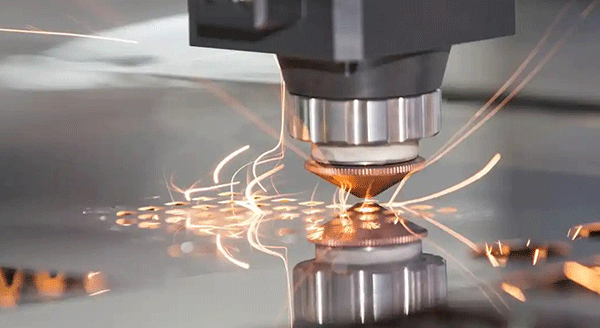
First, reputable manufacturers own in-house fiber laser equipment instead of outsourcing all production. Operators tune laser power, cutting speed, focal position and auxiliary gas parameters according to material grade and thickness. Well-controlled heat input effectively reduces thermal deformation, which is critical for ultra-thin sheet metal. Laser cutting is non-contact processing, avoiding surface scratches caused by stamping or shearing.
Second, competitive manufacturers provide complete one-stop fabrication solutions. Available secondary processes include deburring, bending, tapping, welding, grinding, passivation, sandblasting and surface coating. Customers can obtain finished assembly-ready components without coordinating multiple suppliers, simplifying the supply chain and shortening delivery cycles.
Third, professional engineering support is indispensable. After receiving DXF, DWG or PDF CAD drawings, manufacturers conduct free DFM review. Engineers will identify defective structures such as undersized holes, sharp inner corners and narrow gaps, and offer practical optimization suggestions before production to lower the risk of failed samples.
Standard Cooperation Workflow
- Inquiry submission: Clients provide drawings, material specification, thickness, quantity, tolerance and surface requirements.
- DFM evaluation and quotation: Technical teams assess manufacturability and issue formal quotations.
- Order confirmation and pre-production preparation: Arrange raw materials, graphic programming and optimized nesting layout to improve material utilization.
- Laser cutting production: Nitrogen is adopted for stainless steel, aluminum and thin sheets to achieve oxide-free smooth cutting edges. Oxygen is used for carbon steel to raise cutting efficiency.
- Inspection, post-processing and delivery: All parts undergo dimensional and visual inspection. Optional surface treatment can be arranged. Products are packed carefully to prevent scratches and deformation during transportation.
Processable Materials & Typical Laser Cut Sheet Metal Parts
Sheet metal laser cut manufacturers process a wide range of industrial metals: carbon steel, 304 & 316L stainless steel, aluminum alloy, brass, phosphor bronze and spring steel. Processing thickness covers thin sheets below 0.5 mm to medium plates over 12 mm.
Typical products include equipment support brackets, EMI shielding plates, heat dissipation sheets, precision gaskets, sensor accessories, battery fixing plates, perforated mesh panels and mechanical structural components.
Key Standards to Select Sheet Metal Laser Cut Manufacturer
- Independent workshop and self-owned laser machines. Factories relying heavily on outsourcing tend to have unstable quality and unpredictable lead times.
- Rich experience with thin sheet processing. If you require ultra-thin metal components, confirm whether the manufacturer can control thermal warping effectively.
- Stable tolerance capacity matching your technical specifications.
- Flexible production capacity to handle urgent prototype orders and continuous mass production.
- Complete quality control system ensuring consistent batch-to-batch quality.
Practical Design Guidelines
Avoid sharp internal right angles; add rounded fillets to reduce overburning and stress concentration. The minimum hole diameter is recommended to be no less than material thickness. Avoid dense clustered patterns on thin sheets to balance heat distribution and prevent warping. Mark all technical requirements clearly on drawings to reduce communication disputes.
Sheet Metal Laser Cutting vs Photochemical Etching
Laser cutting works well for medium-thick plates and large simple outlines. Nevertheless, laser thermal impact may cause deformation and local annealing on ultra-thin elastic sheets. Photochemical etching is more suitable for 0.01 mm–1.5 mm ultra-thin metal, micro-holes and intricate elastic components with zero processing stress. Buyers can choose suitable processes based on material thickness and part structures.
Conclusion
An excellent sheet metal laser cut manufacturer acts as a long-term manufacturing partner rather than a simple processor. With advanced laser equipment, experienced technical team, diversified post-processing services and strict quality management, manufacturers can supply stable, cost-effective custom sheet metal parts. By comparing technical capabilities, service procedures and industrial project experience, purchasers can find ideal partners to support product development from prototype testing to mass shipment.