
Precision Cleaning After Laser Cutting: Process Features, Core Functions & Industrial Applications
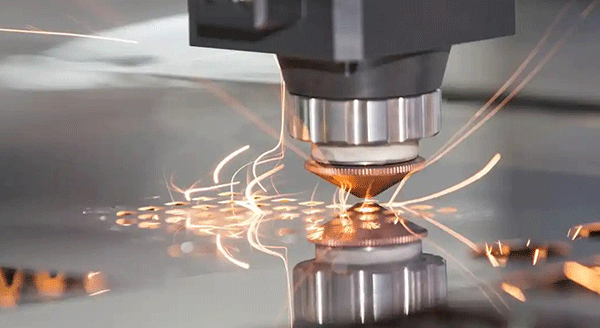
Precision cleaning after laser cutting is a dedicated post-fabrication surface treatment process designed to thoroughly remove residual contaminants generated during laser cutting, while fully preserving the original dimensional accuracy and surface quality of workpieces. During laser cutting, high-energy beam melting and vaporization of metal inevitably produce molten slag on cut edges, scattered spatter particles, thin oxide films and trace auxiliary gas residues on part surfaces. If not properly removed, these contaminants will directly degrade the quality of subsequent processes such as welding, coating, bonding and precision assembly, and may even cause early failure of parts during service. As modern manufacturing continuously raises requirements for part cleanliness, assembly accuracy and surface performance, precision cleaning has become an indispensable quality control step in the laser cutting production chain, ensuring that finished laser cut parts meet the strict surface standards of downstream industries.
I. Core Characteristics of Precision Cleaning After Laser Cutting
Targeted at the unique residues of laser processing, precision cleaning forms a set of technical attributes different from ordinary industrial cleaning, which directly determines cleaning effect, substrate safety and production adaptability.
1. Targeted Removal of Laser-Specific Contaminants
Different from general degreasing and dust removal cleaning, precision cleaning after laser cutting focuses on four typical laser-generated pollutants: hanging slag on cut edges, discolored oxide layers in the heat-affected zone, solidified spatter particles on the surface, and loose molten residues inside micro holes and slits. The process adopts targeted parameter settings for different pollutants, which can penetrate into narrow gaps and dense hole arrays to remove residues that are difficult to reach by conventional cleaning methods, achieving full coverage of the workpiece surface and cut section.
2. Non-Damaging Process with Full Accuracy Retention
Formal precision cleaning adopts a mild physical or chemical composite process, which will not cause mechanical wear, chemical corrosion or dimensional change to the base material. It does not alter the original cutting tolerance of laser cut parts, nor does it damage pre-existing surface finishes such as brushing and mirror effect. For ultra-thin foils and high-precision parts, it will not cause deformation and warping, and completely retains the processing accuracy achieved by laser cutting.
3. Excellent Batch Consistency for Mass Production
The automated precision cleaning line adopts closed-loop parameter control for cleaning time, medium concentration and temperature. The cleanliness of each batch of parts is uniform and consistent, without individual differences caused by manual operation, and no quality fluctuation with the extension of running time. It perfectly matches the mass production rhythm of laser cutting, stably controls product yield, and reduces quality inspection pressure in the subsequent process.
4. Wide Compatibility Across Metals and Thicknesses
This cleaning process is compatible with almost all common laser-processed metal materials, including carbon steel, stainless steel, aluminum alloy, copper alloy and titanium alloy, and supports workpieces with thicknesses from 0.1mm ultra-thin foil to tens of millimeters thick plates. Targeted process adjustments are made for materials with different activities, avoiding problems such as surface discoloration and corrosion of active metals, and ensuring uniform cleaning effect of all materials.
5. Residue-Free Output with Environmental Compliance
Qualified precision cleaning ensures that there is no cleaning agent residue, floating dust or free particles on the final workpiece surface, meeting quantitative industrial cleanliness standards. At the same time, the process adopts recyclable cleaning media and a closed treatment system, with less waste water and waste gas discharge, which meets the requirements of green production and is easier to achieve environmental compliance.
6. Automation Compatibility for In-Line Production
Precision cleaning equipment can be directly connected to the laser cutting production line to realize fully automatic connection of loading, cleaning, drying and unloading, without manual transfer. This greatly shortens the production cycle, reduces labor costs and the risk of secondary pollution during turnover, and supports the construction of an integrated intelligent production line.
7. Controllable Cleanliness Grades for Flexible Matching
The cleaning grade can be adjusted according to downstream process requirements, from ordinary industrial grade to food grade, medical grade and electronic grade, corresponding to different particle residue limits and surface cleanliness standards. It flexibly matches the quality requirements of different industries, avoids cost waste caused by excessive cleaning, and also ensures that high-demand scenarios meet the standard.
II. Core Functions & Industrial Value
As a key connecting process between laser cutting and downstream application, precision cleaning delivers six core values for manufacturing, solving common quality pain points in laser processed parts.
1. Improve Yield of Secondary Fabrication Processes
The most core function is to provide qualified surface foundation for subsequent welding, spraying, electrophoresis, bonding and other processes. Removing the oxide layer and hanging slag can significantly improve welding strength and avoid defects such as false welding and pores; a clean surface can enhance coating adhesion and avoid peeling and falling off. This directly improves the yield of subsequent processes and reduces rework and scrap costs.
2. Guarantee Precision Assembly and Electrical Performance
Removing burrs, spatter particles and loose residues at the cut edge avoids jamming, sealing failure and dimensional deviation during assembly; for electrical parts, a clean surface eliminates the risk of short circuit and poor contact caused by metal particles, and improves the electrical performance and operation reliability of products.
3. Enhance Appearance Quality and Corrosion Resistance
For appearance parts, precision cleaning removes black edges, oxidized discoloration and surface spatter points on cutting edges, restores the original texture of metal, and improves the appearance grade of products. At the same time, it removes the damaged layer in the heat-affected zone, restores the surface passive film of stainless steel and other materials, improves the corrosion resistance of parts, and prolongs the service life in outdoor or humid environments.
4. Eliminate Hidden Failure Risks and Extend Service Life
Residual slag and burrs may fall off during equipment operation, causing pipeline blockage, wear of moving parts, abnormal noise and other problems. Precision cleaning eliminates these hidden dangers, improves the long-term operation stability of parts, prolongs the overall service life of products, and reduces after-sales maintenance costs.
5. Meet Industry-Specific Compliance Standards
Automotive, medical, aerospace, food and other industries have clear component cleanliness standards. Precision cleaning enables laser cut parts to meet corresponding industry specifications, meets quality audit and compliance requirements, and helps products enter high-end application markets.
6. Optimize Production Flow and Reduce Total Cost
Integrating precision cleaning into the laser cutting production line avoids logistics and time costs of multi-vendor transfer, and reduces the rework rate of subsequent processes. Although a cleaning process is added, comprehensively it reduces the total manufacturing cost of products and improves the overall production efficiency.
III. Main Industrial Application Fields
With the improvement of quality requirements in various industries, precision cleaning after laser cutting has been widely used in many industrial sectors.
1. Automotive & New Energy Vehicles
Automotive body structural parts, chassis brackets, new energy battery trays, liquid cooling plates and other laser cut parts require precision cleaning before welding and assembly. Removing the oxide layer and slag ensures welding strength, and a clean surface guarantees the insulation performance and sealing performance of the battery system, meeting the strict quality and life requirements of the automotive industry.
2. Electronics & Semiconductor Packaging
Precision parts such as shielding covers, heat sinks, connector shells and semiconductor packaging jigs in the electronics industry have extremely high requirements for surface particle residues. Precision cleaning removes all free metal particles, avoids circuit short circuits and signal interference, meets electronic-grade cleanliness requirements, and ensures the operation stability of electronic products.
3. Medical Device & Healthcare Equipment
Medical surgical instruments, equipment shells, medical cart structural parts, fluid pipeline accessories, etc., need to meet hygienic cleaning standards. Precision cleaning removes all impurities left by cutting, with a burr-free and dead-angle-free surface that is easy to disinfect, complies with medical safety and hygiene requirements, and can withstand repeated high-temperature sterilization.
4. Aerospace & Aviation Engineering
Aerospace structural brackets, engine parts, hydraulic system accessories have extremely high requirements for fatigue performance and reliability. Precision cleaning removes the damaged layer and surface residues in the heat-affected zone, avoids fatigue fracture caused by stress concentration, and meets aviation-grade cleanliness standards to ensure long-term reliable operation in extreme environments.
5. Food & Beverage Processing Equipment
Food-grade stainless steel filter plates, conveyor chain plates, tank accessories, filling parts and other components directly contact food materials. Precision cleaning removes all burrs and residual particles, with a smooth surface without dirt hiding corners, easy to clean and disinfect, complies with FDA, LFGB and other food contact safety standards, and avoids food safety hazards.
6. Architectural Decoration & Premium Hardware
Decorative stainless steel screens, hardware accessories, signs, sanitary components and other appearance parts have high requirements for surface aesthetics. Precision cleaning removes cutting black edges, oxide spots and spatter points, restores the luster and texture of the metal itself, improves the appearance grade of products, and meets the aesthetic needs of high-end decoration and consumer markets.
7. Industrial Automation & Precision Machinery
Frames, panels, precision fixtures and transmission parts of automation equipment have high requirements for assembly accuracy and operation stability. Precision cleaning ensures accurate part size and no excess residue, improves assembly accuracy, avoids wear of moving parts, and prolongs the service life of industrial equipment.
Conclusion
In conclusion, precision cleaning after laser cutting is a critical quality assurance process that connects laser fabrication and downstream application. By targeted removal of slag, oxide layers and spatter residues while preserving dimensional accuracy and substrate properties, it effectively improves secondary process yield, enhances product reliability and extends service life, creating tangible economic value for manufacturing enterprises.
As industries continue to raise requirements for part precision, cleanliness and service life, the importance of post-laser cutting precision cleaning will continue to grow. In the future, with the development of automated and intelligent cleaning technology, this process will further integrate with laser cutting production lines, achieve higher cleaning efficiency and more precise cleanliness control, and provide more reliable quality support for the high-quality development of advanced manufacturing.