What Is Laser Etching on Metal? Process, Features, Benefits & Industrial Applications
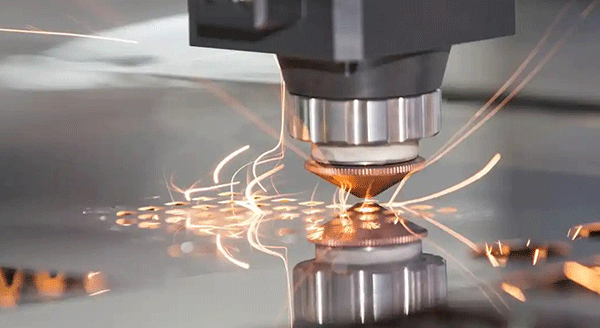
To answer what is laser etching on metal: it is a precision non-contact surface fabrication process that uses focused high-energy laser beams to selectively remove a thin layer of material from metal surfaces, creating permanent patterns, text, textures or micro-structures. Unlike mechanical engraving that relies on physical tool contact, or chemical etching that uses corrosive agents, laser etching reshapes the metal surface through controlled localized vaporization and melting. It delivers accurate depth control, ultra-fine detail resolution and zero workpiece deformation, and has become a mainstream solution for metal surface marking, functional texturing and precision micro-fabrication across modern manufacturing sectors.
Different from laser cutting which penetrates the full material thickness, laser etching only removes a shallow surface layer with typical depth ranging from a few microns to tens of microns. It also differs from standard laser marking: laser marking mainly changes surface color through oxidation, while laser etching achieves tangible material removal with measurable depth, producing more wear-resistant, three-dimensional and visually prominent results. This unique combination of precision, permanence and flexibility makes it widely adopted in industries with strict requirements for traceability, surface performance and appearance quality.
I. Core Characteristics of Laser Etching on Metal
The non-contact photothermal processing mechanism gives metal laser etching a set of inherent technical advantages that traditional surface treatment methods cannot match. These features directly determine processing quality, production efficiency and long-term performance of finished parts.
1. Non-Contact Processing with Zero Mechanical Stress
Laser etching applies no physical extrusion, shearing or clamping pressure to the metal workpiece during the entire process. The laser beam interacts with the material surface without tool contact, introducing no residual stress, mechanical deformation or surface indentation. Even ultra-thin metal foils as thin as 0.1mm and soft, easily deformed materials can be processed with perfect flatness and no shape distortion. This is a critical advantage over mechanical engraving and stamping, which often cause workpiece deformation and surface damage on thin or soft metal parts.
2. Micron-Level Controllable Etching Depth
Professional laser etching systems achieve precise depth control with tolerance within ±0.002mm, and adjustable etching depth ranging from 1μm to 100μm according to process requirements. By adjusting laser power, scanning speed and pulse frequency, operators can accurately set the target depth for different areas of the same workpiece, producing graded depth effects and three-dimensional micro-structures. This level of depth precision is difficult to achieve with chemical etching and mechanical engraving, and lays the foundation for functional surface structures such as micro flow channels and positioning grooves.
3. Permanent Wear-Resistant Results with No Peeling
Laser etched patterns are formed by removal of the base metal itself, and are completely integrated with the substrate rather than being an additional coating or ink layer. They will never peel off, fade or wear away under long-term friction, high temperature, corrosion and solvent cleaning, maintaining clear and intact appearance for the entire service life of the part. Compared with screen printing, pad printing and inkjet marking that wear off easily, laser etched marks deliver far better durability and reliability, and are suitable for parts working in harsh environments.
4. Ultra-High Detail Resolution & Sharp Edges
With a focused laser spot diameter as small as 10μm, laser etching can reproduce extremely fine patterns, tiny text and dense textures with sharp, clean edges and no jagged distortion. Minimum machinable line width can reach 0.02mm, and even micro QR codes, fine scale lines and complex decorative patterns can be presented with high clarity. This ultra-high detail resolution makes it the preferred process for precision parts requiring micro identification and fine surface structures.
5. Zero Hard Tooling & Unlimited Design Flexibility
Laser etching requires no dedicated hard tooling or mold. Production starts immediately after importing digital design files, with no mold manufacturing cost and debugging cycle. Any pattern, text, graphic and custom texture can be processed as long as it can be drawn digitally, and design complexity does not significantly increase processing cost. Design modifications only require updating the digital file, with no additional mold modification cost and long lead time, making it highly suitable for multi-variety, small-batch customized production.
6. Broad Compatibility Across All Common Metals
Laser etching works with almost all common engineering metals and alloys, including stainless steel, carbon steel, aluminum alloy, copper alloy, titanium alloy, nickel-based alloy and precious metals. Optimized process parameters are available for different materials to achieve ideal surface finish and etching efficiency. It can also process materials with special surface treatments such as brushed, mirror and anodized surfaces, and is not limited by material hardness and reflectivity.
7. Consumable-Free Operation & Stable Batch Consistency
The laser etching process requires no cutting tools, etching agents or other consumables, and has no tool wear and consumption during long-term production. Under the same process parameters, the etching effect and depth remain completely consistent from the first part to the ten-thousandth part, with no gradual quality degradation. Automated closed-loop control further reduces manual operation errors, ensuring highly stable batch quality and meeting strict mass production requirements of industrial manufacturing.
II. Core Functions & Industrial Value
Beyond basic surface marking, laser etching on metal delivers six core functional values, solving common pain points in traditional manufacturing and creating tangible economic benefits for downstream industries.
1. Permanent Traceability Marking for Lifecycle Management
The most widely applied function is permanent product traceability marking. Laser etched serial numbers, batch codes, QR codes, production dates and part numbers are integrated with the substrate, supporting full lifecycle quality traceability from production to use and maintenance. For automotive, aerospace and medical industries with strict traceability regulations, this function is indispensable for compliance management and product recall, and is far more reliable than printed and labeled marks.
2. Functional Surface Texturing & Performance Modification
Laser etching can create specific micro textures on metal surfaces to improve material surface performance. For example, regular micro-groove textures on friction surfaces can improve lubrication and reduce wear; rough textured structures can increase surface friction coefficient and anti-slip performance; and uniform micro-pit structures can enhance coating adhesion and bonding strength. This functional surface modification helps improve the working performance and service life of parts without changing the base material.
3. Precision Micro-Groove & 3D Micro-Structure Fabrication
With accurate depth control, laser etching can fabricate precision shallow grooves, micro flow channels, positioning slots and other three-dimensional micro-structures on metal surfaces. These structures are widely used in microfluidic chips, heat dissipation components, precision molds and sensor parts, replacing more expensive lithography and EDM processes for medium-precision micro-structure production and significantly reducing manufacturing costs.
4. Decorative Surface Enhancement & Brand Value Upgrade
Laser etching can produce delicate decorative patterns, brand logos, texture effects and personalized designs on metal surfaces, creating a high-end metallic texture and improving product appearance grade. Different from printing and spraying, etched decorative patterns have a subtle three-dimensional feel and durable quality, and are widely used in high-end hardware, luxury goods and consumer electronics to enhance brand value and product competitiveness.
5. Rapid Prototyping & Customized Small-Batch Production
Zero tooling cost and fast setup capability enable laser etching to quickly deliver customized sample parts, supporting rapid iterative verification of new product designs. Engineers can test different marking schemes, texture parameters and structural designs at very low trial cost, shortening the R&D cycle and reducing trial-and-error risk. It also supports personalized customization for end customers, meeting the growing demand for personalized and differentiated products.
6. Automated In-Line Integration for High-Volume Production
Laser etching systems can be easily integrated into automated production lines to work with feeding, testing and packaging equipment, realizing fully automatic in-line mass production. Compared with manual and semi-automatic surface treatment processes, it greatly improves production efficiency, reduces labor costs and human-induced quality fluctuations, and adapts to the high-efficiency and high-consistency requirements of large-scale industrial manufacturing.
III. Main Industrial Application Fields
Thanks to its unique technical advantages, laser etching on metal has been widely used across almost all industrial manufacturing sectors.
1. Automotive & New Energy Vehicles
In the automotive industry, laser etching is used to mark permanent traceability codes, part numbers and parameter information on engine components, chassis parts, battery structural parts and sensor housings. The marks can withstand harsh operating environments such as high temperature, oil corrosion and vibration, supporting full lifecycle quality management of vehicles. It is also used to fabricate micro textures on friction parts to improve wear resistance and lubrication performance.
2. Electronics & Semiconductor Packaging
Electronic components, semiconductor packages, connector terminals and shielding housings use laser etching to mark product models, serial numbers and anti-counterfeiting marks. Ultra-fine marking capability adapts to the miniaturization trend of electronic components, and permanent marks will not fall off during welding, cleaning and assembly. It is also used to fabricate micro structures on heat dissipation and shielding parts to optimize product performance.
3. Medical Device & Healthcare Equipment
Surgical instruments, implantable devices, medical equipment parts and testing tools use laser etching to mark product numbers, batch codes and traceability information. The marks can withstand repeated high-temperature autoclave sterilization and chemical disinfection without fading and falling off, complying with strict medical safety and traceability standards. Smooth, burr-free etched edges will not cause tissue damage and bacterial growth, meeting medical hygiene requirements.
4. Industrial Equipment & Precision Instruments
Industrial equipment panels, gauge dials, cutting tools, measuring tools and mold parts use laser etching to make scale lines, parameter marks, part numbers and wear-resistant identification. Permanent marks remain clear after long-term use and friction, ensuring accurate reading and reliable identification. It is also used to fabricate positioning grooves and micro structures on precision jigs and molds to improve assembly accuracy and working performance.
5. Hardware, Sanitary & Consumer Goods
High-end hardware, sanitary ware, tableware, digital accessories and luggage hardware use laser etching to make brand logos, decorative patterns and texture effects. Delicate etched texture improves product appearance grade and creates a high-end metallic texture. Permanent marks will not wear off in daily use, maintaining long-term brand display effect, and have become the standard process for high-end consumer metal products.
6. Aerospace & Defense Aviation
Aerospace components, engine parts and structural brackets use laser etching to mark permanent traceability codes and part information. The marks can withstand extreme environments such as wide temperature range, strong vibration and high altitude corrosion, supporting full lifecycle management of aircraft parts. Non-contact processing will not damage the fatigue performance of high-value aerospace materials, meeting the strict quality requirements of the aerospace industry.
7. Mold & Tooling Fabrication
Plastic molds, die-casting molds and stamping dies use laser etching to fabricate surface texture patterns, exhaust grooves and cooling micro-channels. Textured molds can produce rich surface effects on molded parts, and micro-channel structures improve mold cooling efficiency and product molding quality. Accurate depth control ensures uniform texture effect and stable mold performance, and is an important application in the high-end mold manufacturing industry.
Conclusion
In summary, laser etching on metal is a precision surface fabrication technology that realizes permanent material removal through focused laser energy. With core advantages including non-contact stress-free processing, micron-level depth control, permanent wear resistance and flexible customization, it solves multiple pain points of traditional surface treatment processes, and plays an irreplaceable role in product traceability, functional modification, appearance enhancement and micro-structure fabrication.
As global manufacturing continues to pursue higher product precision, stricter quality traceability and more personalized appearance, the application scope of metal laser etching will continue to expand. In the future, with the continuous upgrading of ultrafast laser technology and intelligent control systems, laser etching will further improve processing accuracy and efficiency, and provide stronger technical support for high-quality development and product innovation in various manufacturing industries.