Precision Engraving and Laser Cutting: Integrated Fabrication Features, Functions & Applications
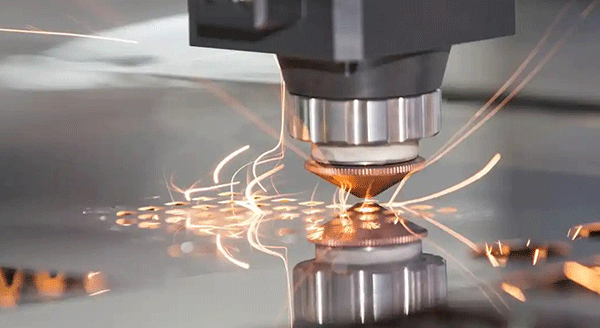
Precision engraving and laser cutting is an integrated digital fabrication solution that completes both contour cutting and surface engraving in a single setup using focused laser beam technology. Unlike traditional split workflows that require multiple clamping steps and cross-vendor coordination, this combined approach delivers unified precision, shorter lead times and lower total production costs. As modern manufacturing and commercial projects increasingly demand both functional structural forming and permanent surface marking on one component, integrated laser engraving and cutting has become a mainstream one-stop fabrication choice. It eliminates alignment errors caused by secondary clamping, retains all the non-contact, tooling-free advantages of laser processing, and adapts to demands from single custom prototypes to large-volume batch production.
I. Core Characteristics of Precision Engraving and Laser Cutting
The integrated laser processing mechanism endows combined engraving and cutting with unique technical advantages that split workflows cannot match. These inherent features directly determine processing accuracy, finished part quality and overall production efficiency.
1. One-Pass Integrated Processing & Zero Alignment Deviation
Both outer contour cutting and surface engraving are completed in a single clamping process, with no need for secondary positioning or fixture adjustment. Alignment error between engraved patterns and cut contours is controlled within ±0.01mm, eliminating dimensional mismatch and position deviation caused by separate processing. This ensures every engraved mark, scale line and pattern aligns perfectly with the part outline, directly guaranteeing functional accuracy and assembly consistency for gauge panels, encoder discs and other components with strict position requirements.
2. Micron-Controlled Depth & Stable Dimensional Tolerance
Professional integrated laser systems deliver stable cutting tolerances of ±0.03mm to ±0.05mm for thin and medium-thickness metal sheets, with engraving depth controllable from a few microns to hundreds of microns at ±0.005mm accuracy. Closed-loop CNC control ensures consistent depth across the entire batch, with no gradual quality drift from tool wear. Whether for shallow surface marking or deep half-etch engraving, depth and size remain highly uniform across every part, meeting strict consistency requirements for industrial mass production.
3. Broad Material & Thickness Adaptability
Precision engraving and laser cutting covers almost all common engineering metals including stainless steel, carbon steel, aluminum alloy, copper alloy and titanium alloy, and can also process selected non-metallic materials such as acrylic and wood. With graded laser power configurations, it handles material thicknesses from 0.1mm ultra-thin foil to 20–30mm thick structural plates, adapting to both thin decorative parts and heavy load-bearing components. This wide compatibility allows one production line to serve diverse project needs across multiple industries.
4. Non-Contact Processing & Minimal Material Deformation
As a pure non-contact thermal processing technology, laser engraving and cutting applies no mechanical extrusion or clamping pressure to the workpiece. There is no tool impact or shearing force, so even ultra-thin foils and thin-walled parts can be processed with minimal warpage and deformation. Optimized auxiliary gas blowing removes molten material in real time, reducing heat accumulation and controlling thermal impact within a narrow range. This preserves raw material flatness and original surface quality to the maximum extent, lowering scrap rates for precision and appearance parts.
5. Zero Hard Tooling Cost & Unlimited Design Freedom
No dedicated hard tooling is required for integrated laser processing. Production starts immediately after importing digital CAD files, with no mold design, manufacturing or debugging costs. Any contour shape, custom pattern, text content and complex texture can be produced as long as it can be drawn digitally, and pattern complexity does not significantly raise processing cost. Design modifications only require updating the digital file, with no mold rework expense or long lead time, making it ideal for multi-variety, small-batch customized projects.
6. Clean Engraving Details & Smooth Cut Edges
With optimized laser parameters and auxiliary gas configuration, precision engraving delivers sharp, clear pattern edges with no burnt blur or molten slag, and cut sections are smooth with minimal burrs. For most thin and medium-thickness materials, cut edges meet industrial assembly requirements without secondary deburring, and engraved marks have clean, legible details. This reduces post-processing workload, avoids surface damage from secondary grinding, and shortens the overall production cycle.
7. Automated Batch Production & Consistent Long-Term Quality
Modern integrated laser production lines are equipped with automated loading and unloading systems, enabling continuous unattended operation for long hours. Since there is no physical tool wear, processing accuracy and engraving effect remain completely consistent from the first part to the ten-thousandth part, with no gradual quality degradation. For medium and large batch orders, this excellent batch consistency ensures stable finished part quality and reduces incoming inspection and quality management costs.
II. Core Functions & Industrial Value
Beyond basic metal shaping and surface marking, integrated precision engraving and laser cutting delivers six core functional values that solve common manufacturing pain points and create tangible economic benefits for downstream customers.
1. One-Stop Fabrication & Streamlined Production Workflow
The most fundamental value is providing one-stop finished part delivery, integrating cutting, engraving and optional secondary processes into a single production flow. This eliminates the need to coordinate multiple suppliers, reduces logistics and handling costs, and shortens total order fulfillment cycles. It also avoids quality disputes from responsibility division between processing links, simplifies project management and improves overall production efficiency.
2. Permanent Traceability Marking & Product Identification
Laser engraved marks are integrally formed with the substrate, and will not peel, fade or wear away under friction, high temperature and corrosion. They can serve as permanent product identification and traceability marks, with part numbers, batch codes, serial numbers, QR codes and brand logos engraved directly on the part surface during cutting to support full lifecycle quality traceability. For automotive, aerospace and medical industries with strict traceability requirements, this integrated marking function meets compliance needs more reliably than printing and labeling.
3. Integrated Functional & Decorative Feature Forming
Integrated processing completes both structural part cutting and engraving of functional scales, reference lines and decorative patterns in one step, realizing the integration of functional structure and decorative effect. For example, a gauge panel can have its outer contour cut and scale lines engraved simultaneously, and a decorative hardware part can have its shape formed and pattern engraved at the same time. This eliminates secondary processing steps, improves alignment accuracy and enhances product perceived value and grade.
4. Rapid Prototyping & Accelerated Product Development
With zero tooling cost and fast setup capability, integrated laser processing can deliver prototype samples within 24–48 hours after drawing confirmation, supporting rapid iterative verification of new product designs. Engineers can test both structural fit and marking effect at the same time, speeding up R&D progress and reducing trial-and-error costs. This agile prototyping capability helps enterprises shorten time-to-market and seize market opportunities faster.
5. Scalable Capacity & Flexible Order Adaptation
Integrated laser production lines support flexible scaling from single-piece custom orders to tens of thousands of mass-produced parts. The same process and equipment can handle prototype verification and mass production with identical quality, eliminating the cost and risk of process transfer when scaling up. For customers with fluctuating order volumes, this flexibility avoids idle capacity and fixed cost waste, effectively improving operational agility.
6. Total Cost Reduction & Improved Product Yield
By integrating multiple processes into one step, integrated processing eliminates secondary clamping, cross-vendor logistics and repeated quality inspection costs. High processing yield and reduced post-processing further lower overall production costs. For small and medium batch orders, the total cost of integrated engraving and cutting is often lower than split processing, while delivering higher alignment accuracy and more stable quality.
III. Main Industrial Application Fields
Thanks to its flexible processing capability and integrated value, precision engraving and laser cutting is widely used across almost all industrial and commercial sectors.
1. Industrial Equipment & Instrumentation
This is the most core application field. Integrated laser processing produces equipment panels, nameplates, gauge dials, scale rulers, mechanical brackets and equipment housing parts. Cutting forms the outer contour and mounting holes, while engraving adds scale lines, parameter marks, part numbers and brand logos. High alignment accuracy ensures measurement reliability and identification clarity, meeting the functional and quality requirements of industrial equipment.
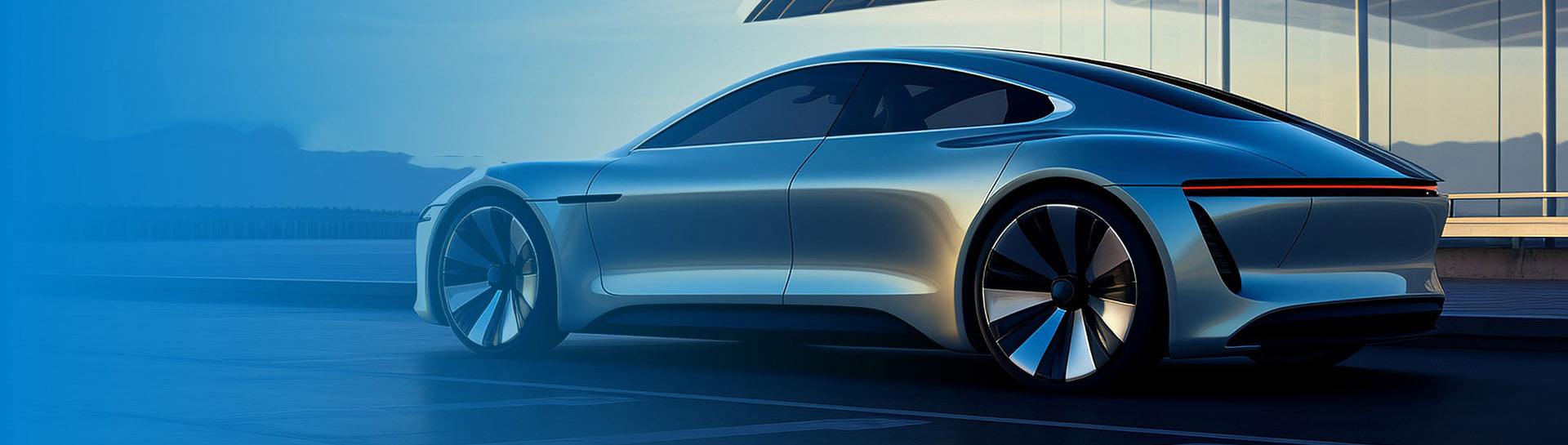
2. Automotive & New Energy Components
In the automotive industry, integrated laser cutting and engraving produces body structural brackets, interior trim parts, battery system components and sensor parts. Cutting completes contour forming and hole processing, while engraving adds traceability codes, part numbers and production information. Permanent marks withstand harsh vehicle operating environments, and high batch consistency meets strict automotive quality standards, supporting full lifecycle traceability management.
3. Electronics & Electrical Enclosures
Electrical chassis cabinets, equipment housings, heat sinks and shielding covers are commonly processed by integrated laser technology. Cutting forms the outer shape, ventilation holes and mounting positions, while engraving adds product parameters, warning signs and brand logos. Smooth burr-free edges avoid short-circuit risks, and clear permanent marks ensure long-term identification effectiveness, adapting to diversified production needs in the electronics industry.
4. Medical & Healthcare Equipment
Medical device housings, surgical instrument accessories, equipment panels and measuring tool parts rely on integrated laser processing for fabrication. Clean, burr-free edges are easy to clean and disinfect, meeting medical hygiene requirements, and engraved batch codes and traceability marks support medical device quality management. High precision and stable quality comply with strict medical industry production standards.
5. Architectural Decoration & Premium Hardware
Decorative metal screens, hollow partitions, door hardware, sanitary accessories and decorative trim widely adopt integrated laser processing. Cutting creates custom hollow shapes and contours, while engraving adds delicate patterns, textures and brand logos. The combination of hollow structure and surface texture creates rich layered decorative effects, improves product grade and adapts to personalized architectural decoration project needs.
6. Commercial Signage & Display Products
Store signs, wayfinding signs, display stands, exhibition props and advertising signs are typical applications. Cutting forms various irregular contours, and engraving adds text, patterns and decorative textures. Permanent wear-resistant marks maintain good visual effect for a long time, and flexible custom design adapts to diverse commercial space display needs, helping brands build a unified high-end visual image.
7. Craft Gifts & Promotional Products
Custom metal bookmarks, medals, ornaments, business gifts and promotional souvenirs are produced through integrated laser processing. Cutting creates various special-shaped contours, and engraving adds personalized text, commemorative patterns and exclusive logos. Fast custom production and permanent clear marks meet demand for personalized customized gifts, making it the preferred process for high-end custom craft gifts.
Conclusion
Precision engraving and laser cutting integrates structural cutting and surface engraving into one efficient digital production flow, delivering core advantages including high alignment accuracy, zero tooling cost, wide material adaptability and stable batch quality. It solves the pain points of low efficiency, large error and high cost in traditional split processing, and has become a mainstream one-stop fabrication solution across industrial, commercial and creative fields.
As demand for customized production and integrated component design continues to grow, integrated laser engraving and cutting technology will further develop toward higher precision, higher automation and wider material compatibility, playing a greater role in more industrial scenarios and providing stronger support for manufacturing efficiency improvement and product innovation.