
Sheet Metal Laser Cutting: Process, Advantages & Industrial Fabrication Applications
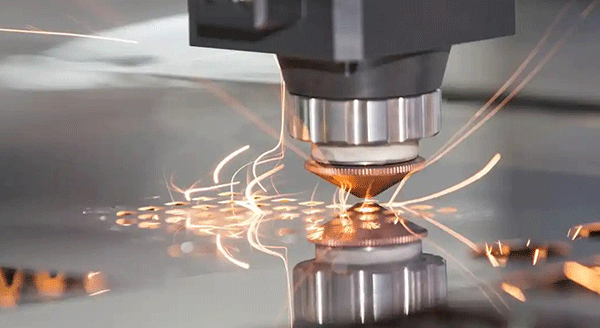
Sheet metal laser cutting is a CNC‑driven thermal fabrication process widely adopted in modern sheet metal manufacturing. By focusing high‑energy laser beam onto flat metal sheet surface, the equipment melts, vaporizes or burns through targeted areas, while high‑pressure assist gas blows away molten residues to form clean cutting paths. As a non‑contact processing method, it eliminates rigid tool pressing on workpieces, delivering high‑accuracy profiles for simple outlines and highly complex geometric patterns alike. Compatible with diverse metal sheets from ultra‑thin foils to medium‑thick plates, this technology serves prototype development, small‑batch custom orders and mass industrial production.
The standard sheet metal laser cutting workflow starts with digital file preparation. CAD drawings are imported into CAM nesting software, which arranges multiple parts reasonably on raw sheet material to reduce leftover waste and improve material utilization rate. After program conversion to machine‑readable code, operators fix sheet metal on the worktable and adjust laser focus, nozzle distance, assist gas type and pressure according to material grade and thickness. During cutting, the laser head moves along programmed trajectories. Once cutting completes, parts are separated from sheet skeleton, then go through deburring, edge cleaning, inspection and subsequent secondary operations such as bending, tapping or surface treatment.
Product Features
- High dimensional precision and tight tolerance. Modern fiber laser equipment achieves typical tolerances around ±0.1 mm for thin and medium sheet metal. Narrow kerf width allows fine internal features, small holes and intricate contours which are hard to realize via punching or shearing.
- Non‑contact cutting without mechanical deformation. Since no punch or die touches workpiece, sheet metal avoids squeezing marks, indentations and physical distortion caused by mechanical stamping. Ultra‑thin sheets can maintain flatness under proper parameter control.
- No dedicated tooling requirement. Different part designs only need updating digital programs, no custom molds or stamping dies. It greatly lowers upfront cost for frequent design revisions, prototypes and mixed‑batch production.
- Clean cutting edge quality. With proper assist‑gas selection, most sheet metal obtains smooth edges with minimal dross. Nitrogen cutting produces oxide‑free bright edges for stainless steel and aluminum, reducing heavy post‑polishing workload.
- Broad material compatibility. Works with carbon steel, stainless steel, aluminum alloy, galvanized sheet, brass and copper. Adjustable power settings cover ultra‑thin foils as well as medium‑thickness industrial sheet plates.
- Flexible geometry capability. Supports straight cuts, curved contours, sharp corners, slots, meshes and patterned cutouts. Complex one‑piece outlines can be finished in single processing step.
- Efficient material nesting. Intelligent nesting software optimizes part layout, maximizes sheet usage and effectively cuts raw‑material cost for large‑volume projects.
Core Functions
First, high‑precision profile blanking for sheet‑metal components. It cuts flat blanks ready for follow‑up bending and forming, serving as primary blanking solution for sheet‑metal fabrication workshops.
Second, complex pattern and internal feature machining. It creates slots, small holes, decorative cut‑outs and mesh structures on sheet surfaces, fulfilling both functional structural requirements and decorative appearance demands.
Third, rapid prototype verification. Short setup cycle supports fast iteration of engineering prototypes. Design modifications can be completed by editing digital files, shortening product development cycle.
Fourth, mixed‑batch flexible production. It switches between different part specifications quickly without tool change, suitable for mixed‑order production with multiple part types and variable quantities.
Fifth, pre‑processing for subsequent assembly. Well‑controlled edge quality offers good welding and bonding conditions. Clean laser‑cut edges reduce preparation work before welding, painting or surface coating.
Application Fields
Sheet metal laser cutting covers extensive industrial sectors. In general machinery manufacturing, it produces equipment housings, protective covers, mounting brackets, support plates and cabinet structural parts, delivering stable‑performance sheet‑metal components for automation devices.
In automotive industry, it processes automotive interior trim panels, chassis accessories, exhaust system sheet parts and new‑energy battery housing components. High‑precision cutting meets strict dimensional requirements for vehicle assemblies.
For electronics and electrical industries, it manufactures instrument enclosures, shielding sheets, conductive shims and control cabinet panels. Thin stainless‑steel and aluminum sheets are commonly processed with fine feature requirements.
In advertising and architectural decoration, laser‑cut sheet metal creates metal letters, logos, decorative screens, wall panels and art metalwork. Diverse hollow‑out patterns enrich building and commercial‑space visual effects.
Medical and laboratory equipment also apply laser‑cut sheet‑metal parts, including equipment frames, protective housings and internal structural supports made of corrosion‑resistant stainless‑steel sheets.
In aerospace and transportation, it fabricates lightweight aluminum‑alloy sheet components with high‑precision dimensional demands, supporting strict weight‑control specifications.
Even though sheet metal laser cutting brings prominent advantages, users should notice its practical limits. Heat input may cause minor heat‑affected zones; ultra‑thin sheets need careful parameter tuning to reduce warping risk; extra‑thick plates are more economical with alternative cutting technologies. Reasonable design parameters, material selection and process setting will maximize part quality.
As fiber‑laser hardware and nesting software keep upgrading, sheet metal laser cutting continuously improves in speed, accuracy and cost performance. It remains an irreplaceable core process within modern sheet‑metal fabrication industry.