
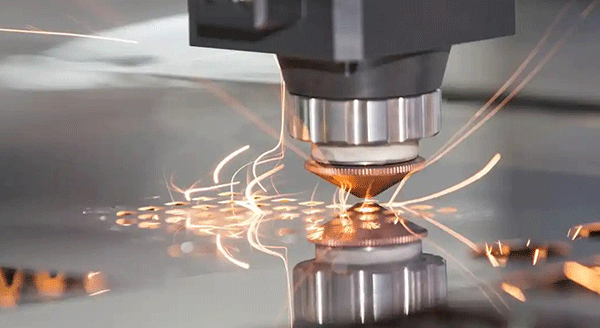
Laser Cutting Factory | Custom Metal Laser Cutting & Precision Sheet Metal Fabrication
A professional laser cutting factory relies on fiber laser cutting equipment to provide customized metal processing solutions for global industrial customers. The services cover prototype trial production, small-batch orders and mass manufacturing. Laser cutting factories serve a wide range of industries including new energy, electronics, automation equipment, automotive, medical instruments, environmental protection machinery and communication equipment. When selecting a reliable laser cutting factory, buyers need to evaluate equipment configuration, technical capability, quality control system and supporting processing capacity to avoid unstable dimensional accuracy, poor edge quality and delayed delivery.
Main Processable Materials
Qualified laser cutting factories support various ferrous and non-ferrous metals:
- Carbon steel, mild steel
- Stainless steel: 304, 316L, spring stainless steel
- Aluminum alloys: 1060, 5052, 6061, 6063
- Brass, copper, phosphor bronze
Processing thickness ranges from ultra-thin sheets starting at 0.1 mm to thick plates over 20 mm. Factories with complete parameter databases can handle both thin sheet anti-deformation processing and thick plate high-speed cutting.
Core Competitiveness of a Standard Laser Cutting Factory
- Self-owned laser equipment Professional factories deploy multiple fiber laser cutting machines rather than outsourcing all orders. Operators adjust laser power, cutting speed, focal length and auxiliary gas pressure according to different materials and thicknesses to stabilize cutting quality.
- Complete supporting processing lines One-stop services include deburring, bending, tapping, welding, grinding, sandblasting, passivation and surface coating. Customers can obtain finished assembly-ready components without cooperating with multiple suppliers.
- Professional engineering DFM support Engineers review DXF, DWG and PDF CAD drawings in advance. They identify structural risks such as sharp corners, tiny holes and narrow strips and provide optimization suggestions to reduce defective rate.
- Standardized quality inspection Equipped with calipers, micrometers and image measuring instruments for dimension inspection. Appearance inspection ensures minimal burrs and clean cutting edges.
- Flexible production schedule Support urgent prototype orders as well as stable mass production, with controllable delivery cycles.
Standard Service Workflow of Laser Cutting Factory
- Inquiry: Customers provide CAD drawings, material grade, thickness, quantity, tolerance and surface requirements.
- Drawing review & quotation: Technical team completes manufacturability assessment and issues formal quotation.
- Order confirmation and production arrangement: Arrange raw materials, optimize nesting layout to improve material utilization and control costs.
- Laser cutting production: Nitrogen cutting for stainless steel, aluminum and thin sheets to achieve oxide-free bright edges; oxygen cutting for carbon steel to improve efficiency.
- Inspection and secondary processing: Carry out dimensional testing and surface treatment according to requirements.
- Protective packaging and shipment: Use isolation films and hard packaging to prevent scratches and deformation during transportation.
Typical Laser Cutting Products
Equipment brackets, EMI shielding sheets, heat sinks, precision shims, filter mesh, battery structural parts, sensor accessories, automation fixture components, mechanical housing panels.
Supplier Selection Tips for Laser Cutting Factory
- Confirm whether the factory owns workshops and laser machines; heavy outsourcing easily leads to unstable quality.
- Verify experience in processing thin metal sheets if ultra-thin components are required.
- Clarify tolerance range and inspection standards before placing orders.
- Confirm available post-processing items to avoid additional cross-factory processing.
Laser Cutting VS Photochemical Etching
Laser cutting factories excel at processing medium-thick plates and large-size parts. However, thermal impact will exist on ultra-thin metal below 0.2 mm, which may cause warping. Photochemical etching achieves stress-free processing for 0.01 mm–1.5 mm ultra-thin metal, suitable for elastic shims, micro-hole components and high-flatness precision parts. Buyers can select appropriate processing technology according to product specifications.
Conclusion
A trusted laser cutting factory acts as a stable long-term processing partner for industrial purchasers. With advanced laser equipment, mature technical parameters, standardized inspection procedures and complete post-processing capacity, factories can deliver consistent custom metal cutting services covering sampling to mass shipment. Global buyers should fully compare technical strength, delivery performance and quality stability when cooperating with a laser cutting factory to reduce procurement risks.