
# Precision Laser Cut Components – High Accuracy Custom Metal Fabrication
Precision Laser Cut Components – High Accuracy Custom Metal Fabrication
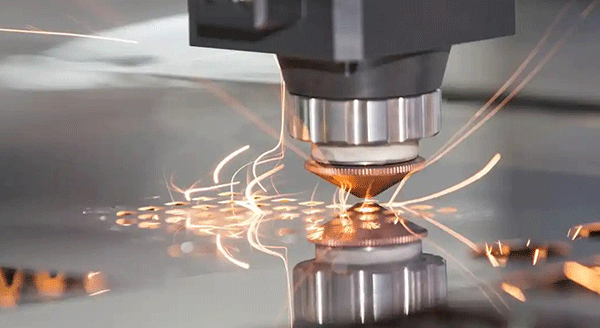
Precision laser cut components refer to metal parts manufactured via advanced fiber laser cutting technology under strict tolerance control. Widely adopted across precision machinery, new energy, automotive, medical equipment, electronics, communication and aerospace industries, these components require consistent dimensional accuracy, clean cutting edges and stable flatness. Unlike conventional laser cutting for general structural parts, the production of precision laser cut components relies on optimized equipment parameters, precise fixture positioning, professional DFM guidance and complete quality inspection systems to meet strict technical specifications.
Raw Materials for Precision Laser Cut Components
A broad range of ferrous and non-ferrous metals can be processed into precision laser cut components:
- Stainless steel: 304, 316L, spring stainless steel
- Aluminum alloys: 1060, 5052, 6061, 6063
- Carbon steel, mild steel
- Brass, phosphor bronze, copper
Available thickness ranges cover ultra-thin sheets starting from 0.1 mm up to medium-thick plates above 12 mm.
Core Features of Qualified Precision Laser Cut Components
- Controlled tight tolerance Stable dimensional tolerance reaches ±0.05 mm ~ ±0.15 mm depending on material thickness. Critical dimensions can achieve higher precision via optimized nesting and cutting parameters.
- High-quality cutting edges Nitrogen-assisted cutting delivers smooth, burr-minimized, oxidation-free edges, reducing workload for subsequent deburring and polishing.
- Low thermal deformation Technicians implement low-heat-input cutting strategies, reasonable part spacing and optimized cutting sequences to restrain warping, especially vital for thin precision components.
- Consistent repeatability Digital program control ensures identical dimensions between samples, small batches and mass production batches.
Standard Production Workflow for Precision Laser Cut Components
- Drawing submission and professional DFM review Customers provide CAD files (DXF/DWG/PDF). Engineers analyze tiny holes, sharp corners, narrow slots and thin strips, offering structural optimization to avoid processing defects.
- Quotation confirmation and production planning Clarify material grade, thickness, tolerance requirements, surface standards and order volume before issuing formal quotation.
- Raw material preparation and precision nesting Select flat, qualified metal sheets. Intelligent nesting reserves proper gaps between components to avoid heat accumulation.
- Precision laser cutting Adopt dedicated precision cutting parameters, adjusting laser power, speed, focus height and gas pressure to guarantee penetration while controlling thermal impact.
- Strict dimensional & visual inspection Use calipers, micrometers and image measuring instruments to verify key dimensions. Burrs and sharp edges are removed via deburring if required.
- Secondary processing & protective packaging Optional services: bending, tapping, welding, sandblasting, passivation, anodizing. Components are separated with protective films to prevent scratches during transit.
Typical Precision Laser Cut Components
EMI shielding sheets, precision shims, sensor brackets, battery connection plates, filter mesh panels, instrument contact pieces, automation fixture parts, medical equipment structural components, automotive sensor housings.
Design Tips for Precision Laser Cut Components
- Replace sharp internal corners with fillets to eliminate overburning and dimensional deviation.
- The minimum hole diameter is recommended to be equal to or greater than material thickness.
- Avoid ultra-long narrow strips which easily deform under laser heat.
- Clearly mark critical dimensions and tolerance zones on drawings to guide inspection standards.
Precision Laser Cut Components VS Photochemically Etched Parts
Precision laser cutting works well for medium-thickness materials, larger outlines and structures requiring higher mechanical strength. However, thermal influence inevitably exists on ultra-thin sheets. Photochemical etching produces stress-free micro-components within 0.01–1.5 mm thickness, without thermal deformation. It is more suitable for ultra-thin elastic components, dense micro-hole arrays and ultra-flat precision parts. Buyers select processes according to thickness, precision targets and flatness requirements.
Conclusion
Precision laser cut components serve as core structural and functional parts in high-end industrial equipment. Manufacturing reliable precision components requires coordinated advantages including advanced fiber laser machines, experienced technical teams, standardized quality control and complete post-processing capabilities. When selecting suppliers, purchasers should confirm tolerance control capacity, thin material processing experience and inspection equipment to achieve stable, high-quality custom precision laser cut components from prototype sampling to mass delivery.