
# Aluminum Laser Cutting: Precision Processing for Aluminum Alloy Components
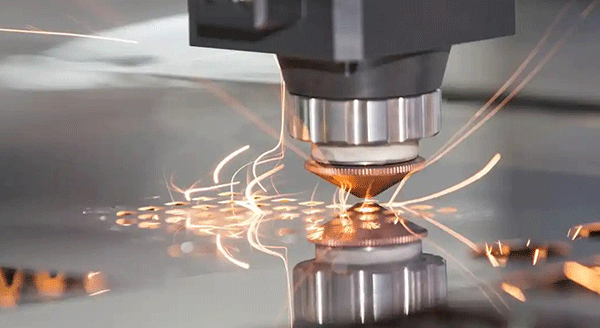
Aluminum laser cutting uses high-power fiber laser equipment to cut aluminum and aluminum alloy sheets into custom shapes. Aluminum features low density, excellent thermal conductivity and good corrosion resistance, making laser-cut aluminum parts widely used in new energy, electronics, automation equipment, automotive, aerospace and architectural industries. Common materials include 1060 pure aluminum, 5052 aluminum alloy, 6061, 6063 aluminum alloy. Due to aluminum’s high reflectivity and fast heat conduction, aluminum laser cutting puts forward higher requirements on laser equipment and processing parameters. Selecting experienced manufacturers helps avoid incomplete cutting, burr residues and thermal deformation.
Processing Principle of Aluminum Laser Cutting
Aluminum has strong reflectivity to laser beams. High-power fiber lasers are adopted to deliver sufficient energy to melt the base material. High-pressure nitrogen is commonly used as auxiliary gas during aluminum cutting. The gas blows away molten aluminum slag to form smooth cutting seams and reduce edge oxidation. Oxygen cutting is rarely used for aluminum alloys. The reaction is unstable and easily leads to excessive slag, rough surfaces and poor dimensional consistency. Laser cutting is non-contact processing without molds, capable of machining complex curves, special holes and irregular outlines efficiently.
Standard Workflow of Aluminum Laser Cutting
- Drawing Review & DFM Analysis Customers provide CAD files in DXF, DWG or PDF format. Engineers check structural rationality, and offer optimization suggestions for sharp corners, narrow strips and tiny holes to lower risks of overburning and deformation.
- Quotation & Order Confirmation Confirm aluminum grade, sheet thickness, quantity, tolerance and surface requirements, then issue formal quotation.
- Material Preparation & Nesting Programming Arrange raw aluminum plates. Technicians optimize nesting layout to improve material utilization and control manufacturing costs.
- Laser Cutting Production Adjust laser power, cutting speed, focal position and nitrogen pressure according to plate thickness. Reasonable parameter matching ensures full penetration and cleaner cutting edges.
- Inspection & Secondary Processing Finished aluminum components go through dimensional and appearance inspection. Optional processes include deburring, bending, tapping, welding, polishing, sandblasting and anodizing pre-treatment.
- Packaging & Delivery Aluminum surfaces are easily scratched, so protective film isolation is required during packaging before scheduled shipment.
Common Aluminum Grades & Processable Thickness
Main aluminum alloys for laser cutting:
- 1060 pure aluminum: good ductility, suitable for heat dissipation plates, conductive parts and shielding components.
- 5052 aluminum alloy: moderate strength, excellent anti-rust property, widely used for equipment housings and structural brackets.
- 6061 / 6063 aluminum alloy: high strength, good machinability, ideal for automation and mechanical structural parts.
Processing thickness covers ultra-thin sheets starting from 0.2 mm up to thick aluminum plates over 15 mm.
Core Advantages of Aluminum Laser Cutting
- No mold investment. Flexible for prototype trial and small-batch customization; drawings can be modified quickly.
- High processing precision. Stable tolerance reaches ±0.05mm ~ ±0.2mm depending on thickness. Complex continuous curves and dense hole arrays can be completed in one cutting procedure.
- Fast processing speed, suitable for mass production.
- Wide thickness adaptability, covering thin heat sink sheets and thick structural aluminum plates.
- Strong process compatibility, easy to cooperate with subsequent bending, welding and surface treatment.
Processing Challenges & Design Guidelines
Aluminum conducts heat rapidly. Thin aluminum sheets are prone to thermal deformation. Its high reflectivity may cause unstable cutting if parameters are not properly set. Design recommendations:
- Add rounded fillets at inner corners to reduce overburn.
- Minimum hole diameter should not be smaller than plate thickness as a general rule.
- Avoid extremely long and narrow thin strips to prevent distortion during cutting.
- For ultra-thin aluminum below 0.15mm with high flatness requirements, alternative manufacturing processes can be evaluated.
Aluminum Laser Cutting VS Photochemical Etching
Aluminum laser cutting is suitable for medium-thick aluminum plates and large-size parts. However, laser thermal impact may trigger deformation on ultra-thin aluminum sheets. Photochemical etching fits 0.01–1.5mm ultra-thin metal. But aluminum etching stability is limited; many manufacturers cannot support aluminum photo etching. Buyers need to confirm process feasibility in advance.
Typical Applications of Laser Cut Aluminum Parts
New energy battery accessories, heat sink plates, equipment shielding housings, automation equipment brackets, automotive lightweight components, aerospace thin-walled parts, architectural decorative panels, precision instrument structural components.
Conclusion
Aluminum laser cutting is an efficient flexible manufacturing solution for aluminum alloy parts. With strong adaptability to complex graphics and diversified post-processing matching capability, it meets demands from sample development to continuous mass production. When selecting suppliers, buyers should verify equipment power, rich experience in aluminum cutting, parameter control ability and supporting post-processing services to guarantee stable quality of finished aluminum components.