
Steel Laser Cutting Design: Guidelines, Rules & Best Practices
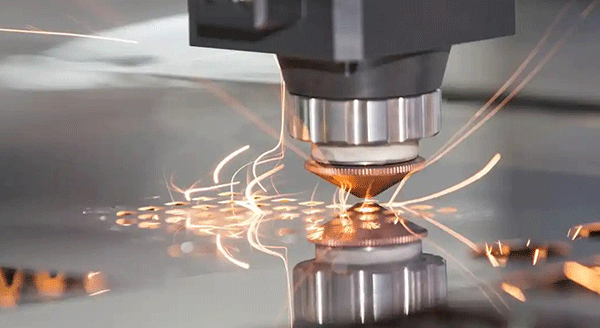
Steel laser cutting design covers standardized structural principles and process-oriented rules for fabricating carbon steel, stainless steel, and spring steel via fiber laser cutting. Proper design is the foundation of high-quality steel parts, directly impacting dimensional accuracy, edge finish, flatness, production yield and manufacturing cost. Unlike stamping and CNC machining, laser cutting features unique process characteristics including fixed kerf width, limited minimum feature size and inevitable heat-affected zones. Following standardized steel laser cutting design guidelines helps designers create fully manufacturable drawings, avoid structural defects, reduce prototype failures, and produce burr-free, high-precision steel components for industrial applications.
These design standards apply to all common steel laser cut products, including thin steel shims, elastic spring sheets, perforated panels, thick steel brackets and mechanical structural parts. Unified design specifications ensure stable quality from rapid prototyping to mass production, solving common problems such as burning, deformation, incomplete cutting and poor assembly compatibility.
1. Core Dimensional Design Parameters
Matching structural feature sizes with steel thickness is the core of qualified laser cutting design. All steel materials have fixed minimum processable dimensions, and non-compliant designs will lead to defective parts and low yield rates.
Minimum hole diameter is the most basic design rule. For conventional carbon steel and stainless steel, the standard minimum hole size equals the material thickness. A 1mm steel sheet requires a minimum 1mm hole; smaller holes cause laser beam overlap, material burning and rough inner wall burrs. For thin steel below 1.5mm, slight size reduction is feasible with optimized laser parameters, but ultra-micro holes are not recommended for structural functional parts.
Minimum slit and gap width must be strictly controlled. The conventional laser kerf ranges from 0.1mm to 0.15mm, so all narrow slots and pattern spacing should exceed 0.2mm. Too narrow gaps leave residual steel connections, cause incomplete cutting, and trigger local overheating that warps thin steel sheets.
Minimum edge margin is essential for thin steel plate processing. Patterns too close to the sheet edge easily cause edge collapse and uneven heating. Reserving a margin of 1.5 times the steel thickness ensures stable cutting and flat finished surfaces.
2. Standard Tolerance Design Rules
Steel laser cutting has stable and fixed tolerance ranges that designers must reserve in advance. For 0.5mm to 6mm thick carbon steel and stainless steel parts, the standard industrial tolerance is ±0.05mm to ±0.1mm. For thick steel plates above 8mm, increased thermal expansion raises the standard tolerance to ±0.15mm to ±0.2mm.
Blind zero-tolerance design is impractical and uneconomical for laser cutting. Excessively strict tolerance requirements extend processing time, reduce production yield and increase costs without improving assembly performance. For matching holes, positioning slots and assembly structures, designers should adopt standard industrial tolerance matching to balance precision and cost efficiency.
3. Thermal Deformation Prevention Design
Steel is highly sensitive to laser thermal energy. Long continuous cutting paths, dense clustered patterns and asymmetrical structures cause uneven heat distribution, leading to bending, warping and torsion deformation of steel sheets.
Optimized laser cutting design effectively avoids thermal defects. Designers can disperse dense holes and slits, break long continuous cutting paths, and add auxiliary process gaps for large thin steel panels. Symmetrical structural layouts balance thermal stress concentration. For ultra-thin steel below 0.8mm, reducing large-area hollow structures fundamentally prevents irreversible post-cutting warping.
4. Material-Specific Custom Design Guidelines
Different steel grades have distinct thermal conductivity and hardness, requiring targeted laser cutting design adjustments to retain material performance and processing quality.
Carbon steel boasts excellent laser cutting performance with smooth edges and minimal slag. It supports complex hollow structures and dense patterns. The key design focus is optimizing cutting paths to avoid concentrated heat accumulation and deformation.
Stainless steel features low thermal conductivity and high toughness. Designs should avoid ultra-narrow slits and ultra-small holes. Thick stainless steel parts require rounded fillet transitions for corners to prevent burning and burr formation. All structures must adapt to nitrogen-assisted cutting processes for oxidation-free edges.
Spring steel has strict design restrictions for elastic performance retention. Sharp right-angle corners cause localized overheating and annealing, permanently reducing elasticity and fatigue resistance. All corners of laser-cut spring steel sheets must adopt rounded fillet designs to preserve original mechanical properties.
5. Common Design Mistakes & Structural Optimization
Most laser cutting defects stem from unreasonable structural design rather than equipment errors. Sharp internal right angles are the most prevalent flaw, leaving burning marks and stress concentration that weaken part durability. Replacing right angles with R0.3 or R0.5 rounded fillets significantly improves edge quality and structural stability.
Overly dense pattern spacing and overlapping contours cause repeated laser heating, resulting in surface oxidation, black edges and local material collapse. Optimizing pattern layout and reserving reasonable spacing enhances both cutting quality and material utilization. Additionally, ultra-thin isolated steel strips are prone to deformation from laser heat and gas impact; appropriately widening strip structures effectively improves production yield.
6. Industrial Laser Cutting Design Best Practices
Standardized production practices further elevate steel laser cutting quality. Unified fillet specifications for all corners simplify parameter debugging and ensure consistent batch quality. For thick steel parts, reserved process margins offset thermal shrinkage errors. Designers should classify structural features: prioritize efficiency for large outline cutting, and focus on precision for micro holes and narrow slots.
DFM review with professional manufacturers is essential to eliminate unfeasible designs and reduce revision cycles. Meanwhile, designs need to reserve process gaps for subsequent bending, welding, sandblasting and other post-processing procedures, realizing one-stop manufacturing compatibility.
Conclusion
Steel laser cutting design acts as a critical link between product development and industrial manufacturing. Scientific dimensional control, thermal deformation optimization, material targeted adjustment and defect avoidance rules are key to producing high-precision, low-cost and high-yield steel laser cut parts. Adhering to professional design guidelines enables designers to create manufacturable steel structures suitable for electronics, automotive, new energy, precision machinery and decoration industries, maximizing the technical advantages of laser cutting in modern precision steel fabrication.