
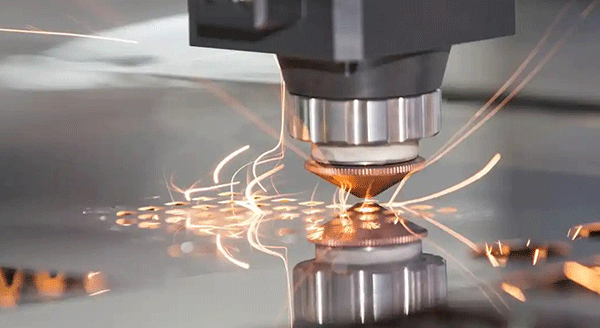
Thin Sheet Metal Services: Precision Laser Cutting Fabrication
Thin sheet metal services centered on laser cutting deliver flexible, high-precision fabrication for flat metal materials generally under 3 mm thickness. This manufacturing solution addresses the growing demand for miniature components, elastic shims, shielding parts and intricate structural panels used in electronics, automotive, new energy, medical devices and precision instrumentation. Compared with stamping, CNC machining and plasma cutting, laser cutting stands out as the preferred process for thin sheet metal thanks to non-contact processing, minimal thermal deformation and no requirement for expensive forming molds. Reliable thin sheet metal laser cutting services cover drawing review, material preparation, laser processing and optional secondary finishing to supply ready-to-assemble custom metal parts for global manufacturers.
The production workflow of professional thin sheet metal laser cutting services follows standardized digital operation procedures. Customers submit CAD files in DXF, DWG or PDF formats. Engineers conduct design for manufacturability (DFM) checks to verify minimum hole sizes, gap widths, fillet radii and tolerances. Suggestions will be offered to adjust unreasonable structures that may lead to burning, warping or incomplete cutting on ultra-thin materials. After drawing confirmation, qualified thin metal sheets including stainless steel, aluminum alloy, brass, phosphor bronze and spring steel are loaded onto automated laser cutting equipment.
A concentrated fiber laser beam melts or vaporizes metal along programmed paths. Auxiliary nitrogen or oxygen gas blows away molten residues to form clean cutting edges. Nitrogen cutting is widely adopted for thin stainless steel and spring sheets to achieve oxidation-free surfaces without heavy burrs. Once cutting finishes, components go through sorting, deburring, cleaning and quality inspection. Clients can select additional post-processing such as passivation, sandblasting, bending and anti-fingerprint coating under one-stop thin sheet metal services.
Working with thin metal sheets brings unique processing challenges. Ultra-thin materials are highly vulnerable to uneven heat distribution. Continuous long cutting paths and densely arranged patterns easily cause thermal stress, resulting in sheet bending and surface distortion. Professional service providers optimize laser parameters including power, cutting speed and focal position to control the heat-affected zone. Reasonable nesting layout and cutting path sequencing help balance temperature across the sheet and maintain flatness of finished thin metal components.
There are clear advantages when choosing laser cutting within thin sheet metal services. First of all, non-contact processing avoids mechanical squeezing and surface scratches that frequently occur during stamping. Ultra-thin foils down to 0.05 mm can be processed without wrinkling. Secondly, narrow laser kerf improves material utilization, effectively lowering raw material costs for high-volume thin sheet projects. Complex contours, narrow slots and dense micro-perforations can be completed in a single cutting step.
Another key benefit is strong flexibility for product iteration. Since no hard molds are needed, designers can modify outlines quickly during prototype testing. Thin sheet metal laser cutting services support single samples, small-batch trial runs and continuous mass production, shortening new product development cycles significantly. Precise dimensional consistency guarantees interchangeability of parts during assembly, which is critical for miniaturized electronic equipment and sensor assemblies.
Material selection covers a broad range of industrial thin metals. 304 and 316L stainless steel thin sheets are common for corrosion-resistant shielding and filter components. Aluminum alloy thin sheets are favored for lightweight heat dissipation structures. Copper and bronze alloys are widely used for conductive contacts and elastic terminals. Spring steel thin sheets rely on carefully tuned laser parameters to prevent local annealing, preserving elasticity and fatigue resistance for repeated compression applications.
A wide spectrum of finished components comes from thin sheet metal laser cutting services. Typical products include EMI shielding frames, battery contact shims, heat sink panels, precision gaskets, micro filter screens, optical slits, sensor brackets and decorative perforated panels. These thin metal parts must satisfy strict requirements for flatness, edge quality and dimensional accuracy under limited assembly space.
Several practical guidelines help clients achieve better outcomes when ordering thin sheet metal services with laser cutting. Designers should avoid sharp inner corners; rounded fillets reduce burning marks and stress concentration. Feature sizes must match sheet thickness to prevent incomplete cutting. Clear specifications for material grade, thickness, tolerance and surface finish should be noted on drawings. For elastic thin sheets, communicate application requirements with manufacturers so laser settings can be adjusted to protect material elasticity.
In summary, thin sheet metal services based on laser cutting provide an efficient, reliable fabrication route for precision thin metal components. Combining digital flexibility, stable accuracy and broad material compatibility, laser cutting solves many manufacturing difficulties faced by ultra-thin sheet processing. As industries keep advancing toward miniaturization and lightweight design, professional thin sheet metal laser cutting services will remain an essential partner for component designers and manufacturing enterprises worldwide.