
What is Chemical Etching on Stainless Steel? Process, Benefits & Applications
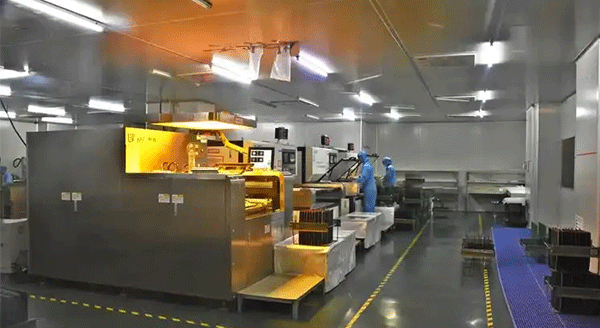
Chemical etching on stainless steel is a non-contact cold subtractive manufacturing process that fabricates custom precision metal components through controlled chemical dissolution. It transfers pre-designed geometric patterns from digital CAD files onto stainless steel sheets via photolithography technology, then selectively removes unprotected metal areas using heated ferric chloride etchant at room temperature, ultimately producing finished parts with micron-level dimensional accuracy. Unlike stamping, laser cutting and CNC milling that rely on mechanical force or high-energy thermal impact to remove material, stainless steel chemical etching shapes parts at the molecular level through uniform chemical reaction, introducing zero residual stress, zero burrs and zero heat-affected zone to the substrate.
As one of the most widely used engineering metals, 304 and 316L stainless steel are valued across industries for their balanced corrosion resistance, mechanical strength and hygienic performance. However, traditional fabrication methods often damage the chromium-rich passive film on the stainless steel surface, degrade inherent corrosion resistance and leave burrs that compromise hygiene and assembly accuracy. Chemical etching solves these inherent defects perfectly. It fully preserves the native material properties of stainless steel while achieving complex geometries that traditional processes cannot produce economically, and has become the preferred precision fabrication solution for high-end stainless steel parts across food, medical, automotive and industrial sectors.
I. Core Characteristics of Chemical Etching on Stainless Steel
The room-temperature chemical forming mechanism gives etched stainless steel components a set of irreplaceable advantages over traditional manufacturing methods. These characteristics run through the entire product lifecycle from prototyping to mass production, directly determining part performance, reliability and total cost of ownership.
1. Stress-Free Cold Processing & Full Corrosion Resistance Retention
As a pure room-temperature cold process, chemical etching applies no mechanical extrusion force or high-temperature thermal impact to the stainless steel substrate, and causes no damage to the chromium oxide passive film that gives stainless steel its anti-corrosion properties. Stamped stainless steel parts typically carry large residual stresses that become initiation points for stress corrosion cracking in humid or mildly corrosive environments. Laser-cut parts have a 0.1–0.3mm heat-affected zone at cut edges that destroys the passive film, leading to premature edge rusting in outdoor or wet applications.
Etched stainless steel parts retain 100% of the original corrosion resistance of the base material, with no degradation in salt spray resistance, weak acid and alkali resistance and high-temperature oxidation resistance. For components used in food processing, kitchen appliances and outdoor equipment, this intact passive film directly translates to three or more times longer service life compared to laser-cut and stamped equivalents, reducing replacement and maintenance costs for end users.
2. Micron-Level Dimensional Accuracy & Unlimited Design Freedom
Precision chemical etching achieves a stable dimensional tolerance of ±0.005mm to ±0.01mm for stainless steel, with a minimum machinable line width of 0.02mm. The minimum through-hole diameter is approximately 1.1 times the material thickness per mature process standards. Critically, there is no cost penalty for geometric complexity: arbitrary curves, hollow patterns, multi-track structures and dense micro-hole arrays all form in a single process step at the same unit cost as simple basic shapes.
For complex stainless steel parts such as encoder discs, multi-finger spring contacts and micro-filter arrays, traditional processes require multiple machining steps that introduce cumulative errors, while chemical etching completes all features in one pass with high pattern fidelity. Designs optimized through fluid dynamics simulation or mechanical finite element analysis can be reproduced 1:1 without manufacturing constraints, giving engineers maximum freedom to optimize part performance.
3. Burr-Free Smooth Edges & Hygienic Dead-Zone-Free Surface
Chemical etching removes stainless steel through uniform molecular-level dissolution, producing smooth, vertically rounded edges completely free of burrs, flanging, tool marks and sharp protrusions. Stamping, punching and CNC machining inevitably leave burrs on cut edges, requiring secondary deburring operations that increase costs and can easily damage the surface passive film. Sharp burrs also trap dirt and food residues, breeding bacteria and creating hygiene hazards for food contact and medical applications.
The burr-free smooth surface eliminates the need for post-processing deburring, reduces production steps and costs, and has no hidden dead corners for dirt accumulation. It is easy to clean and sterilize, fully meeting the strict hygienic requirements of food and medical scenarios, and is a necessary condition for compliance with FDA, LFGB and other international food safety standards.
4. Wide Thickness Range & Unique Half-Etching Capability
Chemical etching supports stainless steel material thickness ranging from 0.02mm ultra-thin foil up to 2.0mm standard sheet, covering the full spectrum from micro precision components to medium-thickness structural parts. The process supports two forming modes: full through-etching for complete part separation and half-etching for controlled partial-depth features.
Half-etching is a unique advantage of chemical etching: by precisely controlling etching time, accurate partial-depth recesses can be created on the sheet surface without penetrating the material. This enables integrated formation of 3D features such as bending positioning grooves, sealing grooves, reinforcing ribs and brand logos in a single process, eliminating secondary machining operations and improving assembly alignment accuracy. For decorative and structural stainless steel parts, half-etching delivers design effects that cannot be achieved by stamping or laser processes.
5. Excellent Batch Consistency & Stable Mass Production Quality
Stainless steel etching production runs on digital photomask imaging and closed-loop controlled chemical reaction systems. Automated constant-temperature production lines maintain precise control over etchant concentration, temperature and spray pressure, ensuring every part on the same processing sheet has identical dimensions, shape and performance. Dimensional uniformity across the full production sheet exceeds 99.5%, with a comprehensive yield rate stable above 98.5%.
Compared with stamping, which suffers from gradual die wear and quality drift during long-term mass production, chemical etching maintains completely consistent accuracy from the very first part to the millionth part. There is no mold wear or recurring maintenance cost, and long-term mass production quality stability is significantly better than traditional mechanical processing. This high repeatability is highly valued by automotive, food equipment and industrial customers with strict long-term quality requirements.
6. Low-Cost Rapid Prototyping & Flexible Customization
Unlike stamping which requires expensive hardened steel dies with a production cycle of tens of days, stainless steel chemical etching uses digital photomask films as tooling. The production cost of a single photomask is less than 1/50 of a typical stamping die, and the production cycle is only a few hours. Design modifications only require updating the electronic drawing file and plotting a new mask, with no additional mold modification costs.
Prototype samples can be delivered within 24–48 hours after drawing confirmation, greatly shortening product R&D cycles and reducing trial-and-error costs. The process supports order quantities from single-digit prototype samples to millions of mass-produced parts, with no minimum order threshold, making it ideal for today’s multi-variety, small-batch customized manufacturing model.
II. Core Functions of Chemically Etched Stainless Steel Components
As a precision fabrication technology for stainless steel parts, chemical etching delivers six core functional values for downstream products, providing fundamental support for performance improvement, cost optimization and reliability enhancement.
1. Precision Filtration & Stable Flow Regulation
This is the most widely applied core function. Chemically etched stainless steel filter screens and orifice plates achieve accurate particle interception and flow control through uniformly sized micron apertures. The consistent aperture ensures stable filtration accuracy across the entire screen, and the smooth hole walls provide low and stable flow resistance, avoiding the problem of gradually increasing resistance caused by burrs and rough inner walls. They are widely used in beverage processing, hydraulic systems and water treatment equipment to ensure stable operation of fluid systems.
2. Precision Gap Compensation & Accurate Positioning Reference
Etched stainless steel shims and spacers provide accurate gap filling and positioning reference for mechanical assembly. The micron-level thickness accuracy and stress-free flat structure ensure precise control of assembly gaps, compensate for part manufacturing tolerances, and improve the overall assembly accuracy and operational stability of equipment. They are widely used in mold manufacturing, industrial automation and precision instruments to ensure repeated positioning accuracy and long-term service life of equipment.
3. Elastic Contact & Reliable Electrical Connection
Stainless steel etched spring contacts and connector springs provide reliable electrical connection and elastic preload. The stress-free structure preserves the full elastic properties of the material, delivering stable contact force and long fatigue life. They maintain consistent contact resistance during long-term cyclic operation, avoiding signal interruption caused by poor contact, and are widely used in automotive connectors, industrial control equipment and household appliance circuit systems.
4. Corrosion-Resistant Structural Support & Environmental Adaptation
Etched stainless steel structural parts combine moderate mechanical strength and excellent atmospheric corrosion resistance, serving as both functional components and structural supports. They can operate stably for long periods in humid, salt spray and mildly corrosive environments without rusting, deforming or degrading performance. They are widely used in outdoor equipment, marine facilities and chemical machinery to improve the overall reliability and service life of equipment.
5. Motion Control Sensing & Stable Signal Feedback
Etched stainless steel encoder discs and grating components serve as the core sensing elements of motion control systems to achieve high-precision detection of rotational position and speed. The stress-free structure ensures stable signal output with zero drift during long-term operation, improving the control accuracy and repeatability of automation equipment. They are widely used in servo motors, CNC machine tools and industrial robot systems.
6. Hygienic Compliance & Food Safety Assurance
The burr-free, dead-zone-free and easy-to-clean surface of etched stainless steel parts meets the strict hygienic requirements of the food and beverage industry. They can withstand repeated high-temperature cleaning and disinfection without breeding bacteria or leaching harmful substances, ensuring food safety and product quality consistency. They are core basic components of food processing equipment and commercial catering appliances.
III. Main Industrial Application Fields
Driven by the global industrial upgrading trend and growing demand for cost-effective corrosion-resistant precision parts, chemical etching of stainless steel is expanding into more and more industrial and consumer sectors.
1. Food & Beverage Processing Equipment
Food-grade 304/316L stainless steel etched parts include coffee filter meshes, beer brewing filter screens, beverage filling orifice plates, edible oil filter elements and food machinery accessories. They meet FDA and LFGB food contact safety standards, with accurate filtration accuracy and easy cleaning, ensuring consistent taste, quality and hygienic safety of food and beverage products. They are core components of high-end coffee machines, commercial brewing equipment and automated filling production lines.
2. Medical & Healthcare Devices
Medical-grade 316L stainless steel etched parts include surgical instrument components, infusion filter meshes, implantable medical accessories, biosensor parts and orthodontic brackets. The burr-free, clean and biocompatible characteristics fully comply with strict medical safety standards, and can withstand high-temperature and high-pressure sterilization without performance degradation, providing reliable support for medical device safety and efficacy.
3. Industrial Hydraulic & Automation Equipment
304 stainless steel etched filter screens, precision adjustment shims, encoder discs and elastic components are core applications in the industrial automation field. High-precision and stable-performance etched parts ensure the operational accuracy and reliability of hydraulic systems and automation equipment, reduce maintenance costs and extend equipment service life. They are widely used in hydraulic stations, CNC machine tools, automated production lines and logistics conveying systems.
4. Automotive & Transportation Components
In the automotive industry, etched stainless steel parts include transmission filter meshes, sensor shims, connector spring contacts and fuel system filter elements. Their high batch consistency, corrosion resistance and long-term stability meet strict automotive quality requirements, and adapt to the complex vehicle operating environment of vibration, temperature fluctuation and oil corrosion. They are standard components for automotive powertrain and chassis electronic systems.
5. Kitchen Appliances & Sanitary Hardware
Kitchen and sanitary products such as range hoods, coffee makers, shower heads and juicers use a large number of etched 304 stainless steel parts, including water outlet sheets, filter meshes, ventilation meshes and decorative hollow parts. The material’s excellent rust resistance and easy-to-clean surface adapt to the humid and oily kitchen and bathroom environment, while the delicate etched texture improves product appearance grade and user experience.
6. Environmental Protection & Water Treatment Engineering
In the environmental protection field, etched stainless steel filter screens are used in tap water purification, industrial wastewater pretreatment, waste gas dust removal and water reuse equipment. Excellent atmospheric and weak acid-base corrosion resistance improves the stability of environmental protection equipment, reduces replacement frequency and operation costs. They are also widely used in municipal water supply and drainage systems and swimming pool circulation filtration equipment.
7. Architectural Decoration & Premium Hardware
Etched stainless steel decorative sheets, hollowed-out signs, metal logos and hardware accessories are widely used in architectural decoration, luxury hardware and craft gifts. The process can produce exquisite complex patterns and half-etched textures that cannot be achieved by stamping, with a delicate metal texture and long-lasting rust resistance, helping brands create high-end product visual effects.
Conclusion
In summary, chemical etching on stainless steel is an advanced precision manufacturing process that uses photolithographic pattern transfer and controlled chemical dissolution to produce burr-free, stress-free, corrosion-resistant stainless steel parts with micron-level accuracy. It effectively solves the inherent defects of traditional stamping and laser processes, including edge rust, burr contamination and low processing efficiency for complex parts, and fully retains the native excellent properties of 304 and 316L stainless steel.
With the continuous development of food processing, new energy, environmental protection and consumer appliance industries, the market demand for high-precision etched stainless steel components will maintain steady growth. The process will also continue to evolve toward higher precision, wider thickness adaptation and more intelligent production, providing stronger technical support for the innovation and upgrading of various manufacturing industries.