
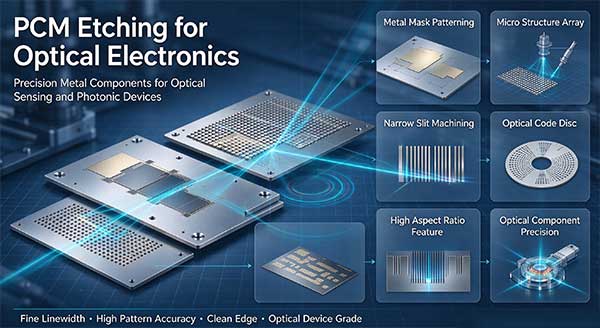
optical electronics components
PCM etching, also known as photochemical machining, is a subtractive manufacturing process ideal for producing thin metal components used in optical electronics. This non-contact machining method removes material via chemical etching, without mechanical stress or burrs on workpiece surfaces, which is critical for optical-related assemblies.
For optical electronics applications, PCM etching can fabricate a wide range of parts, including optical masks, aperture plates, light shielding sheets, micro filter screens, flexible metal shims and encoder discs. These components require extremely accurate micro openings, consistent thickness and flat surface quality to control light transmission, block stray light and ensure stable optical signal performance.
Common raw materials for PCM etching in optical electronics include stainless steel, nickel, copper, brass and titanium. Material selection depends on requirements of light shielding, conductivity, corrosion resistance and mechanical stability.
One major advantage of PCM etching is the capability to create intricate micro geometries with tight tolerances. Unlike laser cutting or stamping, PCM etching will not cause material deformation or heat affected zones. It supports fast prototype validation and mass production with the same tooling, greatly shortening development cycles for optical electronics products.
Typical application scenarios cover optical sensors, camera modules, fiber optic devices, photoelectric detectors and precision optical instruments. The process meets strict cleanliness and dimension requirements demanded by optical electronics industry.