
PEM fuel cell bipolar plate
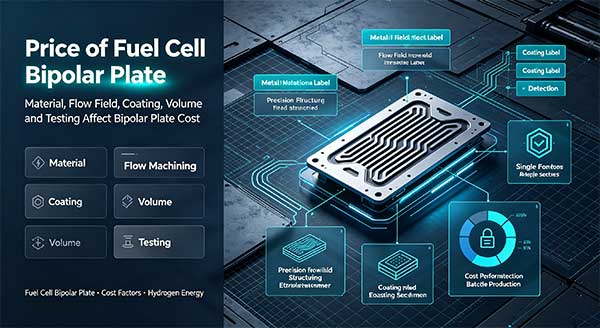
Bipolar plate is a core component of proton exchange membrane fuel cells, responsible for gas distribution, electron conduction, heat transfer and structural support. The price of fuel cell bipolar plates varies drastically, mainly divided into graphite bipolar plates and metal bipolar plates. Material, coating, flow channel structure, precision tolerance, batch size and testing requirements are the main factors affecting final quotation.
1. Main Factors Affecting Bipolar Plate Cost
1.1 Material Selection
- Graphite: Low raw material cost for simple plates. High-density, resin-impregnated graphite increases cost for gas tightness.
- Stainless Steel (316L): Dominant for automotive mass production. Thin foil (0.1–0.2mm) with conductive anti-corrosion coating is the mainstream solution.
- Titanium alloy: Excellent corrosion resistance, much higher raw material price, used for high-end, long-life and harsh-environment stacks.
1.2 Surface Coating (Critical for Metal Bipolar Plates)
Uncoated metal plates suffer high contact resistance and ion leaching. Conductive coating is mandatory for fuel cell operation. Coating type and coating thickness account for a large portion of total cost. Carbon-based coating is the most common cost-effective option. Noble metal coating delivers superior performance but sharply raises price.
1.3 Manufacturing Process
- Chemical etching: Ideal for thin metal plates with complex micro flow channels, high precision and consistent channel depth. Setup cost for photo tooling applies.
- Stamping: Low unit cost for large-volume mass production of metal bipolar plates.
- CNC machining: Used for graphite or prototype custom plates, high machining time and high cost.
1.4 Flow Channel Design & Tolerance
Complex serpentine, interdigitated or 3D flow channels increase processing difficulty. Tight tolerance on channel depth, flatness and surface roughness raises inspection cost and scrap rate.
1.5 Order Volume
- Mass production (10k+ pieces): Tooling and coating setup cost amortized, unit price drops significantly.
- Small batch / R&D prototype: High unit price, fixed setup cost cannot be shared. Sample orders usually charge separately.
1.6 Testing & Certification
Material test reports, contact resistance test, corrosion test, gas tightness inspection and third-party certification all add extra cost.
2. Reference Price Range (FOB China, for reference only)
Final quotation depends on drawing, material, coating, tolerance and quantity.
- Graphite bipolar plates Simple low-density graphite: $2–$8 / pc Resin impregnated high-density graphite: $8–$25 / pc High precision CNC machined graphite: $25–$100+ / pc
- Coated stainless steel metal bipolar plates Mass production automotive grade: $10–$35 / pc Small batch custom etched prototypes: $35–$80 / pc
- Titanium alloy bipolar plates Custom etched titanium plates: $80–$200+ / pc
3. Tips to Reduce Bipolar Plate Cost
- Choose stainless steel with carbon coating for mass automotive fuel cell stacks to balance performance and cost.
- Optimize flow channel design to reduce machining complexity while keeping gas distribution performance.
- Relax tolerance requirements where functional allow, avoid over-specification.
- Consolidate order quantity to take advantage of economies of scale.
- Select suitable coating solution; avoid precious metal coating unless required by working conditions.
4. Summary
Graphite bipolar plates are cost-effective for stationary power and low-power stacks. Coated thin stainless steel bipolar plates are the preferred choice for mass-produced automotive fuel cells. Titanium bipolar plates are premium options for high durability and corrosive environments. Send 2D drawings, material specs, coating requirements and target quantity to manufacturers for formal quotation.