
difference between photo-etched mesh and woven mesh
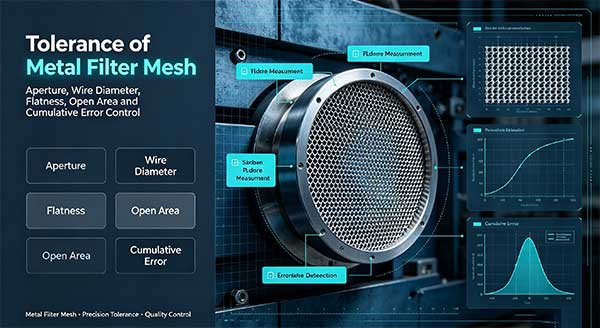
Metal filter mesh tolerance defines the allowable deviation of key parameters during manufacturing. It directly impacts filtration accuracy, assembly fit and end product performance. Different fabrication methods deliver distinct tolerance levels.
1. Core Tolerance Parameters
Aperture Tolerance
This is the most critical index for filtration.
- Photo chemical etched metal mesh: Tight aperture tolerance. Typical ±0.01~±0.03 mm for thin sheets. Consistent hole geometry, uniform edge quality.
- Woven metal mesh: Wider aperture tolerance, usually ±0.03~±0.1 mm. Variation comes from weaving wire spacing. Fine woven mesh has higher inconsistency for ultra-small holes.
Outer Dimension Tolerance
Relates to cutting or etching of the mesh outline.
- Chemical etching: ±0.02 ~ ±0.05 mm for small parts.
- Laser cutting: ±0.03 ~ ±0.1 mm, depends on material thickness and part size.
- Woven mesh blank cutting: ±0.1 mm or larger for large panels.
Material Thickness Tolerance
Based on raw metal foil/strip tolerance plus processing influence. Thin foils (0.02–0.1 mm) have more obvious thickness variation from the original material.
Flatness Tolerance
Thin metal mesh is prone to warping after processing. Flatness tolerance is specified for assembly applications. Etched mesh can be leveled to control flatness with post-treatment.
2. Main Factors Affecting Tolerance
- Manufacturing technology: Photo etching achieves tighter hole tolerance than woven mesh.
- Raw material: Original foil thickness, material hardness.
- Part size: Larger mesh panels have looser allowable tolerance.
- Post-processing: Heat treatment, flattening, cleaning.
- Inspection standard: Custom tolerance requirements can be specified on drawings.
3. Tolerance Selection Tips
- For precision filtration, sensor and automotive applications: Choose photo-etched mesh with strict aperture tolerance.
- For general coarse filtration: Woven mesh meets demand with lower cost.
- Always mark required tolerance on CAD drawings before production.
4. Common Applications
Fuel cell filters, automotive oil filter mesh, coffee filter mesh, medical filtration, industrial fluid separation, sensor protective screens.