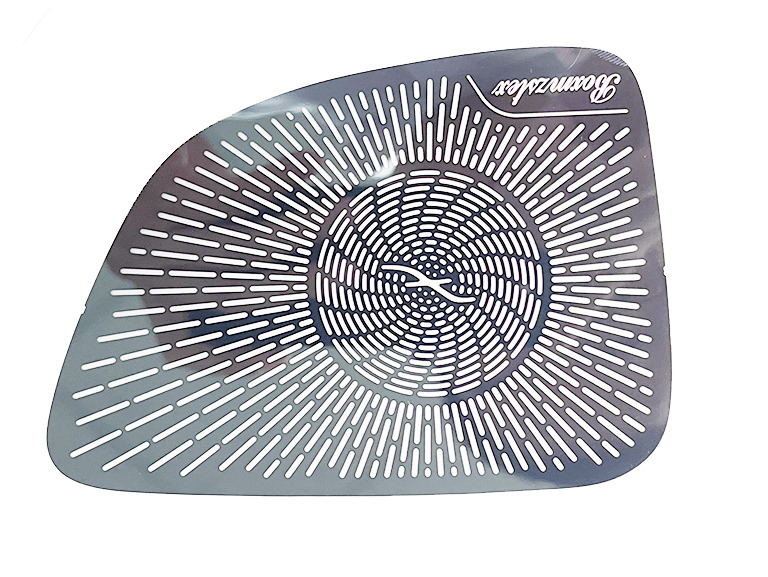
Chemical etching is a highly precise and versatile manufacturing process widely used in industries ranging from aerospace to electronics. When applied to stainless steel sheets, chemical etching offers exceptional accuracy, repeatability, and design flexibility, making it a preferred method for producing intricate components and designs. In this blog post, we’ll explore the fundamentals of chemical etching, its benefits, and its applications in processing stainless steel sheets.
What is Chemical Etching?
Chemical etching, also known as photo-chemical machining (PCM), is a subtractive manufacturing process that uses chemical solutions to selectively remove material from a metal surface. The process involves applying a resist layer (typically a photoresist) to the metal sheet, which protects specific areas from being etched. The unprotected areas are then exposed to an etchant solution, which dissolves the material to create the desired pattern or design.
This method is especially advantageous for working with thin metal sheets and for producing intricate patterns that would be challenging or cost-prohibitive using traditional machining methods.
Why Use Stainless Steel Sheets?
Stainless steel is a popular material for chemical etching due to its unique properties. It is corrosion-resistant, durable, and aesthetically appealing. Additionally, stainless steel comes in various grades, each offering specific characteristics suited for different applications. For example:
- **304 Stainless Steel:** Known for its excellent corrosion resistance and versatility, this grade is commonly used in industrial and decorative applications.
- **316 Stainless Steel:** With enhanced resistance to chemicals and saltwater, this grade is ideal for marine and medical applications.
- **430 Stainless Steel:** A cost-effective option with good corrosion resistance, often used in decorative and architectural projects.
Stainless steel’s ability to maintain its structural integrity and appearance after etching makes it an ideal choice for a wide range of industries.
The Chemical Etching Process for Stainless Steel Sheets
The chemical etching process typically follows these key steps:
1. **Cleaning and Preparation:** The stainless steel sheet is thoroughly cleaned to remove any contaminants, such as grease or dirt, ensuring proper adhesion of the resist layer.
2. **Laminating the Photoresist:** A light-sensitive photoresist film is applied to the surface of the sheet. This resist will define the areas to be etched.
3. **Exposure and Development:** The sheet is exposed to UV light through a photomask that contains the desired pattern or design. The UV light hardens the exposed areas of the resist, while the unexposed areas remain soft. The soft areas are then removed during the development process, exposing the underlying metal.
4. **Etching:** The sheet is immersed in a chemical etchant solution (commonly ferric chloride or similar agents) that dissolves the exposed stainless steel areas. The resist-protected areas remain intact.
5. **Stripping the Resist:** After etching is complete, the resist layer is stripped away to reveal the final etched design.
6. **Finishing:** Depending on the application, additional finishing processes such as polishing, passivation, or coating may be applied to enhance the appearance or functionality of the etched sheet.
Advantages of Chemical Etching for Stainless Steel
Chemical etching offers several benefits compared to other manufacturing techniques such as stamping, laser cutting, or CNC machining:
1. **High Precision and Accuracy:** Chemical etching can achieve tolerances as tight as ±0.025 mm, making it ideal for intricate designs and fine details.
2. **No Mechanical Stress:** Unlike stamping or machining, chemical etching does not involve physical force or heat, ensuring that the material’s structural integrity remains intact.
3. **Cost-Effective for Complex Designs:** Since no expensive tooling or molds are required, chemical etching is an economical choice for low-to-medium production volumes and prototypes.
4. **Scalability:** The process can be easily scaled up for high-volume production without compromising quality or precision.
5. **Design Flexibility:** Chemical etching allows for complex geometries and patterns that would be difficult or impossible to achieve with other methods.
6. **Consistent Quality:** The process ensures uniform results across multiple parts with minimal variation.
7. **Environmentally Friendly Options:** Modern advancements in chemical etching have led to more sustainable practices, including recycling of etchant solutions and reducing waste.
Applications of Chemically Etched Stainless Steel Sheets
Due to its precision and versatility, chemical etching is used in a wide range of industries. Some common applications include:
- **Electronics:** Stainless steel sheets are etched to produce fine components such as EMI/RFI shielding, lead frames, and connectors.
- **Aerospace:** Lightweight yet durable parts like fuel cell components, heat exchangers, and turbine blades are manufactured using this process.
- **Medical Devices:** Surgical instruments, implantable devices, and diagnostic tools benefit from the precision and biocompatibility of etched stainless steel.
- **Automotive:** Components such as gaskets, filters, and decorative trim are often created through chemical etching.
- **Decorative Applications:** Intricate patterns on elevator panels, jewelry, nameplates, and signage are made possible with chemical etching.
- **Industrial Manufacturing:** Custom meshes, screens, and filters with precise apertures are produced for various industrial applications.
Factors to Consider
While chemical etching offers numerous benefits, there are a few factors to consider when working with stainless steel sheets:
1. **Material Thickness:** Chemical etching works best with thin sheets (typically up to 1.5 mm thick). Thicker materials may require longer etching times or alternative methods.
2. **Etchant Selection:** The choice of etchant depends on the grade of stainless steel being used. For example, ferric chloride is commonly used due to its effectiveness on stainless steel.
3. **Environmental Impact:** While modern facilities implement recycling measures for chemicals, it’s important to choose a supplier that adheres to environmental regulations.
4. **Design Constraints:** While chemical etching allows for complex designs, extremely deep or three-dimensional features may be better suited for other manufacturing processes.
Conclusion
Chemical etching is an invaluable technique for processing stainless steel sheets into high-precision components with intricate designs. Its ability to deliver consistent quality without introducing mechanical stress makes it a go-to choice across many industries. Whether you’re designing delicate electronic components or creating elegant decorative pieces, chemical etching offers unmatched versatility and accuracy.
When considering chemical etching for your next project, partnering with an experienced manufacturer is crucial. A reliable provider will ensure that your specifications are met while adhering to industry standards and environmental best practices. With its numerous advantages and wide-ranging applications, chemical etching continues to be a cornerstone of modern manufacturing processes involving stainless steel sheets.
Contact: Andy_Lai
Phone: +8613144801682
E-mail: info@lasercutoem.com
Add: 208, Building B, Fushengda, No. 6, Hongkan Road, Yanchuan Community, Yanluo Street, Bao'an District, Shenzhen, China