Stainless steel is a metal material with excellent corrosion resistance, high temperature tolerance, and high strength, widely used in fields such as medical devices, aerospace, automotive parts, kitchenware, electronic products, and architectural decoration. In these areas, it is often necessary to perform precision engraving on stainless steel surfaces to achieve identification marks, patterns, text, or decorative effects. Traditional engraving methods such as mechanical cutting, chemical etching, or manual engraving, although once mainstream, have issues like low precision, slow efficiency, and high risk of material deformation. With the rapid development of laser technology, precision laser engraving has become the preferred method for stainless steel processing. It uses a high-energy-density laser beam for non-contact processing, achieving micron-level precision and complex pattern engraving. Below, we elaborate on the advantages of laser engraving for stainless steel from multiple aspects.
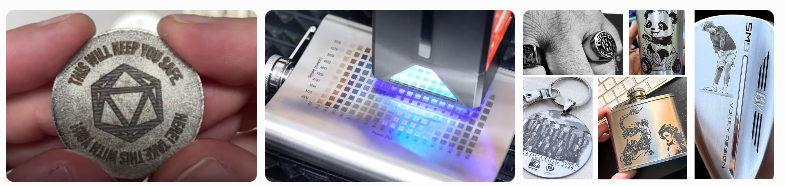
First, high precision and high resolution are the most prominent advantages of stainless steel laser engraving. The laser beam can be focused to an extremely small spot diameter, typically between 0.01-0.1mm, or even finer. This allows engraving line width errors to be controlled within 0.01mm, with positioning accuracy reaching ±0.03mm. Compared to traditional mechanical engraving, where tool wear leads to rough and uneven lines, laser is non-contact processing that produces no mechanical stress, avoiding workpiece deformation or surface damage. On stainless steel, lasers can easily engrave fine QR codes, serial numbers, miniature patterns, or complex LOGOs. For example, traceability codes on medical devices or exquisite textures on jewelry. This high precision is particularly suitable for common stainless steel grades like 304 and 316L, ensuring clear and permanent marks without affecting the overall material performance.
Second, strong permanence and durability are the core highlights of laser engraving. The laser removes or alters the stainless steel surface material through vaporization, melting, or oxidation, forming controllable-depth indentations (usually 0.05-0.5mm). These marks are resistant to corrosion, high temperatures, and wear, remaining unfaded or intact even in harsh environments like high heat, chemical corrosion, or frequent friction. Traditional chemical etching may damage the chromium oxide protective layer of stainless steel, increasing rust risk, whereas laser annealing or blackening marks produce high-contrast black markings without removing the protective layer, preserving the material's natural corrosion resistance. This is particularly crucial in aerospace and medical industries, where identifiers on aircraft parts or surgical instruments must withstand extreme conditions.
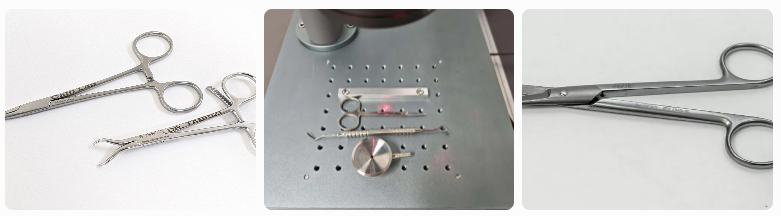
Third, high processing efficiency and fast speed are significant advantages of laser engraving. Laser engraving speeds can reach several meters per minute or higher, far exceeding traditional methods. Automated CNC systems allow complex graphics to be completed in one pass without multiple tool changes or mold making. Compared to mechanical engraving requiring frequent tool replacement and mold repair, laser processing requires no consumables (such as tools or chemicals), greatly reducing production time and costs. For batch production, stainless steel laser engraving machines enable high-speed continuous operation, increasing productivity by 3-5 times or more. At the same time, the heat-affected zone is extremely small (only a few microns), avoiding large-area thermal deformation and ensuring no warping or burning in thin stainless steel sheets (below 0.2mm).
Fourth, flexibility and safety from non-contact processing. Laser engraving has no physical contact, avoiding vibration, noise, and dust pollution in traditional methods. Workpieces do not require firm clamping, making it suitable for processing brittle or irregularly shaped stainless steel parts, such as tubes, curved surfaces, or thin-walled structures. This not only improves operational safety (no risk of mechanical injury) but also expands the application range: from flat to 3D curved surface engraving, from simple text to color marking (achieved through MOPA laser pulse control for stainless steel color effects). Additionally, laser processing is environmentally friendly, with no chemical waste discharge, complying with contemporary green manufacturing standards.

Third, high processing efficiency and fast speed are significant advantages of laser engraving. Laser engraving speeds can reach several meters per minute or higher, far exceeding traditional methods. Automated CNC systems allow complex graphics to be completed in one pass without multiple tool changes or mold making. Compared to mechanical engraving requiring frequent tool replacement and mold repair, laser processing requires no consumables (such as tools or chemicals), greatly reducing production time and costs. For batch production, stainless steel laser engraving machines enable high-speed continuous operation, increasing productivity by 3-5 times or more. At the same time, the heat-affected zone is extremely small (only a few microns), avoiding large-area thermal deformation and ensuring no warping or burning in thin stainless steel sheets (below 0.2mm).
Fourth, flexibility and safety from non-contact processing. Laser engraving has no physical contact, avoiding vibration, noise, and dust pollution in traditional methods. Workpieces do not require firm clamping, making it suitable for processing brittle or irregularly shaped stainless steel parts, such as tubes, curved surfaces, or thin-walled structures. This not only improves operational safety (no risk of mechanical injury) but also expands the application range: from flat to 3D curved surface engraving, from simple text to color marking (achieved through MOPA laser pulse control for stainless steel color effects). Additionally, laser processing is environmentally friendly, with no chemical waste discharge, complying with contemporary green manufacturing standards.
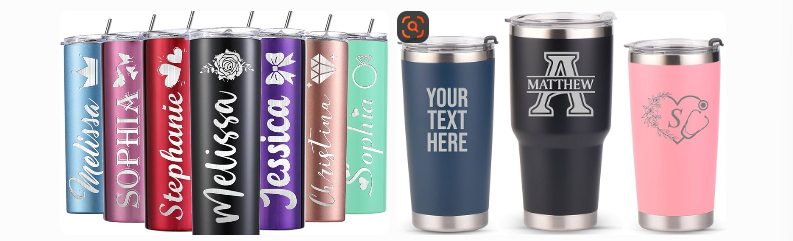
Furthermore, in specific applications, the advantages of stainless steel laser engraving are even more evident. In the medical device industry, for permanent identification on surgical tools, ensuring traceability without affecting sterility; in automotive and aerospace fields, for part numbering and anti-counterfeiting marks resistant to high temperatures and vibrations; in kitchenware and architectural decoration, for aesthetic pattern engraving to elevate product quality; in electronics, for micro-circuit boards or casing marks with micron-level precision.
Of course, laser engraving is not perfect and requires parameter optimization (such as power, speed, focus) to avoid discoloration from overheating. However, overall, compared to traditional methods, laser precision engraving comprehensively leads in precision, durability, efficiency, environmental friendliness, and flexibility, becoming the preferred technology for stainless steel processing.
In summary, the advantages of laser engraving processing for stainless steel stem from its revolutionary technical characteristics, driving the manufacturing industry toward intelligent and refined transformation. In the future, with increases in laser power and integration of AI control, this technology will further expand application boundaries, bringing innovative opportunities to more industries.
Contact: Andy_Lai
Phone: +8613144801682
E-mail: info@lasercutoem.com
Add: 208, Building B, Fushengda, No. 6, Hongkan Road, Yanchuan Community, Yanluo Street, Bao'an District, Shenzhen, China