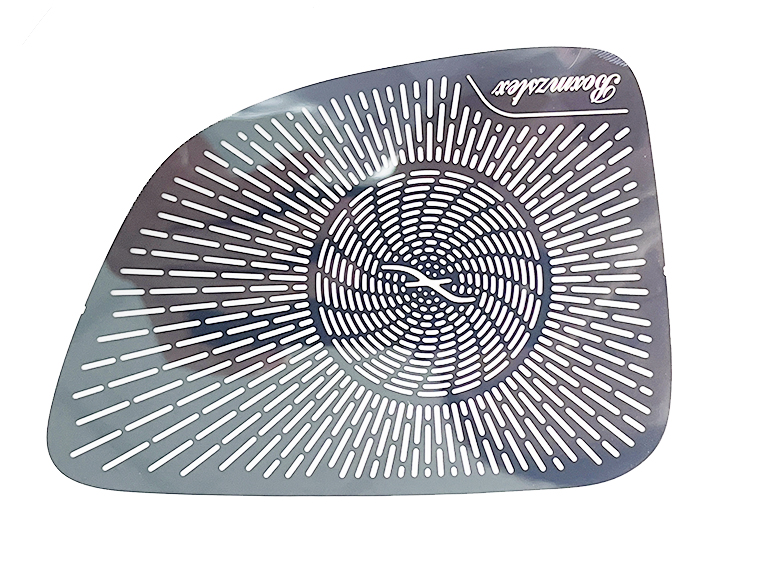
Copper photochemical etching is a precise and versatile manufacturing process utilized in various industries for creating intricate and highly detailed designs on copper and its alloys. This subtractive method employs a combination of photolithography and chemical etching to achieve high levels of accuracy, making it an essential technique for producing complex components in applications such as electronics, aerospace, automotive, and decorative arts.
The Process of Copper Photochemical Etching
The photochemical etching process begins with the preparation of the copper substrate. The surface is meticulously cleaned to remove any impurities, ensuring optimal adhesion of the photoresist material. Once prepared, a thin layer of photoresist—either positive or negative—is applied to the copper sheet. This photoresist serves as a protective mask during the etching process.
A photomask, typically made from a transparent material like glass or polyester with an opaque design pattern, is then aligned over the photoresist-coated copper. The assembly is exposed to ultraviolet (UV) light, which hardens the exposed areas of the photoresist in positive resists or softens them in negative resists, depending on the type used. After exposure, the substrate undergoes a development process where the unexposed or softened areas of the photoresist are removed, revealing the underlying copper.
The next step involves immersing the patterned copper sheet into a chemical etchant solution, commonly ferric chloride or cupric chloride. These chemicals selectively dissolve the unprotected copper areas while leaving the masked regions intact. The duration of this step is carefully controlled to achieve the desired depth and precision of the etched design. Once the etching is complete, the remaining photoresist is stripped away, leaving behind a finished component with intricate patterns and precise dimensions.
Advantages of Copper Photochemical Etching
Copper photochemical etching offers several advantages over traditional machining or stamping methods:
1. **High Precision and Complexity**: The process enables the creation of highly detailed and intricate designs with tolerances as tight as ±0.01 mm. This makes it ideal for applications requiring fine features, such as microelectronics and precision filters.
2. **No Mechanical Stress**: Unlike mechanical machining or stamping, photochemical etching does not involve physical contact with the material. This eliminates the risk of introducing stress, burrs, or deformation to the component, preserving its structural integrity.
3. **Cost-Effective for Prototyping and Low Volumes**: Since photochemical etching relies on photomasks rather than expensive tooling, it is more cost-effective for prototyping and small production runs. Design modifications can also be implemented quickly by simply altering the photomask.
4. **Material Versatility**: While particularly suited for copper and its alloys, this technique can also be applied to other metals such as stainless steel, aluminum, and nickel. This versatility makes it a valuable tool across multiple industries.
5. **Scalability for Mass Production**: Although ideal for small batches, photochemical etching can also be scaled up for high-volume production without compromising quality or precision.
Applications of Copper Photochemical Etching
Copper photochemical etching finds widespread use across numerous industries due to its ability to produce complex components with exceptional accuracy:
1. **Electronics**: The process is widely employed in manufacturing printed circuit boards (PCBs), EMI shielding components, lead frames, and connectors. The high conductivity of copper makes it an ideal material for these applications.
2. **Aerospace**: In aerospace engineering, lightweight yet durable components are essential. Photochemical etching is used to create precision parts such as fuel cell plates, heat exchangers, and sensors.
3. **Automotive**: Automotive manufacturers use this technique to produce intricate components like fuel injector plates, gaskets, and sensor elements that require tight tolerances and high reliability.
4. **Medical Devices**: Copper photochemical etching plays a role in fabricating micro-scale parts for medical devices, including surgical instruments, diagnostic equipment, and implantable components.
5. **Decorative Applications**: Beyond industrial uses, this process is also employed in creating decorative items such as plaques, jewelry, and intricate metal artwork.
Environmental Considerations
While photochemical etching offers numerous benefits, it is important to address its environmental impact. The chemical etchants used in the process can pose risks if not handled properly. To mitigate these concerns, manufacturers implement stringent waste management practices, including recycling spent etchants and adhering to environmental regulations. Advances in green chemistry have also led to the development of more environmentally friendly etching solutions.
Conclusion
Copper photochemical etching is a highly efficient and precise manufacturing technique that has become indispensable in various industries. Its ability to produce intricate designs with minimal material waste and no mechanical stress makes it an attractive option for both prototyping and mass production. As technology continues to advance, innovations in materials and processes will further enhance the capabilities of photochemical etching, ensuring its continued relevance in modern manufacturing.
Contact: Andy_Lai
Phone: +8613144801682
E-mail: info@lasercutoem.com
Add: 208, Building B, Fushengda, No. 6, Hongkan Road, Yanchuan Community, Yanluo Street, Bao'an District, Shenzhen, China