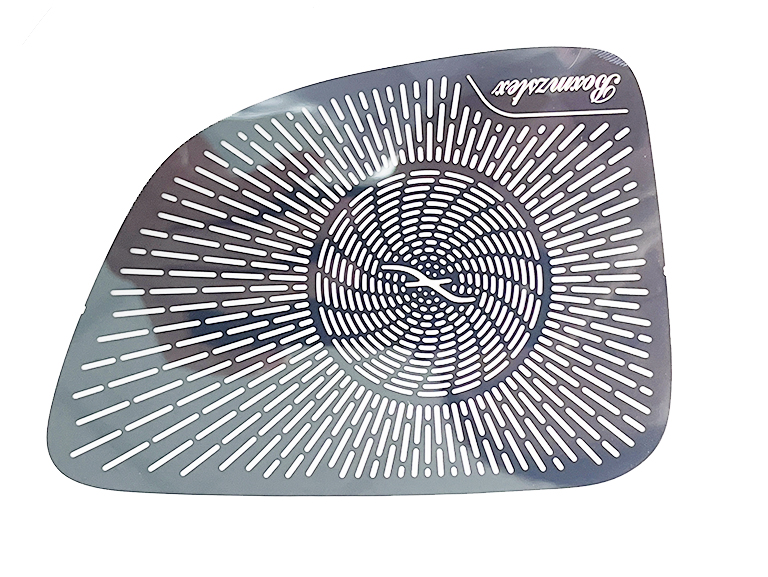
The aerospace industry demands precision, reliability, and innovation in every component it utilizes. Given the extreme conditions and rigorous performance requirements that aerospace systems endure, manufacturers must employ advanced techniques to ensure the highest standards of quality and accuracy. One such technique that has gained significant traction in recent years is photo etching, also known as chemical etching. This highly precise manufacturing process has become a cornerstone for producing intricate components used in aerospace applications.
What is Photo Etching?
Photo etching is a subtractive manufacturing process that uses chemical solutions to remove material from a metal surface with exceptional precision. The process begins with the application of a photoresist material onto the metal substrate. A photomask, which contains the desired design, is then applied, and the assembly is exposed to ultraviolet (UV) light. The UV light hardens the exposed areas of the photoresist, leaving the unexposed areas susceptible to chemical removal. Once the photoresist is developed, the metal is subjected to an etchant solution that dissolves the unprotected areas, leaving behind the intricate design.
This process is ideal for producing highly detailed and complex components with tight tolerances, making it particularly suited for the aerospace sector.
Applications of Photo Etching in Aerospace
The aerospace industry relies on advanced materials and components that can withstand high temperatures, extreme pressures, and demanding operational environments. Photo etching plays a critical role in manufacturing lightweight, high-performance parts that meet these stringent requirements. Below are some key applications of photo etching in aerospace:
1. **Engine Components**
Aircraft engines are among the most complex systems in aerospace engineering. Photo etching is used to produce components such as turbine blades, fuel injector nozzles, and cooling plates. These parts require precise geometries and smooth finishes to ensure optimal performance and efficiency.
2. **Heat Exchangers**
Heat exchangers are essential for maintaining thermal stability in aircraft systems. Photo etching enables the production of thin, intricate metal layers with microchannels that enhance heat transfer efficiency while minimizing weight—a critical factor in aerospace design.
3. **EMI/RFI Shielding**
Electromagnetic interference (EMI) and radio frequency interference (RFI) can disrupt sensitive avionics and communication systems. Photo-etched metal shields provide precise and lightweight solutions for protecting electronic components from such interferences.
4. **Aerospace Filters**
Filters used in fuel systems, hydraulic systems, and air management systems must be both durable and highly precise. Photo etching allows for the creation of fine mesh filters with consistent pore sizes, ensuring reliable filtration performance.
5. **Precision Shims and Spacers**
Shims and spacers are often required to achieve exact alignments in aerospace assemblies. Photo etching can produce these components with micron-level accuracy, ensuring proper fit and function.
Advantages of Photo Etching for Aerospace Manufacturing
Photo etching offers several advantages over traditional manufacturing methods such as stamping, machining, or laser cutting. These benefits make it particularly well-suited for aerospace applications:
1. **High Precision**
The photo etching process can achieve tolerances as tight as ±0.01 mm, making it ideal for producing intricate designs with complex geometries.
2. **Material Integrity**
Unlike mechanical processes such as stamping or machining, photo etching does not induce stress or deformation in the material. This ensures that the mechanical properties of the material remain intact, which is critical for aerospace applications where durability and strength are paramount.
3. **Design Flexibility**
Photo etching allows for rapid prototyping and easy design modifications without requiring expensive tooling changes. This flexibility is invaluable in the aerospace industry, where designs often evolve during development cycles.
4. **Cost-Effectiveness for Complex Parts**
For components with intricate designs or low production volumes, photo etching is often more cost-effective than other manufacturing methods due to its minimal tooling requirements.
5. **Wide Material Compatibility**
The process is compatible with a wide range of metals commonly used in aerospace applications, including stainless steel, titanium, aluminum, Inconel, and copper alloys.
6. **Scalability**
Photo etching can accommodate both small-scale prototyping and large-scale production runs, making it a versatile solution for aerospace manufacturers.
Challenges and Considerations
While photo etching offers numerous advantages, there are some challenges to consider:
1. **Material Thickness Limitations**
The process is most effective for thin materials, typically up to 2 mm thick. For thicker materials, other techniques such as machining may be more appropriate.
2. **Chemical Waste Management**
The use of chemical etchants requires proper handling and disposal to comply with environmental regulations. Manufacturers must implement robust waste management systems to minimize environmental impact.
3. **Surface Finish Requirements**
While photo etching produces smooth edges, additional finishing processes may be required for certain applications where surface roughness must be minimized further.
Future Trends in Photo Etching for Aerospace
As the aerospace industry continues to evolve, so too does the technology supporting it. Several trends are shaping the future of photo etching in this sector:
1. **Advanced Materials**
The development of new high-performance alloys and composite materials is driving innovation in photo etching processes to accommodate these advanced substrates.
2. **Miniaturization**
With the increasing demand for smaller, lighter components in aerospace systems, photo etching is expected to play a pivotal role in producing micro-scale parts with unparalleled precision.
3. **Sustainability**
As environmental concerns take center stage, manufacturers are exploring eco-friendly etchants and waste reduction strategies to make photo etching a more sustainable process.
4. **Integration with Additive Manufacturing**
Combining photo etching with additive manufacturing techniques offers exciting possibilities for creating hybrid components that leverage the strengths of both technologies.
Conclusion
Photo etching has established itself as a critical manufacturing process in the aerospace industry due to its ability to produce highly precise, lightweight components with complex geometries. Its advantages in terms of precision, material integrity, and design flexibility make it an ideal solution for meeting the demanding requirements of aerospace applications.
As technology continues to advance and new challenges emerge in the aerospace sector, photo etching will undoubtedly remain at the forefront of innovation, enabling manufacturers to push the boundaries of what is possible in modern aviation and space exploration.
Contact: Andy_Lai
Phone: +8613144801682
E-mail: info@lasercutoem.com
Add: 208, Building B, Fushengda, No. 6, Hongkan Road, Yanchuan Community, Yanluo Street, Bao'an District, Shenzhen, China