Sheet metal laser cutting is a cornerstone of modern manufacturing, delivering high-precision, high-speed processing of flat metal stock for industries ranging from automotive and electronics to architecture and custom fabrication. As of January 2026, fiber laser technology overwhelmingly dominates sheet metal applications due to its superior efficiency, speed, and ability to handle reflective metals.
The Laser Cutting Process for Sheet Metal
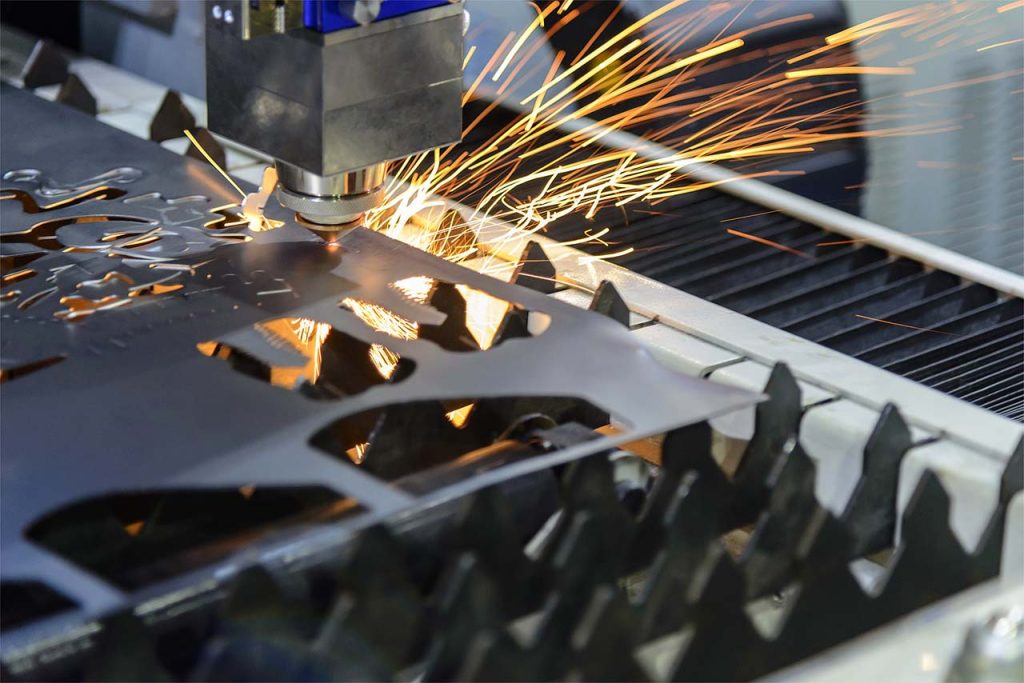
The process begins with a powerful fiber laser source generating a beam (wavelength ≈1.07 μm) that is focused to a tiny spot (typically 0.1–0.3 mm diameter) via precision optics in the cutting head. This beam heats the metal to melting or vaporization temperature almost instantly. A coaxial assist gas—oxygen for mild/carbon steel (boosting speed via exothermic reaction), nitrogen for stainless steel and aluminum (producing clean, oxide-free edges), or increasingly air for cost-sensitive jobs—ejects the molten material from the kerf (cut width).
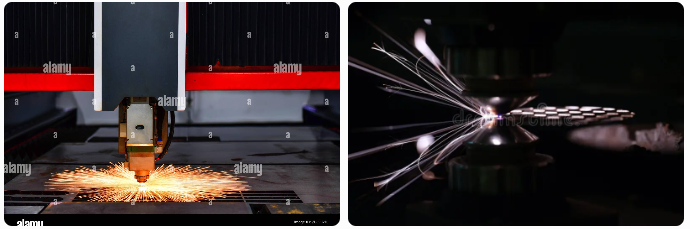
The cutting head maintains precise standoff distance using capacitive height sensing, while CNC-controlled motion follows CAD/CAM paths. Modern machines feature autofocus heads, beam shaping, and real-time monitoring to optimize parameters automatically.
Key variables include:
- Laser power — 1.5–30 kW (common shop range: 6–12 kW)
- Cutting speed — 1–120+ m/min (highest on thin sheets)
- Focal position, nozzle size, gas pressure/type
Fiber lasers absorb far better into metals than older CO₂ systems, enabling 3–10× faster cutting, 30–50% better wall-plug efficiency, and reliable processing of copper/brass without back-reflection issues.
Equipment and Cutting Capabilities in 2026
Industrial sheet metal laser cutters typically feature gantry-style beds (1.5×3 m to 2×6 m+), shuttle tables for high throughput, and advanced nesting software achieving >90% material utilization.
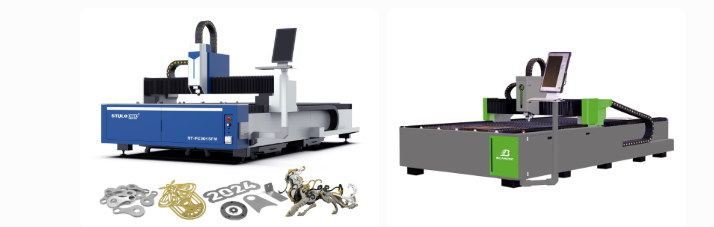
Approximate maximum thicknesses (fiber lasers, stable production cuts, 2026 data):
- Mild/carbon steel: 20–50 mm (oxygen assist pushes higher; 12 kW ≈40 mm, 30 kW+ exceeds 60–80 mm in some cases)
- Stainless steel: 15–40 mm (nitrogen assist; higher powers reach 40+ mm)
- Aluminum: 10–25 mm (reflective, but fiber excels; 20–30 kW reaches 25+ mm)
- Brass/copper: 8–20 mm
Ultra-high-power systems (30–60 kW) target thick plate for shipbuilding and heavy machinery, though edge quality and taper degrade above ~25–30 mm for most sheet applications. Thin sheets (0.5–6 mm) cut at blistering speeds, often >80–100 m/min.
Major Advantages
1. Exceptional precision— Tolerances ±0.05–0.1 mm, narrow kerf for fine details and tight nesting.
2. Superior edge quality— Smooth, burr-free finishes (often Ra <3–6 μm) with minimal heat-affected zone, reducing post-processing.
3. High speed & productivity — Dramatically faster than plasma/waterjet on thin/medium gauges; enables lights-out automation.
4. Material versatility — Cuts mild steel, stainless, aluminum, titanium, brass, copper without tool changes.
5. Minimal waste — Advanced nesting + small kerf maximizes sheet yield.
6.Complex geometries — Intricate 2D patterns, small holes (≈ material thickness), engravings—no dies or tooling required.
7. Low operating costs— No consumable tools; fiber sources last 100,000+ hours.
8. Automation integration — Pairs with robotic loading/unloading, AI parameter optimization, and hybrid lines (laser + bending/punching).
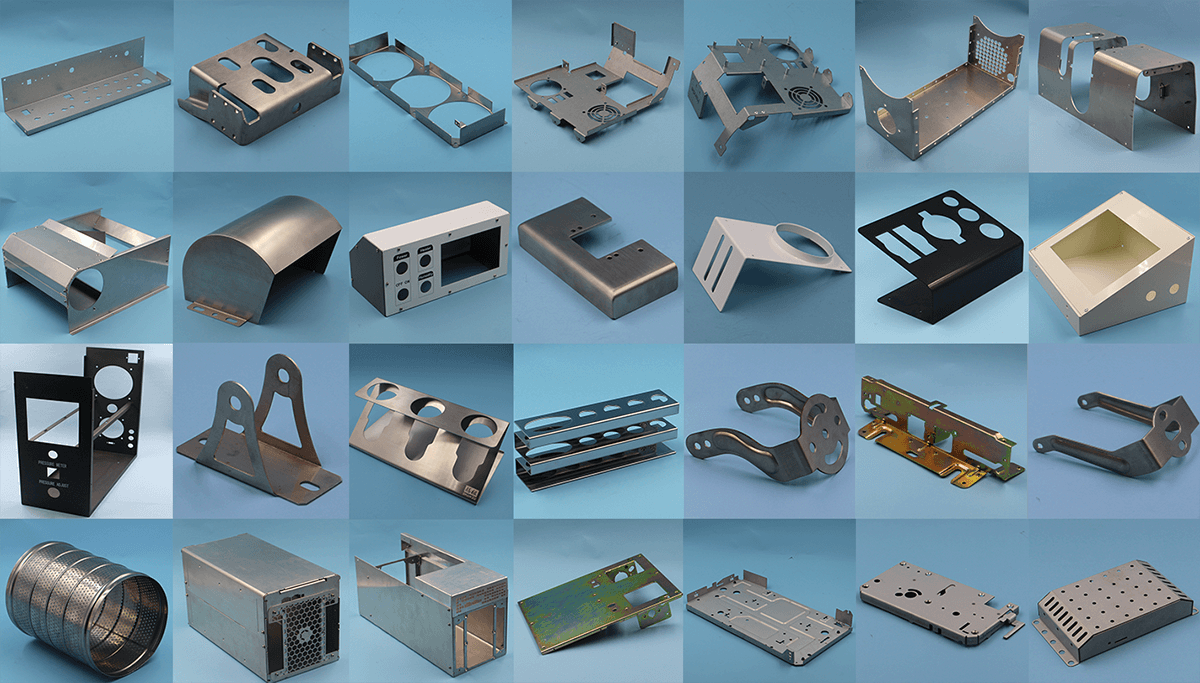
These benefits make laser cutting ideal for prototypes, low-to-medium runs, and high-mix production.
Disadvantages and Limitations
1.High capital cost — Entry-level 1.5–3 kW machines start ~$50,000–$150,000; 12–30 kW industrial units exceed $300,000–$800,000+.
2.Thickness constraints — Best below 25 mm; thicker materials often favor plasma/oxy-fuel for speed/cost.
3.Reflective metals — Still require care (though fiber largely solves this vs. CO₂).
4.Fume & particulate management — Strong extraction/filtration needed (chromium VI from stainless is hazardous).
5.Thermal effects— Possible distortion, discoloration, or edge hardening on thin/heat-sensitive alloys if not optimized.
6. Energy use — High during operation (though fiber is far more efficient than CO₂).
7. Skill & maintenance — Requires trained operators for parameter tuning and optics/nozzle upkeep.
For very thick plates or extremely budget operations, complementary methods like plasma or waterjet remain relevant.
Applications and Industry Trends
Laser-cut sheet metal parts appear everywhere: automotive brackets/panels, electronic enclosures, medical devices, HVAC components, architectural screens, signage, and machinery guards.
In 2026, trends include:
- Ultra-high-power fiber (30–60 kW) for thicker plate with improved beam shaping and mixed-gas assist.
- AI-driven real-time adjustments, autonomous features, and predictive maintenance.
- Greater automation (universal loaders for multiple lasers, coil-fed systems).
- Sustainability focus — reduced waste, energy-efficient sources, and eco-friendly assist gases.
Sheet metal laser cutting continues to evolve as the premier method for precision 2D metal profiling, balancing speed, quality, and flexibility better than alternatives for most sheet applications up to medium thickness.
Contact: Andy_Lai
Phone: +8613144801682
E-mail: info@lasercutoem.com
Add: 208, Building B, Fushengda, No. 6, Hongkan Road, Yanchuan Community, Yanluo Street, Bao'an District, Shenzhen, China