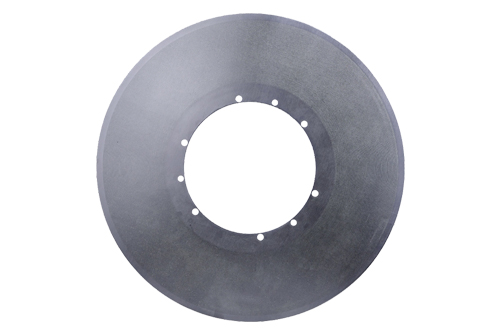
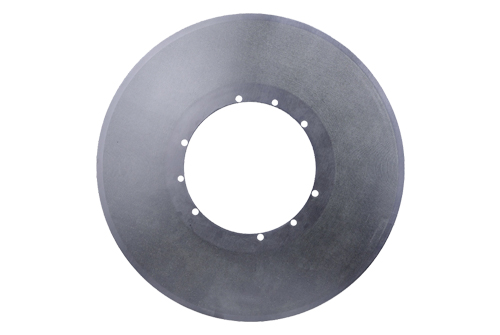
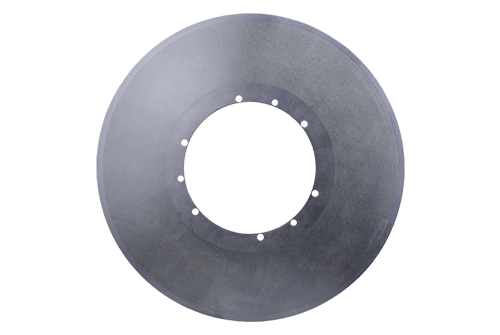
Material: Stainless Steel
Thickness: 0.15mm
Precision Tolerance: ±0.01mm
Spacing:0.1mm
Description:Widely used in industrial automation, robotics, precision instruments, and other fields.
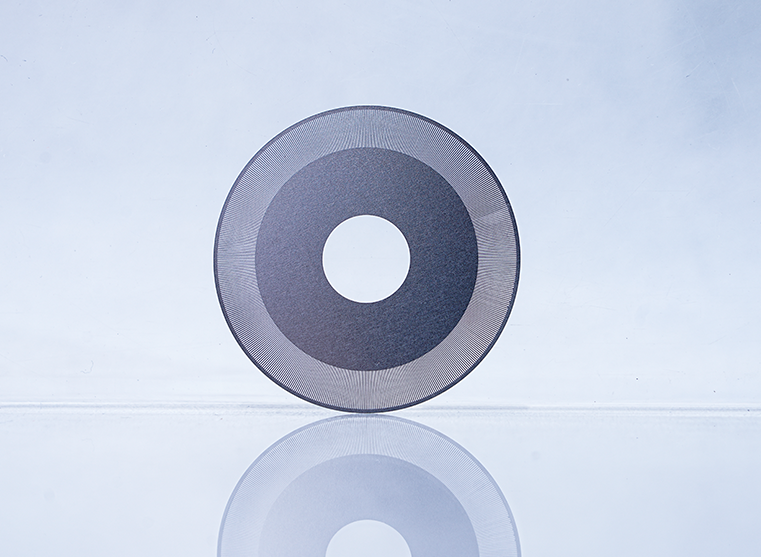
Photoelectric encoders are precision electromechanical conversion devices widely used in fields such as industrial automation, robotics, and precision instruments. They convert mechanical motion into digital signals through optical principles, achieving accurate measurement of position, speed, and angle. Among them, the code disc (also known as the encoding disc or grating disc) is the core component of the photoelectric encoder, directly determining the resolution and accuracy of the encoder. Traditional code disc processing methods include mechanical stamping and chemical etching, but these methods suffer from issues such as low precision, susceptibility to deformation, and high costs. With the rapid development of laser technology, laser processing has become the mainstream process in code disc manufacturing. It utilizes high-energy laser beams for non-contact cutting, etching, or drilling of materials, achieving micron-level precision processing. This article will discuss in detail the laser processing technology for code discs in photoelectric encoders, including principles, advantages, applications, and future trends, aiming to provide reference for relevant practitioners. Laser processing not only enhances the performance of code discs but also drives photoelectric encoders toward higher precision and reliability. In the context of digital transformation, the importance of this technology is increasingly prominent.
The basic working principle of photoelectric encoders is based on photoelectric conversion. When the code disc rotates with the shaft, the gratings or slits on the disc block or transmit light beams emitted from the light source, and the photoelectric sensor receives the signals to generate pulse outputs. These pulses can be used to calculate rotational speed or position. Code discs are typically made of glass, stainless steel, or polymer materials, with precise patterns engraved on the surface, such as rectangular holes, grid lines, or encoding tracks. The introduction of laser processing has made the fabrication of these patterns more refined and efficient. According to industry data, code discs processed by laser can achieve resolutions of tens of thousands of lines per revolution, far surpassing traditional methods. This not only reduces production costs but also improves product stability.
Photoelectric encoders are divided into incremental and absolute types. Incremental encoders generate relative position signals through uniform gratings on the code disc, while absolute encoders use unique encoding patterns to provide absolute position information. As the signal source, the code disc is usually a circular thin disc with diameters ranging from a few millimeters to hundreds of millimeters. Material selection is crucial: glass code discs offer good thermal stability and optical transparency, suitable for high-precision applications; stainless steel code discs are corrosion-resistant and impact-resistant, ideal for harsh environments.
Traditional code disc processing relies on mechanical methods such as stamping or milling, but these processes easily produce burrs and deformation, and precision is difficult to control at the micron level. Although chemical etching can achieve fine patterns, it involves hazardous chemicals and faces significant environmental pressure. The emergence of laser processing has addressed these pain points. It utilizes the thermal effects of lasers, vaporization, or melting of materials to achieve contactless processing. Laser types are diverse, including CO₂ lasers, fiber lasers, picosecond lasers, and femtosecond lasers. Among them, picosecond lasers are particularly suitable for processing glass code discs due to their short pulse duration and small heat-affected zone, avoiding material cracks.
Structurally, code disc patterns include light-transmitting and opaque areas. Laser processing can precisely control pattern widths, for example, slit widths reaching several microns. For instance, on glass code discs, lasers can deposit thin film layers and then etch them to form high-resolution encoding tracks. This processing method not only improves the flatness of the code disc but also ensures pattern uniformity. According to relevant studies, the flatness of laser-processed code discs can be controlled within 50 microns, which is critical for encoder accuracy.
Additionally, the precision of the code disc directly affects the encoder's resolution. Higher resolution allows the encoder to capture finer movements. For example, in robotic joints, high-resolution code discs enable sub-millimeter positioning. Laser processing achieves customized production of complex patterns through computer-controlled laser paths, which is difficult with traditional methods.
The core of laser processing for code discs is utilizing the high energy density of laser beams to locally heat, melt, or vaporize materials. The process includes laser generation, focusing, and scanning. The laser generates a high-brightness beam, focused through lenses into a micron-level spot, acting on the code disc surface. After the material absorbs laser energy, the temperature rises sharply, causing phase changes when reaching the melting or boiling point, achieving cutting or etching.
Specifically for glass code discs, infrared picosecond lasers are commonly used. Picosecond laser pulse widths are on the order of 10⁻¹² seconds, with short heat diffusion time and heat-affected zones less than 80 microns. This avoids thermal stress cracks in glass, ensuring smooth cutting edges. The processing flow: first, deposit chromium or other opaque layers on the glass surface; then, use laser etching to remove excess material, forming slits or gratings; finally, perform cleaning and inspection. Equipment is usually equipped with CCD vision systems and linear motor platforms for sub-micron positioning.
For stainless steel code discs, nanosecond fiber lasers are more suitable. With a wavelength of 515 nm and average power up to 50 W, pulse width and frequency are adjustable. Processing adopts backward laser methods, moving the focus upward to reduce heat accumulation. Laser scanning paths are designed by CAD software, supporting irregular cutting such as circular or fan-shaped patterns. Precision is controlled at ±0.01 mm, with concentricity less than 50 microns.
Laser processing can also be combined with other technologies, such as ultraviolet lasers for fine engraving. UV lasers with a 355 nm wavelength have high photoelectric conversion efficiency, suitable for micro-processing of metal and non-metal films. They produce ultra-short pulses, avoiding material scorching and improving yield. The entire process is highly automated, taking only a few hours from design to finished product.
In practical operation, laser power, scanning speed, and pulse frequency are key parameters. Excessive power may cause material deformation, while too low reduces efficiency. By optimizing these parameters, high repeatability production is achieved. For example, in batch processing, laser systems can run continuously with low maintenance costs, requiring only electricity and compressed air.
Compared to traditional methods, laser processing offers significant advantages in precision, efficiency, and environmental protection. First, high precision. The small laser spot enables 5-micron line width patterns, far exceeding the ±10% tolerance of chemical etching. This enhances code disc resolution for applications in aerospace and semiconductors. Second, non-contact processing avoids mechanical stress, eliminating burrs, deformation, or indentations. Glass code disc cutting has minimal chipping, with smooth surfaces improving optical performance.
In terms of efficiency, laser processing is fast, up to 30 mm/s, suitable for mass production. Low tooling costs support one-time forming of complex shapes without expensive molds. Compared to waterjet cutting, lasers require no water resources, reducing wastewater pollution and being environmentally friendly. High cost-effectiveness: after initial investment, long-term operating costs are low, with minimal consumables.
Additionally, laser processing is highly flexible, handling various materials including borosilicate glass, quartz, and stainless steel. Small heat-affected zones avoid material damage, achieving yields over 95%. When comparing laser etching to photochemical etching, lasers are more versatile for various thicknesses, though initial costs are higher, offering better repeatability and long-term economy. Photochemical etching is cheaper but limited to metals with lower precision.
Lasers also support automated integration, such as vision positioning and loading/unloading systems, further boosting efficiency. In an era of increasingly strict environmental regulations, the chemical-free waste characteristic of laser processing is particularly prominent.
Laser-processed code discs are widely used in industrial robots, CNC machines, and medical equipment. For example, in aerospace cameras, multi-turn absolute encoders use laser-processed code discs for high-precision angle measurement. AdValue Photonics' glass drilling machines can process 50-micron aperture code discs for satellite positioning systems.
In the automotive industry, laser-etched stainless steel code discs are used in ABS systems to improve vehicle stability. Japanese companies like UPT adopt etching combined with laser to produce 0.08 mm thick slit code discs for industrial robots, enhancing positioning accuracy. Chinese companies such as Hangzhou Yinhu Laser and Suzhou Chuangxuan Laser provide specialized equipment for processing glass code discs, serving intelligent manufacturing.
A typical case is irregular cutting of glass encoding discs. Using picosecond lasers, equipment with a 400×300 mm format supports complex patterns, high efficiency, and labor savings.
Despite obvious advantages, laser processing faces challenges like thermal damage from high-power lasers and high initial equipment costs. Solutions include adopting femtosecond lasers to further reduce heat zones. In the future, with 5G and AI development, laser processing will evolve toward intelligence, such as real-time monitoring systems.
Laser processing is a revolutionary technology in the manufacturing of code discs for photoelectric encoders, driving the industry toward high-precision transformation. Looking ahead, it will play a role in more fields, promoting technological innovation.#LaserCuttingTechnology #CustomMetalCutting
Contact: Andy_Lai
Phone: +8613144801682
E-mail: info@lasercutoem.com
Add: 208, Building B, Fushengda, No. 6, Hongkan Road, Yanchuan Community, Yanluo Street, Bao'an District, Shenzhen, China