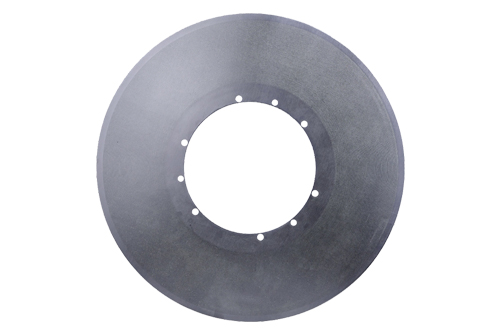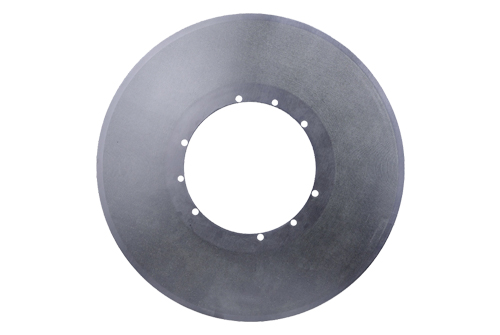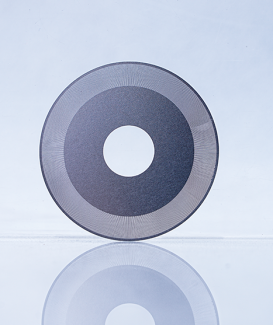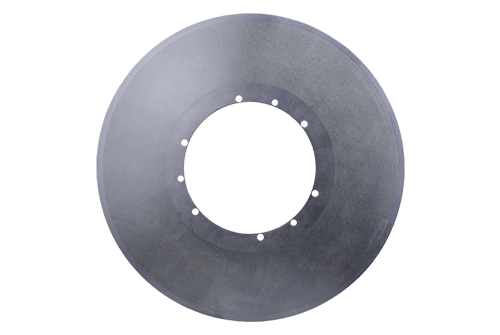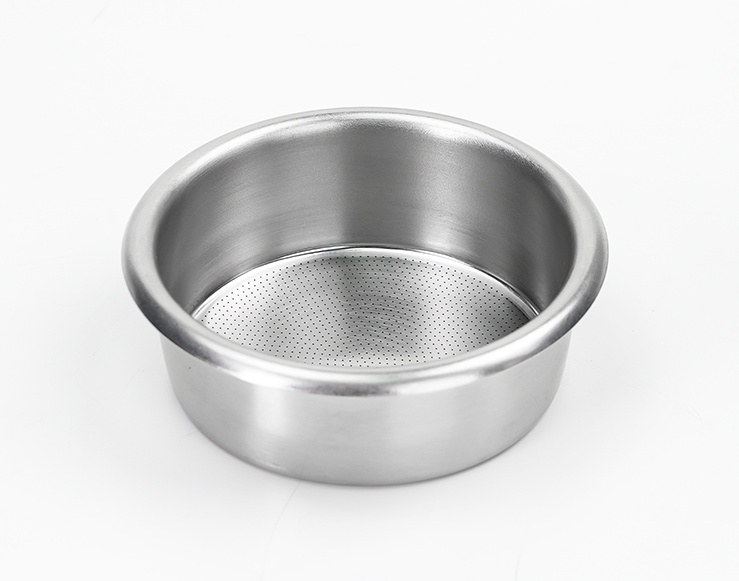
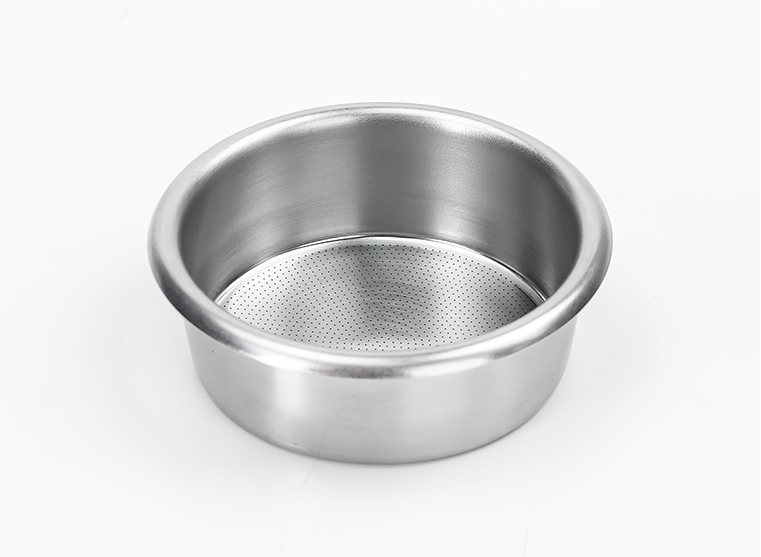
Material: SUS304
Thickness: 0.3mm
Precision Tolerance: ±0.015mm
Description:Coffee filtration efficiency, flavor release, and extraction uniformity
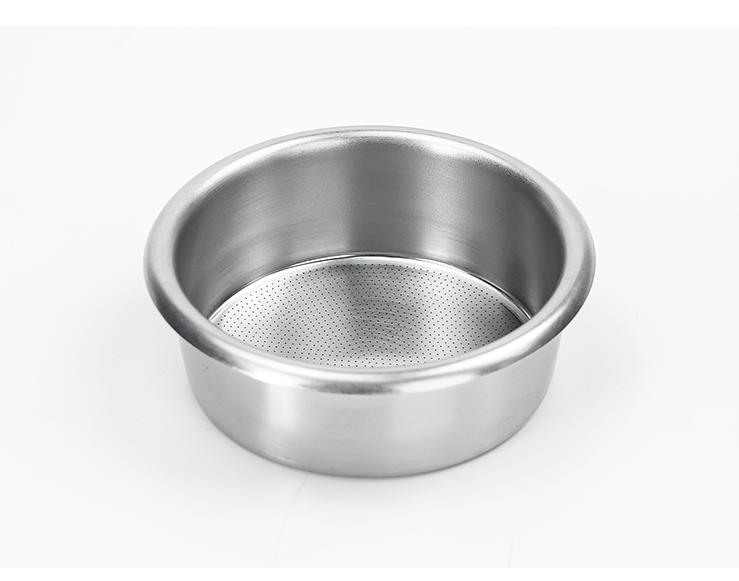
With the rapid development of coffee culture, people's demands for coffee taste and quality are increasingly high. Precision micro-hole coffee filters, as the core component of coffee extraction, directly affect filtration efficiency, flavor release, and extraction uniformity. Traditional filters are often processed using mechanical punching, woven meshes, or chemical etching, while laser engraving (also known as laser perforation or laser etching) technology, with its unique advantages, is gradually becoming the mainstream choice for manufacturing high-end coffee filters. This article will explore in detail the advantages of laser engraving in precision micro-hole coffee filters, analyzing from aspects such as technical principles, processing characteristics, performance improvements, and application effects.
I. Basic Principles and Technical Features of Laser Engraving
Laser engraving utilizes a high-energy-density laser beam (such as femtosecond, picosecond, or CO2 lasers) to precisely melt, vaporize, and remove material from metals like stainless steel, forming micron-level holes. For coffee filters, food-grade stainless steel (such as 304 or 316) is typically used as the base material. The laser focus spot diameter can reach a few microns, enabling precise micro-hole arrays with apertures ranging from 5-200 μm.
Compared to other processing methods, laser engraving is a non-contact process with no mechanical stress or tool wear. The process is controlled by computer, allowing arbitrary hole shapes (such as circular, conical, or honeycomb), arbitrary distributions, and precise size control. This makes laser engraving particularly suitable for the high-density micro-hole requirements of coffee filters, such as espresso puck screens or AeroPress metal filter disks, which often use laser perforation to achieve thousands to tens of thousands of uniform micro-holes.
II. Advantages in Precision and Consistency
The greatest advantage of laser engraving is its extremely high precision and consistency. Traditional mechanical punching often produces burrs and deformation, with aperture errors up to ±10-20 μm, while laser processing can control aperture precision within ±2-5 μm, even achieving single-digit micron tolerances. The hole walls are smooth with minimal recast layer accumulation, avoiding residual mechanical stress and surface defects.
For coffee filters, this means uniform micro-hole distribution and consistent water flow resistance. During coffee extraction, water passing through uniform micro-holes better covers the coffee bed, avoiding channeling and hot spots. In practical applications, a 58mm espresso puck screen with 200 μm laser-etched holes can significantly improve extraction uniformity, producing thicker crema and fuller flavor.
Additionally, lasers can create conical holes (larger inlet, smaller outlet), which is particularly beneficial in coffee filtration: wider inlets reduce clogging, narrower outlets finely filter fines, while retaining coffee oils for a richer mouthfeel. Compared to chemical etching (which is precise but susceptible to chemical agent variability), laser processing is more stable, with minimal aperture deviation across batches.
III. Burr-Free, Stress-Free, and High Surface Quality
Traditional punching or drilling often produces burrs, requiring secondary deburring, which increases costs and may introduce contaminants. Laser engraving has a small heat-affected zone (especially with ultrafast lasers), resulting in mirror-smooth hole edges with no burrs or stress deformation. This is crucial for food-grade coffee filters: smooth surfaces resist accumulation of coffee residues and oils, reducing bacterial growth and meeting hygiene standards.
In practical use, burr-free filters are easier to clean, requiring only rinsing with water or light brushing to restore them to new condition. Compared to woven mesh filters (prone to deformation and clogging), laser-engraved filters are highly durable, with a lifespan of several years. User feedback on AeroPress laser-cut metal filter disks shows moderate pressing resistance, no fine residue after extraction, and a clean, full-bodied taste.
IV. Flexible Design and Customization Capabilities
Laser engraving supports complex pattern designs, easily achieving varying apertures, shapes, and density gradients. For example, denser holes in the center with sparser edges, or honeycomb arrangements to optimize water flow distribution. Coffee machine manufacturers can customize filters for different extraction methods (pour-over or pressure-based): larger apertures for pour-over to retain oils, finer for espresso to build pressure.
This flexibility is unmatched by mechanical processing. Traditional punching molds are costly, and design changes require new molds, while laser only needs program adjustments for rapid prototyping. High-end brands like Flair 58 or Normcore puck screens often use laser etching for logos and special hole patterns, enhancing both aesthetics and functionality.
V. Production Efficiency and Cost-Effectiveness
Although initial laser equipment investment is high, for precision micro-holes, large-scale production efficiency is outstanding. Parallel processing can create tens of thousands of holes simultaneously, with short per-piece processing time. No tool consumption or secondary processing results in overall costs lower than precision mechanical drilling.
In mass production (e.g., hundreds of thousands annually), laser processing offers better cost-performance. Compared to chemical etching (high chemical and environmental costs), laser is more eco-friendly with no waste liquids. In the reusable metal filter market (e.g., Barista Warrior or Able Disc), many adopt laser cutting to balance low cost and high performance.
VI. Performance Improvements and Impact on Coffee Flavor
Laser-engraved filters directly enhance coffee quality. Precise micro-holes allow more coffee oils to pass through (unlike paper filters that absorb them), producing richer body and layered flavors. Fine holes filter out fines, avoiding muddy mouthfeel.
User experiences show: espresso with laser-perforated puck screens has more uniform extraction, longer-lasting crema, and rounder flavor. AeroPress metal disks approach French press style—full-bodied without paper taste. In pour-over, slow and even water flow leads to thorough extraction and prominent sweetness.
Low heat impact ensures material integrity, with stainless steel filters releasing no off-flavors, preserving the coffee's original taste.
VII. Durability, Environmental Friendliness, and Ease of Maintenance
Laser-processed filters have high strength and resist deformation. Even thin screens (0.2-0.8 mm) are robust under pressure, suitable for high-pressure extraction. Environmentally, they are reusable, reducing paper filter waste. Maintenance is simple: hot water rinse plus occasional descaling for long-lasting performance.
VIII. Application Cases and Future Outlook
Real-world examples: Many high-end espresso accessories like Normcore and NEOUZA puck screens use laser etching with 150-200 μm holes to improve extraction consistency. Third-party AeroPress metal disks with laser cutting are popular among travelers. In the future, as ultrafast lasers become widespread, micro-holes will become finer (<50 μm), pushing coffee filters toward smarter, more personalized development.
Precision micro-hole coffee filters processed by laser engraving offer multiple advantages: high precision, strong consistency, burr-free, flexible design, efficient production, enhanced flavor, durability, and environmental friendliness. Compared to traditional methods, it not only elevates manufacturing standards but directly improves the coffee extraction experience. For coffee enthusiasts and professional baristas pursuing ultimate quality, laser-engraved filters are undoubtedly the best choice. They represent the perfect fusion of precision manufacturing and coffee artistry, driving coffee culture toward higher quality.#CoffeeFilterLaserEngravingProcessing #FilterLaserProcessing #CoffeeFilterLaserProcessing
Contact: Andy_Lai
Phone: +8613144801682
E-mail: info@lasercutoem.com
Add: 208, Building B, Fushengda, No. 6, Hongkan Road, Yanchuan Community, Yanluo Street, Bao'an District, Shenzhen, China