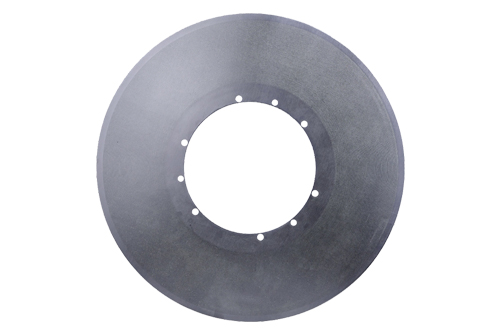
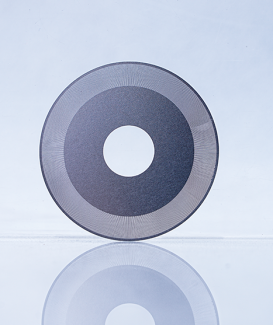
Material: SUS304
Thickness: 0.02mm
Precision Tolerance: ±0.005mm
Description:In a spectrometer, the slit determines the resolution; in a laser system, it controls the beam divergence angle. Slit thickness typically ranges from 0.01 to 0.5 mm, with widths between 5 and 1000 micrometers..
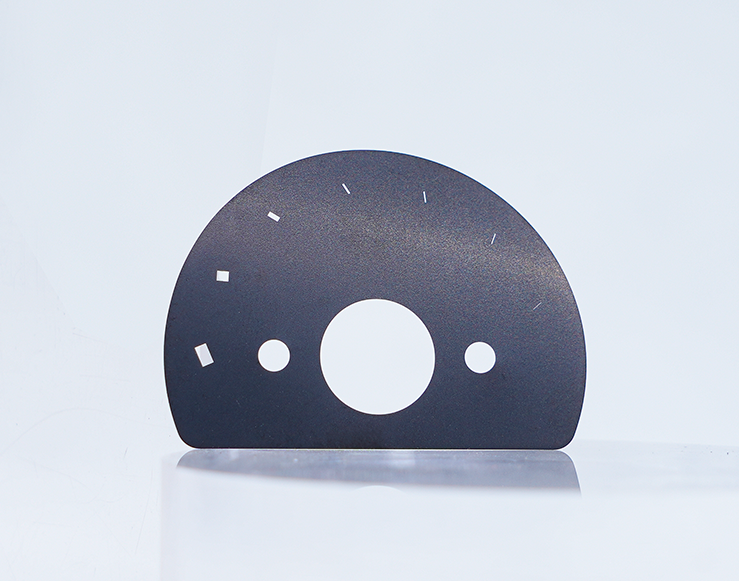
Precision optical slit sheets are critical light-limiting components in optical systems, used to control beam shape, size, and intensity. They are widely applied in spectrometers, laser systems, microscopes, medical devices, and scientific instruments. Typically made from materials like stainless steel, molybdenum, copper, or glass, these slits can have widths down to the micron or even sub-micron level, requiring smooth edges, no burrs, high straightness, and sharpness. Traditional processing methods such as mechanical stamping, chemical etching, or wire cutting suffer from low precision, burrs, and thermal deformation, failing to meet the stringent demands of modern optical systems. With advancements in laser technology, laser cutting has become the mainstream process for precision optical slit sheets. It employs high-energy-density laser beams for non-contact precise cutting, achieving slit widths of 5-50 microns and edge roughness Ra < 0.5 microns. This article explores in detail the laser cutting technology for precision optical slit sheets, including principles, advantages, applications, and future trends. This technology not only enhances slit performance but also drives precision optical manufacturing toward higher accuracy and efficiency. In the context of rapid growth in the optoelectronics industry, the significance of laser cutting is increasingly prominent.
The basic function of precision optical slit sheets is to form narrow light paths for beam shaping or wavelength selection. For example, in spectrometers, slits determine resolution; in laser systems, they control beam divergence. Slit sheets are usually 0.01-0.5 mm thick with widths of 5-1000 microns. The adoption of laser cutting makes fabrication of these micro-structures more reliable. Industry data shows that laser-processed slits achieve accuracies of ±1 micron, far superior to ±10 microns from traditional methods. This improves optical system performance while reducing costs and defect rates.
Precision optical slit sheets include single slits, double slits, adjustable slits, and air slits. Single slits are for basic limiting, double slits for interference experiments, and adjustable for dynamic control. Material selection is key: stainless steel (e.g., 302 or 316) is corrosion-resistant and strong, suitable for high-power lasers; molybdenum or tungsten withstands high temperatures for intense radiation; glass or quartz with coatings for UV/IR optics.
Traditional processing relies on mechanical or chemical methods. Mechanical cutting produces burrs and deformation; chemical etching involves hazards and limited precision with environmental concerns. Laser cutting addresses these with ultra-short pulse lasers (picosecond or femtosecond) for "cold processing" with minimal heat-affected zones. Common lasers include UV picosecond, green nanosecond, and IR femtosecond. UV at 355 nm suits fine metal etching; picosecond pulses <10^-12 s avoid heat diffusion.
Slit structures include straight, curved, and irregular. Laser cutting precisely controls edge sharpness, e.g., knife-like edges on stainless steel for better beam definition. Studies show laser slits with straightness of 0.001 mm/mm and concentricity <5 microns, crucial for reducing diffraction and scattering.
Slit width directly affects resolution. Narrow slits (5 microns) for high-resolution spectroscopy; laser achieves minimum kerf <10 microns via focused spots. Traditional methods struggle with complex batch production; laser supports direct CAD-driven customization.
The core of laser cutting precision optical slit sheets is the interaction of high-energy beams with materials, including melting, vaporization, and plasma effects. The process involves laser generation, transmission, focusing, and scanning. The laser produces coherent light, focused via optics to micron spots (<5 microns) on the surface. Material absorbs energy, rapidly heating to vaporize and form slits; assist gas (nitrogen or argon) removes slag.
For metal slits, fiber or nanosecond green lasers are used. Wavelength 532 nm, power 10-50 W, adjustable frequency. Galvo scanning systems reach 1000 mm/s speeds. Heat-affected zone <10 microns avoids edge oxidation. Flow: protective coating → laser etching → cleaning/inspection. Equipment includes high-res CCD for ±1 micron positioning.
For glass/ceramic, ultra-fast lasers like IR picosecond. Pulse <10 ps, cold ablation dominant, no cracks. Bessel beams or filamentation for thick materials ensure >99% perpendicularity. Key parameters: excess power causes chipping, slow speed heat buildup. Typical: 20 W power, 500 kHz frequency, 500 mm/s speed, 10 micron width.
Lasers combine adaptive optics for real-time focus adjustment. Fully automated, from CAD to finished product in minutes.
Laser cutting offers significant advantages in precision, quality, and efficiency over traditional methods. First, ultra-high precision: spots to microns, slits 5 microns, tolerance ±1 micron, sharp burr-free edges. Traditional etching ±10%, prone to deformation.
Second, non-contact avoids mechanical stress; small heat zone (<5 microns) suits brittle materials like glass, no cracks. Yield >98%, surface Ra <0.2 microns improves transmittance.
High efficiency: fast speeds, batch-capable. No molds, flexible for complex shapes in one pass. Environmentally friendly, no chemical waste, clean gas assist.
Cost-effective: low running costs post-investment. Vs. EDM/waterjet, no consumable wear, simple maintenance.
High flexibility: various materials/thicknesses. UV for reflective, femtosecond for ultra-precision.
Laser-cut precision optical slits are widely used in research and industry. In spectrometers, they enhance resolution for environmental monitoring and analysis. Knight Optical provides laser-drilled stainless slits for laser beam control.
In medicine, for endoscopes and surgical lasers, improving imaging. Lenox Laser offers custom chrome-on-glass slits for spectrophotometers.
Typical case: mobile camera glass slits with picosecond laser, chipping <10 microns. Aerospace optics use molybdenum slits, high-temp laser processed.
Challenges: energy loss on reflective materials (copper), perpendicularity in thick. Solutions: short-wavelength lasers, multi-pass. Future: femtosecond and AI optimization to sub-micron.
Laser cutting is revolutionary for precision optical slit sheet manufacturing, driving optical innovation. It will play key roles in more high-tech fields.#MetalLaserCutting #LaserCuttingProcess #PrecisionLaserCutting
Contact: Andy_Lai
Phone: +8613144801682
E-mail: info@lasercutoem.com
Add: 208, Building B, Fushengda, No. 6, Hongkan Road, Yanchuan Community, Yanluo Street, Bao'an District, Shenzhen, China